United States Β· Pacific Islands
Not enough data yet. Log a session to help build the accuracy score.
This guide was generated from conditions data. Know this spot? Submit your own tips below.
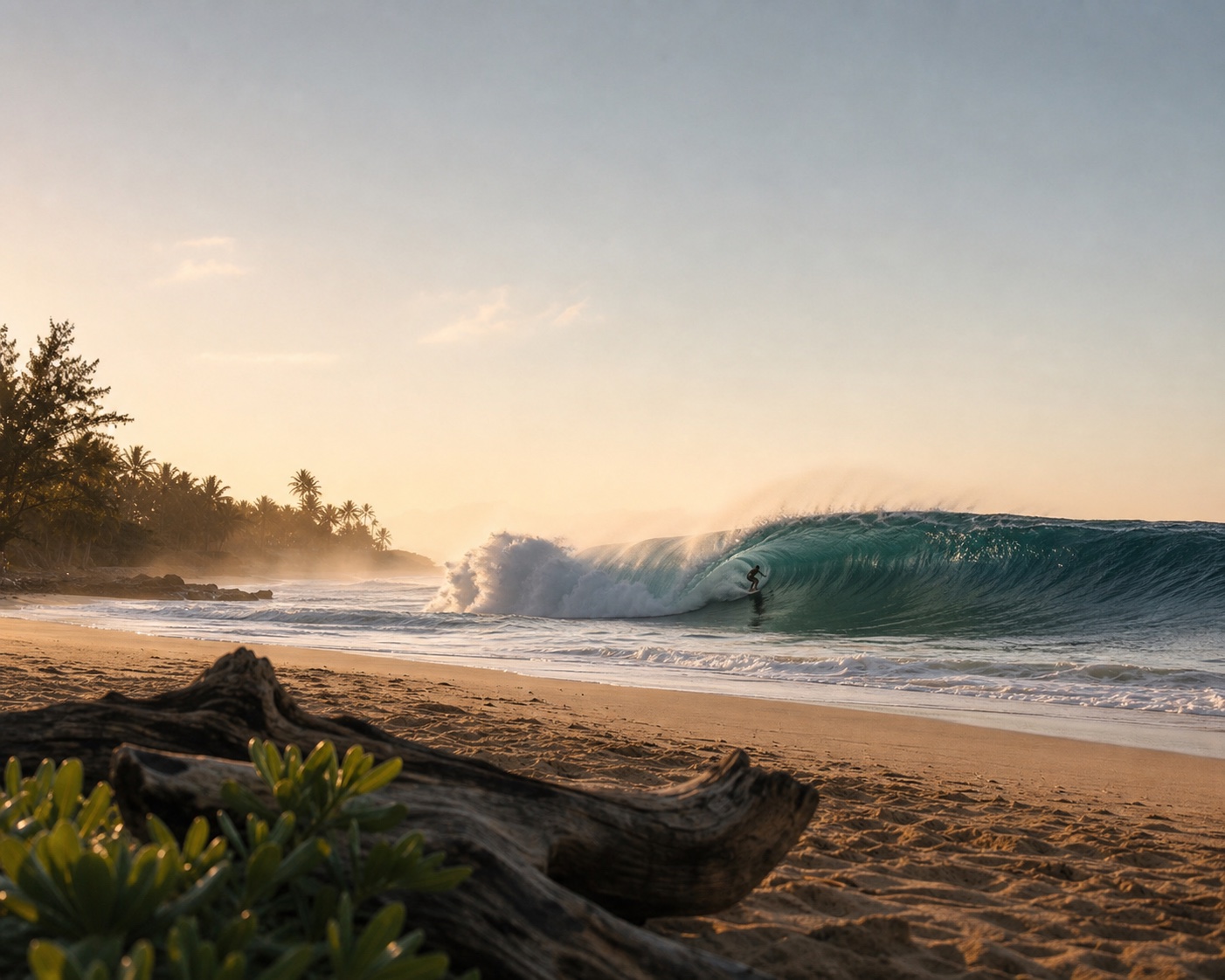
Pipeline is the most famous wave on Earth. A catastrophically shallow, devastatingly powerful left-hand barrel (and Backdoor right) breaking over a cavernous volcanic reef on Oahu's North Shore. The wave pitches top-to-bottom with a violence that has claimed lives and careers in equal measure. The reef's deep fissures and upright coral spires sit centimetres below the surface, creating the most high-consequence surf environment in the world. This is the ultimate test of tube-riding ability and commitment.
North-westerly winter groundswells from November through February deliver Pipeline's legendary barrels. The wave needs at least 6ft to properly form over the first reef, with 8-12ft producing the classic cylindrical tubes. A 315-degree swell angle is considered ideal. Light southerly or easterly trade winds provide offshore grooming. The second and third reef activate on larger swells, producing massive outer walls.
The take-off zone is precisely defined over the shallowest section of the first reef. Pipeline (left) and Backdoor (right) share the same peak. The committed surfer sits directly over the reef ledge where the wave first hits the shallow shelf. Being too deep means getting caught behind the curtain; too far on the shoulder means missing the barrel entirely. The deep-water channel to the west (Ehukai channel) provides the paddle-out.
The volcanic reef is composed of sharp lava rock with deep caves and coral spires. Wipeouts slam surfers directly into this structure in shallow water. The hydraulic force is immense: multi-wave hold-downs are common on bigger days. Broken boards, reef lacerations, and near-drownings are routine occurrences. Surfers have died here. The crowd includes aggressive locals defending their priority. Jet-ski safety operates on bigger days.
Limited street parking along Ke Nui Road or the Ehukai Beach Park car park. Both fill rapidly on swell days. The beach is immediately accessible from the park. No difficult entry; you wade out from the sand and paddle through the channel. The ease of beach access belies the severity of what awaits in the water.
Pipeline has the most intense, competitive, and hierarchical line-up in surfing. Local Hawaiian surfers and visiting professionals command absolute priority. The pecking order is ruthlessly enforced. Dropping in is met with immediate, vocal, and sometimes physical response. Do not paddle out at Pipeline unless you are an advanced to expert surfer with genuine heavy-water barrel experience. Even then, expect to wait.
Pipeline is not a wave you can casually attempt. Years of preparation in lesser barrel venues is required. A proper Pipeline gun (6'6" to 7'2" depending on size) with a pulled-in nose and extra rocker handles the steep drop. Watch from the beach for an extended period before your first paddle out; understanding the boils, the shifting peak, and the sets that swing wide is essential knowledge. Respect the local hierarchy absolutely. Taking a wave in front of a Pipeline local has consequences.
No recent check-ins. Be the first to report.
Record your session, conditions and gear.
Based on historical weekly averages
Combining historical conditions with school holiday crowd pressure to find the sweet spot.
How busy each week is based on school holiday overlap from feeder markets.
The timing score combines two signals: historical conditions quality (how good the skiing or surfing typically is in a given week, based on 5 years of weather data) and crowd pressure (how many of this destination's feeder markets have school holidays that week).
Crowd pressure is weighted by each feeder country's share of visitors. If 40% of a resort's visitors come from France and France is on holiday, that contributes 0.40 to the crowd pressure score. Crowds can reduce the timing score by up to 35%, ensuring conditions still matter most.
Scores: 5 = great conditions with low crowds (the sweet spot). 4 = great conditions with moderate crowds, or good conditions with low crowds. 3 = average. 2 = below average conditions or very crowded. 1 = poor conditions or peak holiday chaos.
Last 29 days of logged conditions.
Sign up to save favourite spots and get surf alerts
Create free accountCreate a free profile and let employers in Pipeline find you.
Create Profile βCurrent conditions refresh every 3 hours when the cron runs. Hourly data updates every 30 minutes. The 7-day forecast, luck factor, and packing notes are all pre-computed at the same time.
We compare the 7-day forecast to the last 5 years of marine data for the same week at Pipeline. The delta tells you whether conditions are shaping up better, worse, or about the same as a typical mid-June.
We score each day of the 7-day forecast using the same algorithm as the leaderboard, and highlight the highest scorer.
Open-Meteo's Marine API (swell height, period, water temperature) and Weather API (wind and conditions).
Honestly, no. Every break has tide windows, swell directions and reef contours that a global model cannot see. Treat the score as a starting point, then check a local cam.
The best week for surf at Pipeline is the week of 30 November (score 3/5) with low crowds.
Next to nothing in the water. Check back tomorrow. Onshore wind making a mess of the surface. Not enough swell to get this spot firing properly.
Heads up: jellyfish: peak season, and rocks exposed at low tide.
Indicators derived from forecast data, not official warnings. Always check local lifeguard or official advice.
Crystal clear water: ~27m visibility
High sediment levels, possible runoff or storm disturbance
Daily scores over the last 12 months at Pipeline