United States Β· North America
Not enough data yet. Log a session to help build the accuracy score.
This guide was generated from conditions data. Know this spot? Submit your own tips below.
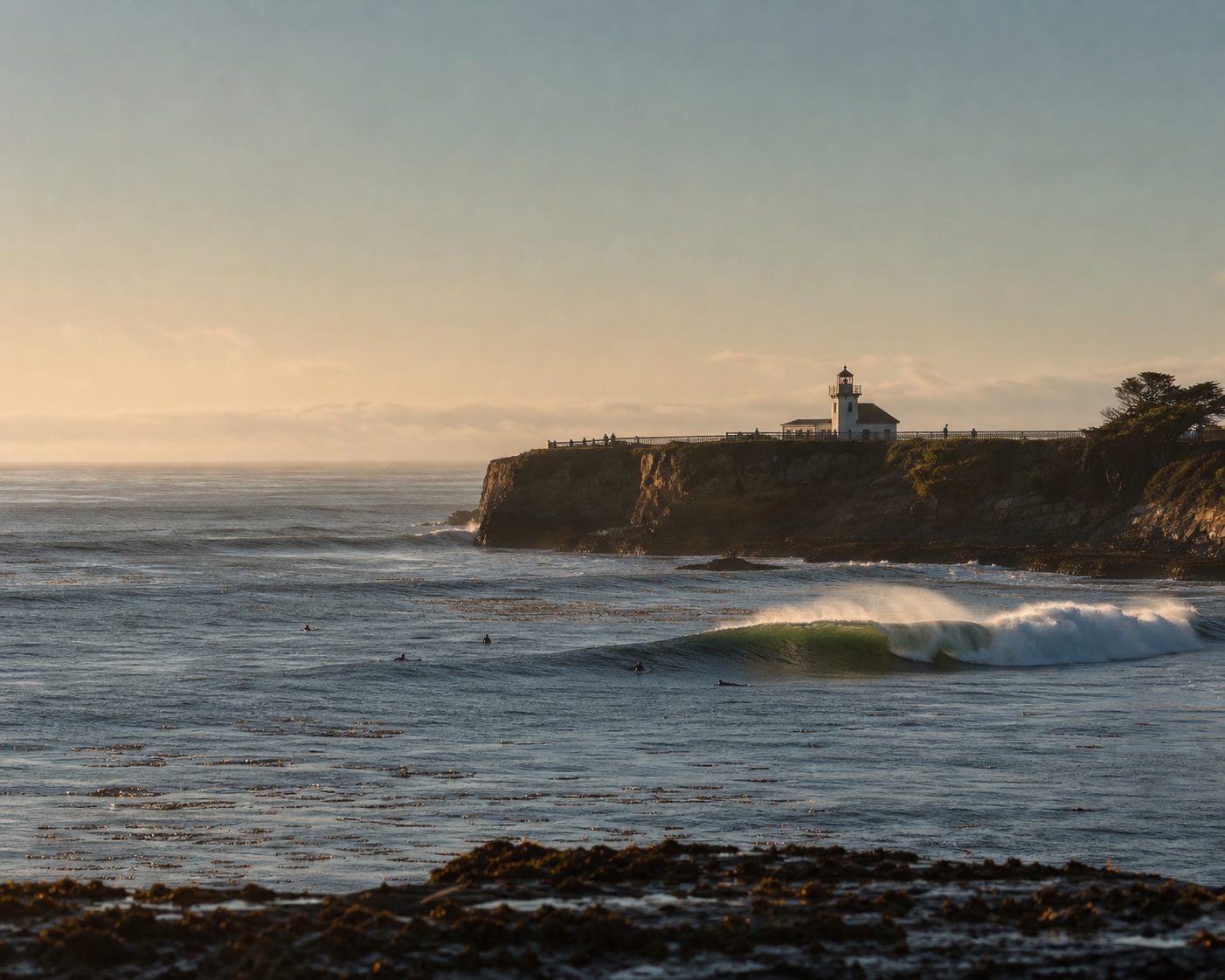
Steamer Lane is the jewel of Santa Cruz surfing and one of California's most iconic waves. A right-hand point break peeling along a kelp-covered reef beneath the lighthouse at West Cliff Drive, it offers high-performance walls when the swell fills in from the north-west. The wave has multiple sections, from the Outside break through Middle Peak to The Slot on the inside, each with its own character. This is a historic venue that has shaped generations of California surfers.
The prime season runs from October through March when North Pacific storms generate powerful north-westerly groundswells. The point needs west to north-west swell in the 4-8ft range to really light up. A north or north-east wind provides clean offshore conditions. Summer brings smaller south swells that occasionally activate the inside sections. The best sessions tend to arrive with the first pulse of a new swell before the wind shifts onshore.
The take-off zone at Middle Peak is the most accessible section, offering steep drops into workable right-hand walls. The Outside break handles the biggest swells and connects through to the middle on the right day. The Slot on the inside produces short, punchy waves better suited to quick turns. Position yourself just inside the kelp line and use the cliff landmarks to maintain your spot in the current. The peak shifts with swell direction, so watch a few sets before paddling out.
The reef is shallow and uneven, with exposed rocks on the inside sections at lower tides. Thick kelp beds can snag leashes and restrict movement. Strong currents sweep along the cliff face and intensify on bigger swells. Sea lions inhabit the area and occasionally bump surfers. Great white sharks patrol the kelp forests, particularly during autumn seal pupping season.
West Cliff Drive offers limited street parking with a two-hour limit. The main staircase descends from the lighthouse directly to the paddle-out point. An alternative entry via Cowell's Beach to the east avoids the cliff stairs but requires a longer paddle. The Santa Cruz Surfing Museum at the lighthouse provides an atmospheric pre-surf ritual.
Steamer Lane is heavily localised with a fiercely competitive line-up. The regulars have been surfing here for years and expect newcomers to earn their waves through patience and respect. Dropping in or snaking will be met with vocal disapproval. Mid-week dawn sessions offer the best chance of finding space. Weekends and after-school hours are chaotic.
Watch from the cliff for twenty minutes before paddling out. The sets are inconsistent and the current shifts between them, so understanding the rhythm saves frustration. The kelp actually helps by dampening surface chop, but keep clear of the thickest patches when duck-diving. Water temperature rarely exceeds 14C, so a good 4/3mm wetsuit with boots is standard year-round. The right-handers at Pleasure Point offer a less intense alternative when the Lane is too crowded.
No recent check-ins. Be the first to report.
Record your session, conditions and gear.
Based on historical weekly averages
Combining historical conditions with school holiday crowd pressure to find the sweet spot.
How busy each week is based on school holiday overlap from feeder markets.
The timing score combines two signals: historical conditions quality (how good the skiing or surfing typically is in a given week, based on 5 years of weather data) and crowd pressure (how many of this destination's feeder markets have school holidays that week).
Crowd pressure is weighted by each feeder country's share of visitors. If 40% of a resort's visitors come from France and France is on holiday, that contributes 0.40 to the crowd pressure score. Crowds can reduce the timing score by up to 35%, ensuring conditions still matter most.
Scores: 5 = great conditions with low crowds (the sweet spot). 4 = great conditions with moderate crowds, or good conditions with low crowds. 3 = average. 2 = below average conditions or very crowded. 1 = poor conditions or peak holiday chaos.
Last 29 days of logged conditions.
Sign up to save favourite spots and get surf alerts
Create free accountCreate a free profile and let employers in Santa Cruz find you.
Create Profile βCurrent conditions refresh every 3 hours when the cron runs. Hourly data updates every 30 minutes. The 7-day forecast, luck factor, and packing notes are all pre-computed at the same time.
We compare the 7-day forecast to the last 5 years of marine data for the same week at Santa Cruz. The delta tells you whether conditions are shaping up better, worse, or about the same as a typical mid-June.
We score each day of the 7-day forecast using the same algorithm as the leaderboard, and highlight the highest scorer.
Open-Meteo's Marine API (swell height, period, water temperature) and Weather API (wind and conditions).
Honestly, no. Every break has tide windows, swell directions and reef contours that a global model cannot see. Treat the score as a starting point, then check a local cam.
The best week for surf at Santa Cruz is the week of 30 November (score 3/5) with low crowds.
Decent swell running. Plenty to work with. Reasonable period putting some grunt behind each wave. Light onshore crumble taking the edge off. Conditions improving through the afternoon. Not enough swell to get this spot firing properly.
Heads up: rocks exposed at low tide.
Indicators derived from forecast data, not official warnings. Always check local lifeguard or official advice.
Reduced water clarity: ~3m visibility
Elevated phytoplankton detected, possible algal bloom
Daily scores over the last 12 months at Santa Cruz