Costa Rica · Central America
Not enough data yet. Log a session to help build the accuracy score.
This guide was generated from conditions data. Know this spot? Submit your own tips below.
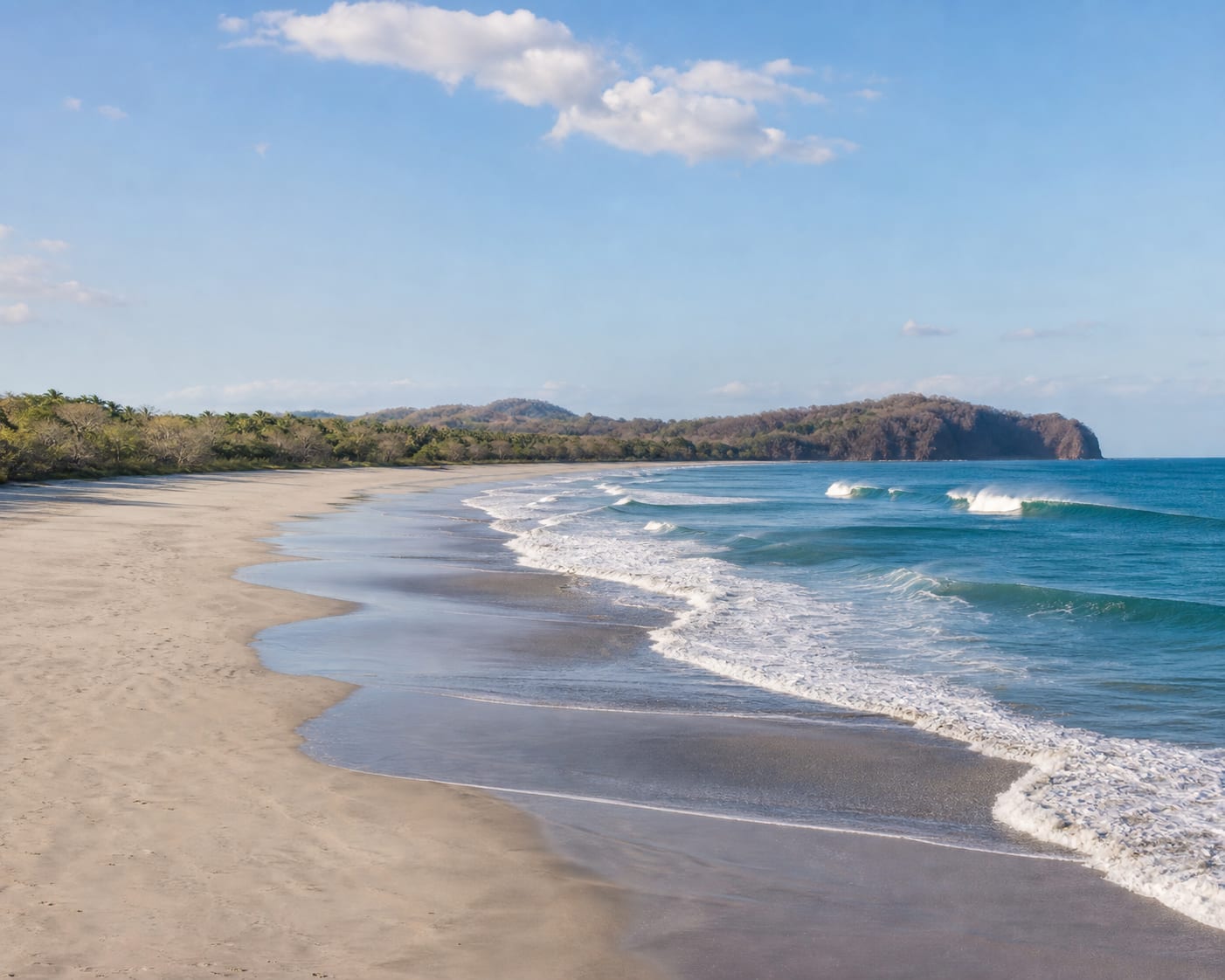
Playa Grande is a consistent, sweeping beach break in Costa Rica's Guanacaste province, producing reliable A-frames over compacted volcanic sand. The beach benefits from the seasonal Papagayo winds that blow offshore almost daily, ensuring clean conditions with remarkable regularity. The vast, open beach and the warm tropical water create an accessible environment for intermediate surfers looking to build confidence and sharpen technique on consistent, punchy peaks.
South-westerly Pacific groundswells arrive from April through October. The seasonal Papagayo winds (easterly) blow offshore from November through April, coinciding with smaller but clean swells. The wave works on 2-6ft of south-west swell. The Papagayo wind provides near-guaranteed offshore conditions during the dry season. Year-round rideable surf is virtually assured.
The wide beach offers multiple peaks spread along its length. The central section is most popular. The northern end near the estuary mouth can produce more defined banks when river sand has been deposited. Position on the outer bar where the A-frames first break. The peaks are consistent and predictable.
Moderate rip currents develop on bigger swells. The beach is a leatherback turtle nesting site; respect all protected zones and avoid surfing at night during nesting season. Stingrays in the shallows. The Papagayo wind can be strong, making the paddle out strenuous.
Parking near the beach access roads. The beach is immediately accessible. Surf schools and rental operate from the area. Accommodation ranges from hostels to upscale eco-lodges. The beach is within Las Baulas National Park (turtle nesting area).
Moderate crowds of 15-25 surfers on good days. The wide beach distributes people. Less crowded than neighbouring Tamarindo. The vibe is relaxed. Weekday mornings are quiet.
The Papagayo wind is strong but produces flawlessly clean conditions. Time your sessions for when the wind is moderate (early morning) rather than howling (midday). The turtle nesting season (October-March) brings restrictions on nighttime beach access; respect these absolutely. A standard shortboard works well for the punchy peaks. The water is warm year-round.
No recent check-ins. Be the first to report.
Record your session, conditions and gear.
Based on historical weekly averages
Combining historical conditions with school holiday crowd pressure to find the sweet spot.
How busy each week is based on school holiday overlap from feeder markets.
The timing score combines two signals: historical conditions quality (how good the skiing or surfing typically is in a given week, based on 5 years of weather data) and crowd pressure (how many of this destination's feeder markets have school holidays that week).
Crowd pressure is weighted by each feeder country's share of visitors. If 40% of a resort's visitors come from France and France is on holiday, that contributes 0.40 to the crowd pressure score. Crowds can reduce the timing score by up to 35%, ensuring conditions still matter most.
Scores: 5 = great conditions with low crowds (the sweet spot). 4 = great conditions with moderate crowds, or good conditions with low crowds. 3 = average. 2 = below average conditions or very crowded. 1 = poor conditions or peak holiday chaos.
Last 29 days of logged conditions.
Sign up to save favourite spots and get surf alerts
Create free accountCreate a free profile and let employers in Playa Grande find you.
Create Profile →Current conditions refresh every 3 hours when the cron runs. Hourly data updates every 30 minutes. The 7-day forecast, luck factor, and packing notes are all pre-computed at the same time.
We compare the 7-day forecast to the last 5 years of marine data for the same week at Playa Grande. The delta tells you whether conditions are shaping up better, worse, or about the same as a typical mid-June.
We score each day of the 7-day forecast using the same algorithm as the leaderboard, and highlight the highest scorer.
Open-Meteo's Marine API (swell height, period, water temperature) and Weather API (wind and conditions).
Honestly, no. Every break has tide windows, swell directions and reef contours that a global model cannot see. Treat the score as a starting point, then check a local cam.
The best week for surf at Playa Grande is the week of 9 November (score 3/5) with low crowds.
Rideable waves with moderate energy. Reasonable period putting some grunt behind each wave. Strong offshore, clean but tough to paddle into. Conditions improving through the afternoon.
Heads up: thunderstorms forecast, and jellyfish: peak season.
Indicators derived from forecast data, not official warnings. Always check local lifeguard or official advice.
Good water clarity: ~8m visibility
Daily scores over the last 12 months at Playa Grande