Not enough data yet. Log a session to help build the accuracy score.
This guide was generated from conditions data. Know this spot? Submit your own tips below.
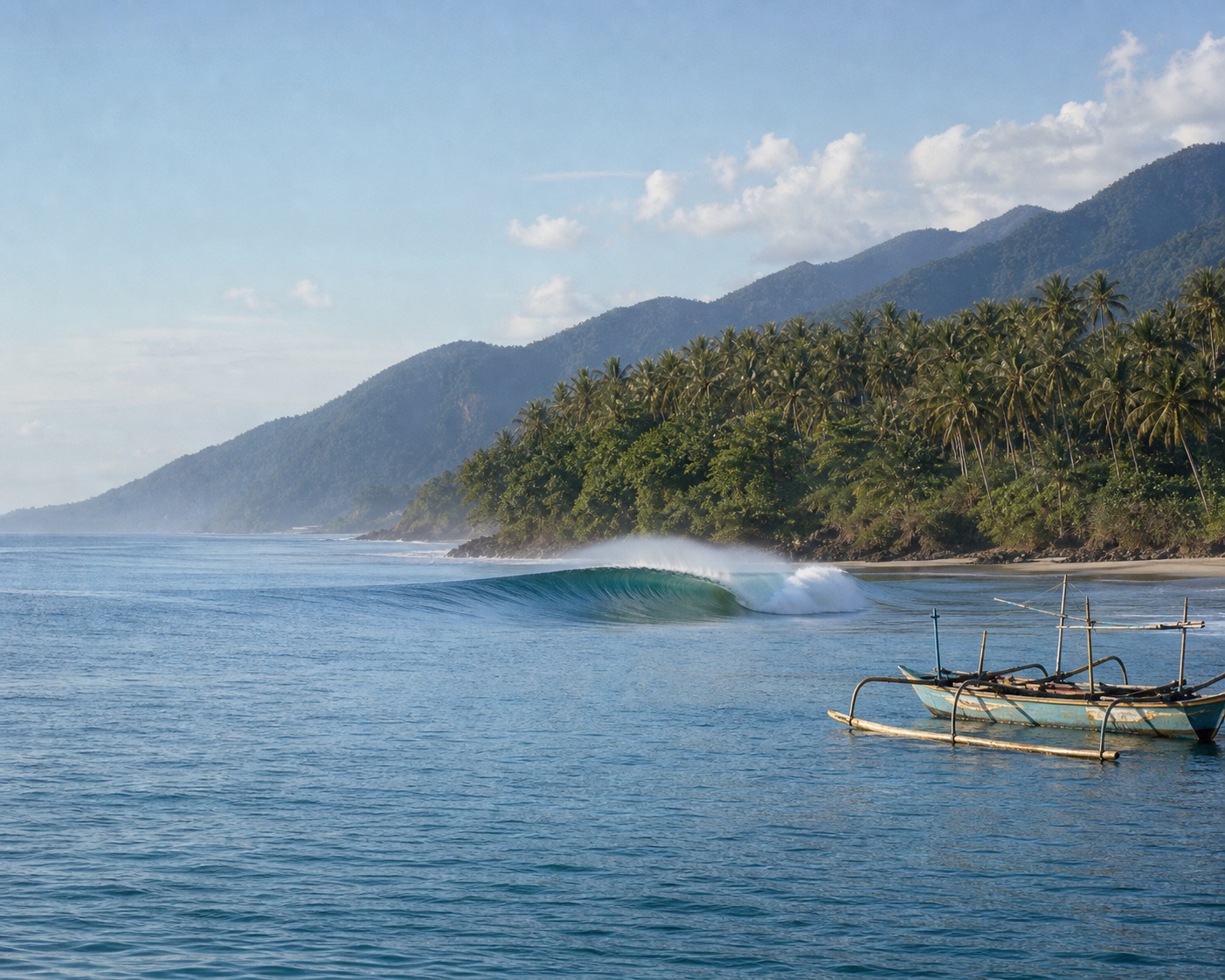
Ujung Bocur at Krui is a long left-hand reef break in southern Sumatra, producing fast, powerful walls with multiple barrel sections along an irregular coral and volcanic rock shelf. The wave has emerged as a viable alternative to the Mentawai Islands, offering similar quality at a fraction of the cost with overland access from the Sumatran mainland. The jungle-fringed coastline, traditional fishing villages, and uncrowded waves create an authentic Indonesian surf travel experience.
South-westerly Indian Ocean groundswells arrive from April through October during the dry season. The wave activates on 4ft swells and handles up to 10ft with increasing intensity. Easterly offshore winds are standard during the dry season mornings. The wet season (November-March) brings variable winds and less consistent swell but occasional solid pulses.
The take-off zone sits at the top of the point where the swell hits the shallowest section of the reef. The left peels for 150-300 metres, with barrel sections forming where the reef shallows and open walls where it deepens. Position yourself on the boil at the reef edge. The initial section is the most critical; from there, the wave alternates between tubes and carving sections.
Sharp live coral sits close to the surface throughout. Falls at speed carry severe consequence. The wave's pace on bigger swells means getting outrun results in being caught in the barrel zone. Strong currents develop along the reef on larger swells. Medical facilities in the area are very limited. Infected coral cuts develop rapidly.
Krui is accessed overland from Bandar Lampung (6-8 hours' drive) in southern Sumatra. Basic surf lodges and losmen provide accommodation near the break. The paddle-out from the beach to the reef takes 5-10 minutes. The area has basic facilities but limited supplies. Bring essentials with you.
Krui receives fewer visitors than the Mentawais, with 5-15 surfers on a typical day. The overland access is less convenient than the Mentawai ferry/flight, keeping casual visitors away. The atmosphere is relaxed and the local community is welcoming. Peak season (June-August) brings slightly more traffic.
Ujung Bocur is heavier and faster than it appears from shore. The barrel sections arrive without warning as the reef shallows. A step-up board (6'4" to 6'8") provides the speed to match the wave's pace. Reef boots and first aid supplies are essential. The morning sessions (before 9am) offer the glassiest conditions before the trade winds establish. The wave's length demands cardiovascular fitness; long rides mean long paddles back to the top of the point.
No recent check-ins. Be the first to report.
Record your session, conditions and gear.
Based on historical weekly averages
Combining historical conditions with school holiday crowd pressure to find the sweet spot.
How busy each week is based on school holiday overlap from feeder markets.
The timing score combines two signals: historical conditions quality (how good the skiing or surfing typically is in a given week, based on 5 years of weather data) and crowd pressure (how many of this destination's feeder markets have school holidays that week).
Crowd pressure is weighted by each feeder country's share of visitors. If 40% of a resort's visitors come from France and France is on holiday, that contributes 0.40 to the crowd pressure score. Crowds can reduce the timing score by up to 35%, ensuring conditions still matter most.
Scores: 5 = great conditions with low crowds (the sweet spot). 4 = great conditions with moderate crowds, or good conditions with low crowds. 3 = average. 2 = below average conditions or very crowded. 1 = poor conditions or peak holiday chaos.
Last 29 days of logged conditions.
Sign up to save favourite spots and get surf alerts
Create free accountCreate a free profile and let employers in Krui find you.
Create Profile βCurrent conditions refresh every 3 hours when the cron runs. Hourly data updates every 30 minutes. The 7-day forecast, luck factor, and packing notes are all pre-computed at the same time.
We compare the 7-day forecast to the last 5 years of marine data for the same week at Krui. The delta tells you whether conditions are shaping up better, worse, or about the same as a typical mid-June.
We score each day of the 7-day forecast using the same algorithm as the leaderboard, and highlight the highest scorer.
Open-Meteo's Marine API (swell height, period, water temperature) and Weather API (wind and conditions).
Honestly, no. Every break has tide windows, swell directions and reef contours that a global model cannot see. Treat the score as a starting point, then check a local cam.
The best week for surf at Krui is the week of 30 November (score 3/5) with low crowds.
Slim pickings. Only worth it if you are gagging for a wave. Reasonable period putting some grunt behind each wave. Strong offshore, clean but tough to paddle into. Best conditions early morning before the sea breeze arrives.
Heads up: thunderstorms forecast, and rip risk elevated.
Indicators derived from forecast data, not official warnings. Always check local lifeguard or official advice.
Crystal clear water: ~24m visibility
Daily scores over the last 12 months at Krui