United States · North America
Not enough data yet. Log a session to help build the accuracy score.
This guide was generated from conditions data. Know this spot? Submit your own tips below.
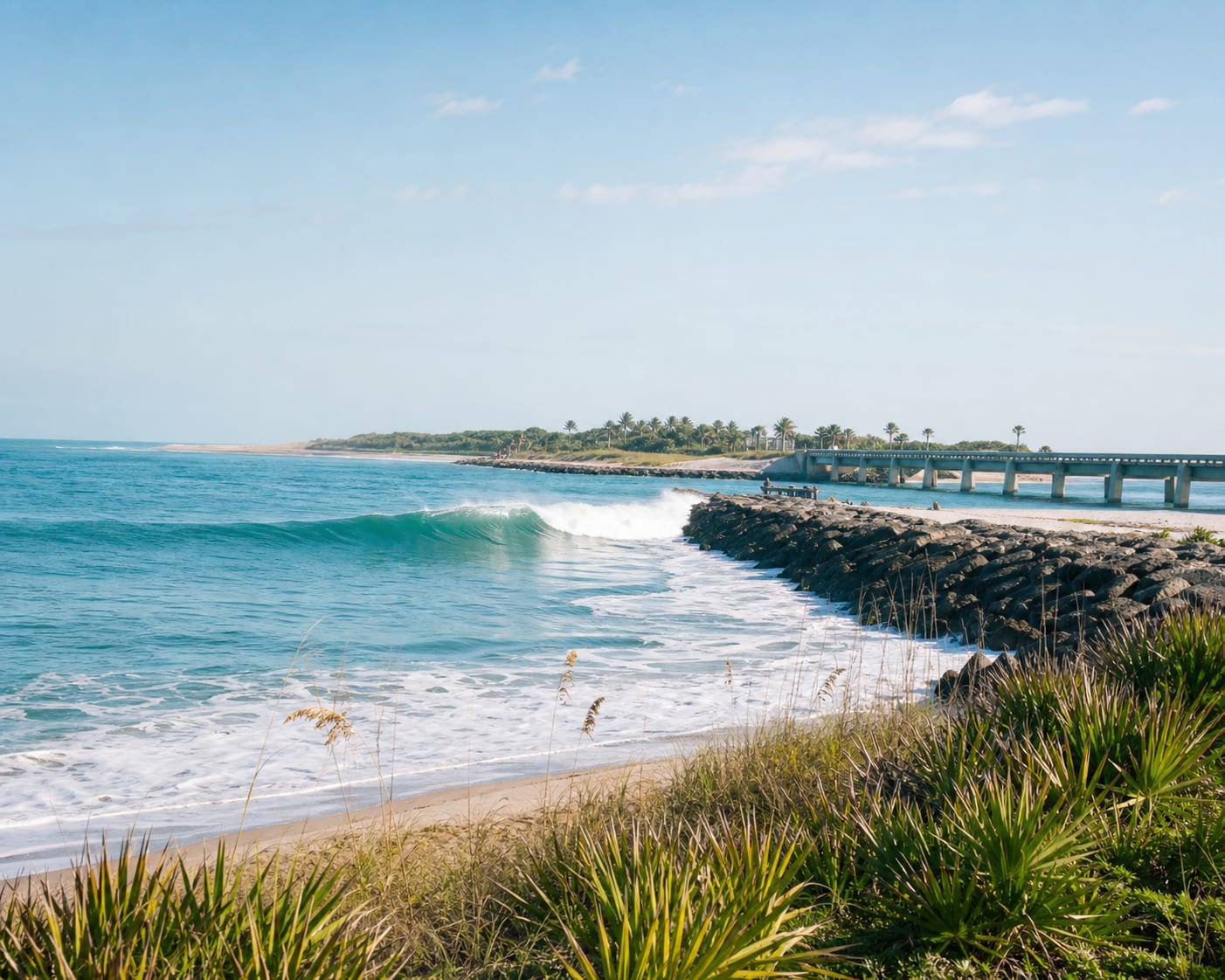
Sebastian Inlet is Florida's premier high-performance wave, a wedging beach break created by the interaction between incoming swells and a man-made rock jetty on the central Atlantic coast. The jetty reflects wave energy back into the primary swell, creating a pronounced wedging effect that amplifies height and steepness far beyond what the rest of the coastline produces. This mechanical advantage has made Sebastian the training ground for a disproportionate number of professional surfers from the East Coast.
The wave needs east to north-east swells to activate, with the best conditions arriving from September through March. Hurricane groundswells in autumn produce the most powerful surf, while winter nor'easters deliver consistent, medium-period energy. The wedge effect means even modest 3-4ft swells produce punchy, hollow peaks. Westerly offshore winds provide optimal grooming, strongest during cold front passages.
The primary peak forms where the reflected energy from the jetty intersects with the incoming swell. This zone is tight and well-defined, sitting approximately 50 metres south of the rock structure. The wedge creates an A-frame peak that offers both a fast left and a shorter, punchier right. Position yourself just south of where the reflected wave creates visible interference patterns in the water surface.
The rock jetty is the primary hazard. Getting swept into the rocks results in serious injury. Strong currents run alongside the jetty and intensify on bigger swells. The wedge produces a powerful, hollow peak that breaks in shallow water, resulting in heavy wipeouts on the sand. The concentrated peak and aggressive crowd create collision risks. Bull sharks frequent the inlet.
Sebastian Inlet State Park charges an entrance fee per vehicle. The car park sits directly above the break with views of the line-up. A short walk down the beach accesses the south side of the jetty where the main peak breaks. Facilities include toilets, showers, and a bait shop. The park opens at 8am, limiting dawn patrol access.
Sebastian is extremely competitive. The concentrated take-off zone and the reputation of the wave draw Florida's best surfers. The local crew is skilled, assertive, and knows exactly where to position for the wedging peaks. Dropping in or snaking will be noticed and addressed vocally. Weekdays and early morning sessions offer marginally better odds of catching waves.
The wedge effect is strongest when swells approach from the north-east at 45 degrees to the jetty. Pure east swells produce less amplification. Watch how the sets interact with the rocks before paddling out; the reflected wave creates a secondary peak that catches inexperienced surfers off guard. A shorter, wider board with extra rocker handles the steep, hollow drops better than a standard Florida longboard. Time your sessions around the tide: mid incoming provides the best shape with the most water over the sand.
No recent check-ins. Be the first to report.
Record your session, conditions and gear.
Based on historical weekly averages
Combining historical conditions with school holiday crowd pressure to find the sweet spot.
How busy each week is based on school holiday overlap from feeder markets.
The timing score combines two signals: historical conditions quality (how good the skiing or surfing typically is in a given week, based on 5 years of weather data) and crowd pressure (how many of this destination's feeder markets have school holidays that week).
Crowd pressure is weighted by each feeder country's share of visitors. If 40% of a resort's visitors come from France and France is on holiday, that contributes 0.40 to the crowd pressure score. Crowds can reduce the timing score by up to 35%, ensuring conditions still matter most.
Scores: 5 = great conditions with low crowds (the sweet spot). 4 = great conditions with moderate crowds, or good conditions with low crowds. 3 = average. 2 = below average conditions or very crowded. 1 = poor conditions or peak holiday chaos.
Last 29 days of logged conditions.
Sign up to save favourite spots and get surf alerts
Create free accountCreate a free profile and let employers in Sebastian Inlet find you.
Create Profile →Current conditions refresh every 3 hours when the cron runs. Hourly data updates every 30 minutes. The 7-day forecast, luck factor, and packing notes are all pre-computed at the same time.
We compare the 7-day forecast to the last 5 years of marine data for the same week at Sebastian Inlet. The delta tells you whether conditions are shaping up better, worse, or about the same as a typical mid-June.
We score each day of the 7-day forecast using the same algorithm as the leaderboard, and highlight the highest scorer.
Open-Meteo's Marine API (swell height, period, water temperature) and Weather API (wind and conditions).
Honestly, no. Every break has tide windows, swell directions and reef contours that a global model cannot see. Treat the score as a starting point, then check a local cam.
The best week for surf at Sebastian Inlet is the week of 30 November (score 3/5) with low crowds.
Next to nothing in the water. Check back tomorrow. Short-period chop. The waves lack any real push. Strong onshore blowing everything out. Give it a miss. Best conditions early morning before the sea breeze arrives. Not enough swell to get this spot firing properly.
Heads up: thunderstorms forecast.
Indicators derived from forecast data, not official warnings. Always check local lifeguard or official advice.
Good water clarity: ~12m visibility
Daily scores over the last 12 months at Sebastian Inlet