Iceland · North Atlantic
Not enough data yet. Log a session to help build the accuracy score.
This guide was generated from conditions data. Know this spot? Submit your own tips below.
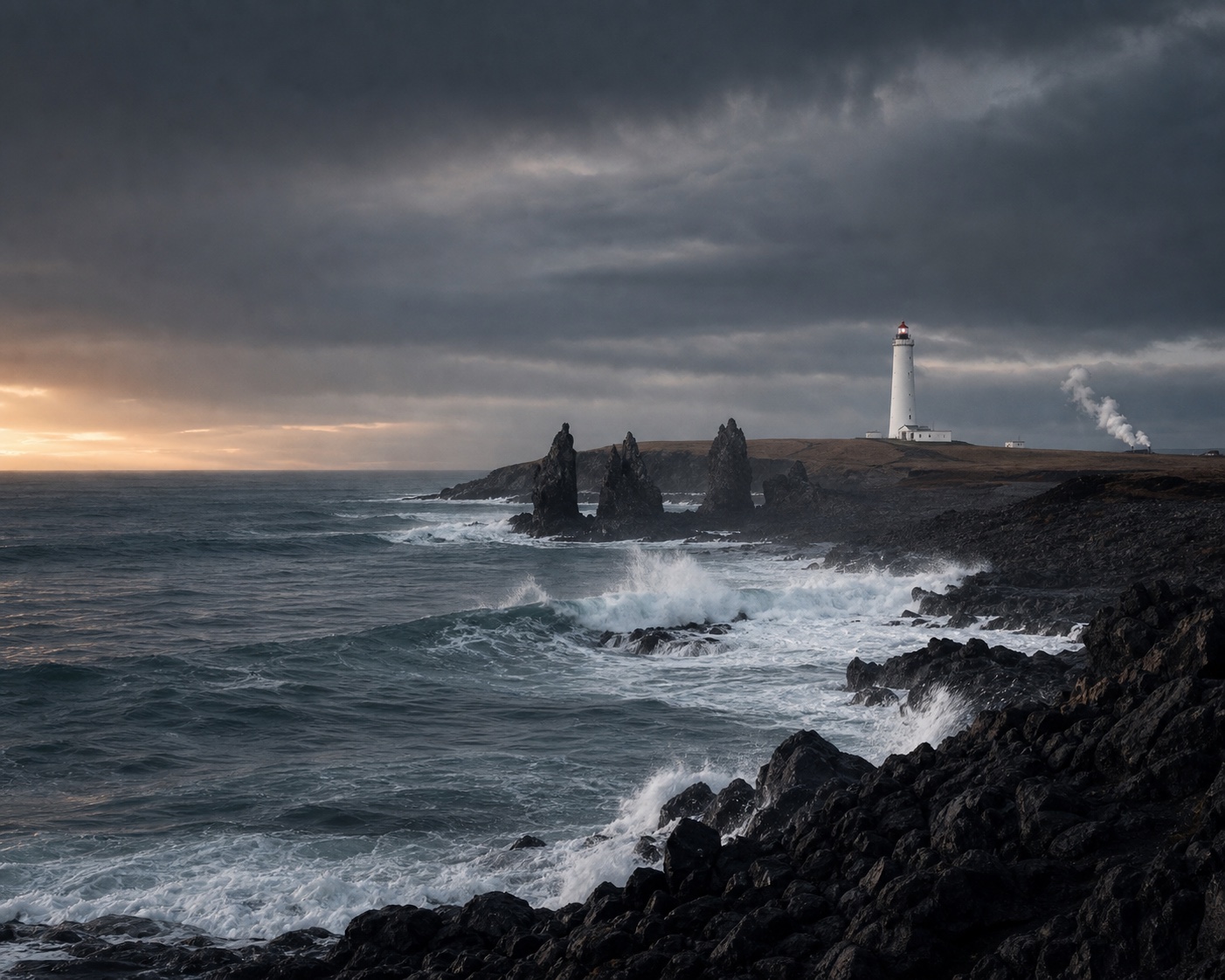
The Reykjanes Peninsula in southwest Iceland offers some of the most extreme cold-water surfing on the planet. Volcanic reef breaks line the coastline, producing powerful waves in freezing sub-Arctic conditions. The landscape is otherworldly: black lava fields, steaming vents, and the North Atlantic. Several reef setups exist along the coast near Grindavik and Sandvik. This is frontier surfing in the truest sense.
Needs south-westerly groundswell from the Atlantic. A northerly wind is offshore for the south-facing reefs. Best at mid tide. The 4-8ft range produces quality waves. October through March offers the most consistent swell. Summer has near-24-hour daylight but less swell.
Multiple reef breaks along the peninsula. Each breaks over a defined volcanic shelf. Local knowledge is essential for identifying the best spot on any given day. The take-off zones are specific to each reef.
Extreme cold (water temperatures 3-8 degrees). Volcanic reef is sharp and unforgiving. Isolation with limited emergency services. Short daylight hours in winter. Powerful waves breaking over shallow rock. Thick wetsuits (6mm+ with full accessories) are essential. Never surf alone.
Park on the road and walk across lava fields to the coast. No formal facilities. The terrain is rough and the walk can be challenging. Grindavik is the nearest town.
A handful of dedicated Icelandic surfers. You might find 3-5 people in the water on a good day. The cold, remoteness, and challenging conditions limit numbers dramatically. Visiting surfers are very rare.
Iceland surfing requires serious preparation. Bring your thickest wetsuit, boots, gloves, and hood. The Blue Lagoon is nearby for post-surf warming (though the geothermal water is harsh on neoprene). Check conditions with the local surf shop in Reykjavik. The Northern Lights are a bonus in winter. Respect the raw power of this coastline.
No recent check-ins. Be the first to report.
Record your session, conditions and gear.
Based on historical weekly averages
Combining historical conditions with school holiday crowd pressure to find the sweet spot.
How busy each week is based on school holiday overlap from feeder markets.
The timing score combines two signals: historical conditions quality (how good the skiing or surfing typically is in a given week, based on 5 years of weather data) and crowd pressure (how many of this destination's feeder markets have school holidays that week).
Crowd pressure is weighted by each feeder country's share of visitors. If 40% of a resort's visitors come from France and France is on holiday, that contributes 0.40 to the crowd pressure score. Crowds can reduce the timing score by up to 35%, ensuring conditions still matter most.
Scores: 5 = great conditions with low crowds (the sweet spot). 4 = great conditions with moderate crowds, or good conditions with low crowds. 3 = average. 2 = below average conditions or very crowded. 1 = poor conditions or peak holiday chaos.
Last 29 days of logged conditions.
Sign up to save favourite spots and get surf alerts
Create free accountCreate a free profile and let employers in Reykjanes Peninsula find you.
Create Profile →Current conditions refresh every 3 hours when the cron runs. Hourly data updates every 30 minutes. The 7-day forecast, luck factor, and packing notes are all pre-computed at the same time.
We compare the 7-day forecast to the last 5 years of marine data for the same week at Reykjanes Peninsula. The delta tells you whether conditions are shaping up better, worse, or about the same as a typical mid-June.
We score each day of the 7-day forecast using the same algorithm as the leaderboard, and highlight the highest scorer.
Open-Meteo's Marine API (swell height, period, water temperature) and Weather API (wind and conditions).
Honestly, no. Every break has tide windows, swell directions and reef contours that a global model cannot see. Treat the score as a starting point, then check a local cam.
The best week for surf at Reykjanes Peninsula is the week of 30 November (score 3/5) with low crowds.
Slim pickings. Only worth it if you are gagging for a wave. Breezy. Some surface chop to deal with. Best conditions early morning before the sea breeze arrives.
Heads up: rip risk elevated, and rocks exposed at low tide.
Indicators derived from forecast data, not official warnings. Always check local lifeguard or official advice.
Moderate water clarity: ~4m visibility
Daily scores over the last 12 months at Reykjanes Peninsula