Not enough data yet. Log a session to help build the accuracy score.
This guide was generated from conditions data. Know this spot? Submit your own tips below.
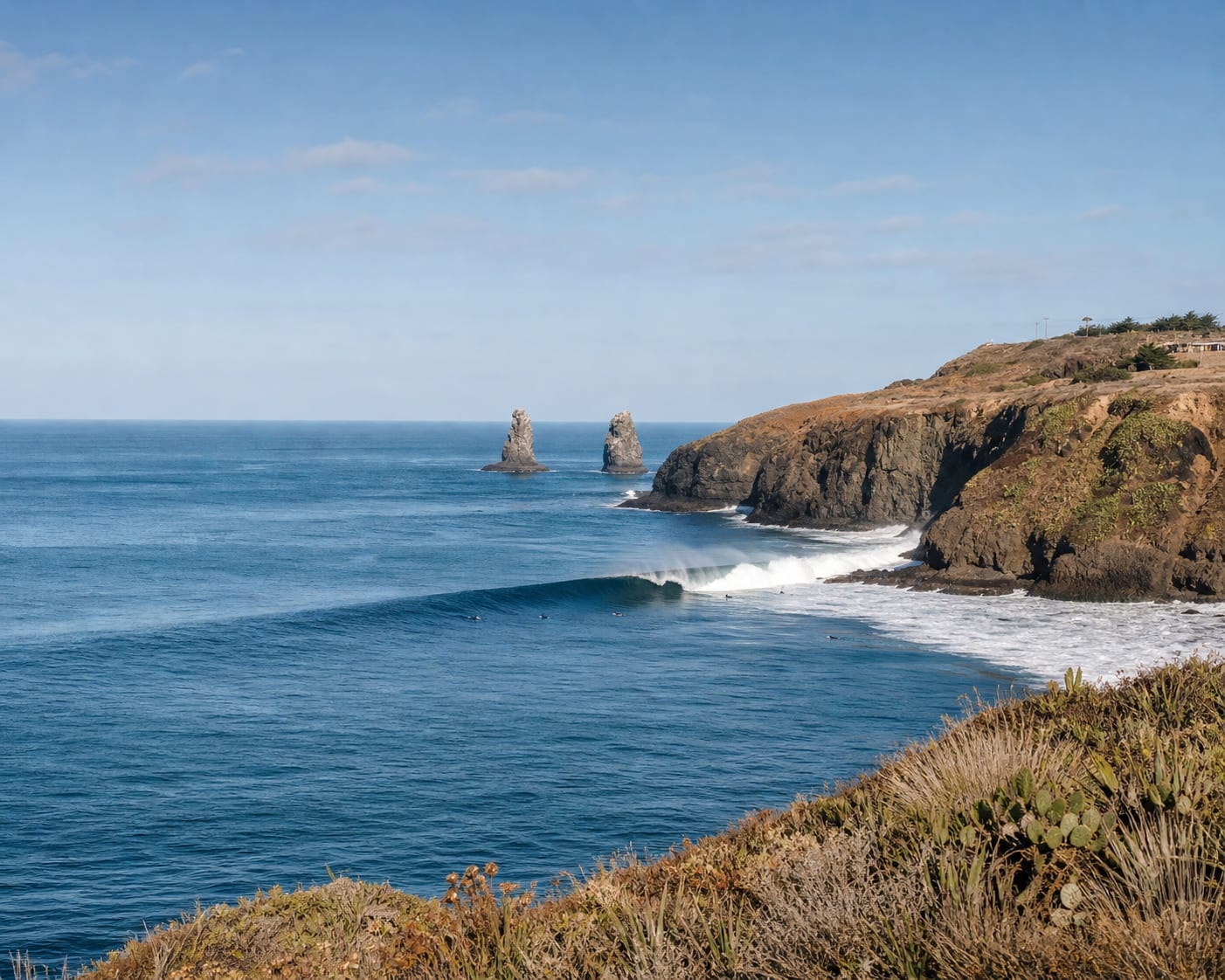
Punta de Lobos at Pichilemu is Chile's most famous wave, a heavy left-hand point break beneath towering coastal cliffs. The wave breaks over deep basalt rock, producing enormous, thick walls that connect through multiple sections on bigger swells. When the Southern Ocean sends its winter storms, Punta de Lobos transforms into a big-wave arena that has attracted some of the world's best heavy-water surfers. The cold, powerful Pacific and the dramatic cliff setting create an intense, isolated atmosphere.
South-westerly winter groundswells from April through September deliver the most powerful conditions. The point needs 6ft-plus swell to connect through the sections, with 10-20ft days creating big-wave conditions. South-easterly offshore winds groom the massive faces. Summer brings smaller, more manageable swells.
The outside section breaks further from the cliff and handles the biggest swells. The inside section wraps closer to the rocks. On connecting days, the ride from outside through to inside covers several hundred metres. Position yourself on the outside peak and commit to the steep, thick-lipped drop.
The basalt rock bottom is hard and uneven. The wave produces immense hydraulic force on bigger days. Strong currents sweep along the cliff face. The water is freezing (12-15C). The cliff entry and exit is treacherous over slippery, kelp-covered rocks. The remote location means medical assistance is distant.
Parking above the cliff lookout at Punta de Lobos. Access to the water is via a steep, rocky path down the cliff face. The rocks are slippery and the entry demands care. No facilities at the break. The town of Pichilemu (10-minute drive) has full services.
Punta de Lobos draws 10-20 experienced surfers on good days. The Chilean big-wave community is skilled and welcoming to those who demonstrate competence. The cold water and heavy conditions naturally limit numbers. International big-wave visitors are increasingly common.
A full 5/4mm wetsuit with hood, boots, and gloves is essential year-round. The water never warms above 15C. A step-up or semi-gun is needed for anything over 6ft. The cliff offers an excellent vantage point; spend time watching the sets and the current patterns before committing to the entry. Chilean wine country is nearby, providing excellent post-surf sustenance.
No recent check-ins. Be the first to report.
Record your session, conditions and gear.
Based on historical weekly averages
Combining historical conditions with school holiday crowd pressure to find the sweet spot.
How busy each week is based on school holiday overlap from feeder markets.
The timing score combines two signals: historical conditions quality (how good the skiing or surfing typically is in a given week, based on 5 years of weather data) and crowd pressure (how many of this destination's feeder markets have school holidays that week).
Crowd pressure is weighted by each feeder country's share of visitors. If 40% of a resort's visitors come from France and France is on holiday, that contributes 0.40 to the crowd pressure score. Crowds can reduce the timing score by up to 35%, ensuring conditions still matter most.
Scores: 5 = great conditions with low crowds (the sweet spot). 4 = great conditions with moderate crowds, or good conditions with low crowds. 3 = average. 2 = below average conditions or very crowded. 1 = poor conditions or peak holiday chaos.
Last 29 days of logged conditions.
Sign up to save favourite spots and get surf alerts
Create free accountCreate a free profile and let employers in Pichilemu find you.
Create Profile →Current conditions refresh every 3 hours when the cron runs. Hourly data updates every 30 minutes. The 7-day forecast, luck factor, and packing notes are all pre-computed at the same time.
We compare the 7-day forecast to the last 5 years of marine data for the same week at Pichilemu. The delta tells you whether conditions are shaping up better, worse, or about the same as a typical mid-June.
We score each day of the 7-day forecast using the same algorithm as the leaderboard, and highlight the highest scorer.
Open-Meteo's Marine API (swell height, period, water temperature) and Weather API (wind and conditions).
Honestly, no. Every break has tide windows, swell directions and reef contours that a global model cannot see. Treat the score as a starting point, then check a local cam.
The best week for surf at Pichilemu is the week of 16 November (score 3/5) with low crowds.
Slim pickings. Only worth it if you are gagging for a wave. Onshore wind making a mess of the surface. Best conditions early morning before the sea breeze arrives.
Heads up: rip risk elevated, and rocks exposed at low tide.
Indicators derived from forecast data, not official warnings. Always check local lifeguard or official advice.
Crystal clear water: ~22m visibility
Daily scores over the last 12 months at Pichilemu