Not enough data yet. Log a session to help build the accuracy score.
This guide was generated from conditions data. Know this spot? Submit your own tips below.
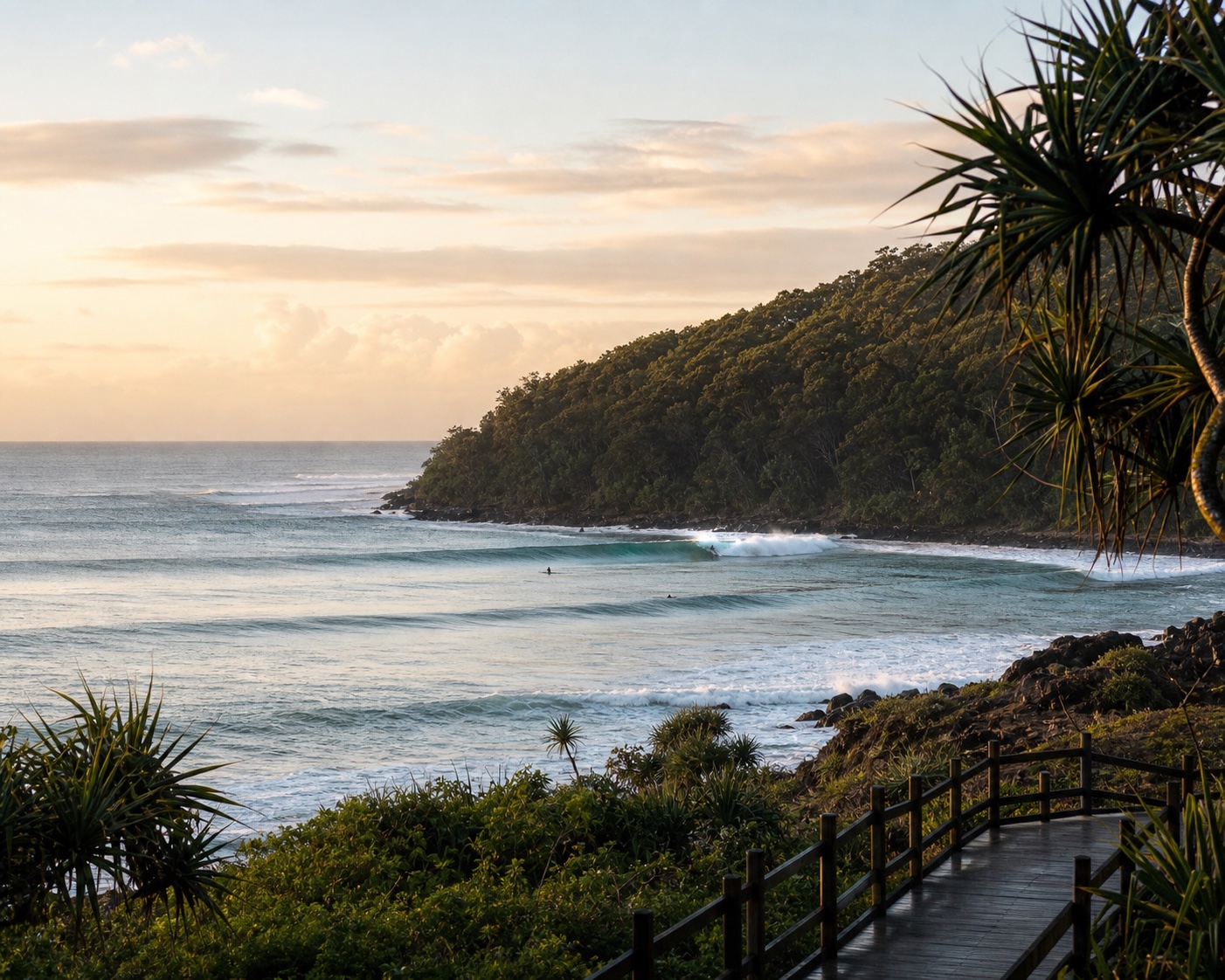
Noosa is one of Australia's most famous longboard waves, a series of gentle right-hand point breaks wrapping around the Noosa National Park headland in Queensland. First Point, the most accessible, produces long, mellow walls perfect for nose-riding and classic longboarding. The warm subtropical water, sunshine, and beautiful headland setting make it one of Australia's most pleasant surf experiences.
Needs a north-east to east cyclone swell wrapping around the headland. A southerly or south-westerly wind is offshore. Best on a high tide (the rocks are exposed otherwise). The 2-5ft range is ideal. Works primarily during cyclone season (December-April) and with north-east wind swells. Less consistent than south-facing spots but magical when it works.
First Point is the most accessible and popular. The wave peels right along the rocks. Second Point and further require a longer walk through the national park but offer more quality and fewer people. Each point has a defined take-off zone.
Rocks and reef throughout. The headland is rocky with urchins. High tide covers most hazards but low tide exposes sharp reef. Bluebottles seasonally. Small sharks occasionally. The crowd at First Point is a hazard itself.
Park in Noosa Heads (limited, arrive early) or take the bus. Walk along the boardwalk to First Point or through the national park for the other points. Full resort town facilities.
First Point is extremely crowded. 50-100 people on a good day. Longboards, SUPs, and beginners create chaos. The further points (Second, Third, Tea Tree) are progressively less crowded but require a longer walk. Dawn patrol at First Point is essential.
Bring a longboard. Noosa is not a shortboard wave (too gentle). Walk to Second Point or beyond for less crowd and better waves. The national park walk is beautiful regardless of surf. Noosa town has excellent restaurants and cafes. Hastings Street is the main strip. Arrive at first light for parking and waves.
No recent check-ins. Be the first to report.
Record your session, conditions and gear.
Based on historical weekly averages
Combining historical conditions with school holiday crowd pressure to find the sweet spot.
How busy each week is based on school holiday overlap from feeder markets.
The timing score combines two signals: historical conditions quality (how good the skiing or surfing typically is in a given week, based on 5 years of weather data) and crowd pressure (how many of this destination's feeder markets have school holidays that week).
Crowd pressure is weighted by each feeder country's share of visitors. If 40% of a resort's visitors come from France and France is on holiday, that contributes 0.40 to the crowd pressure score. Crowds can reduce the timing score by up to 35%, ensuring conditions still matter most.
Scores: 5 = great conditions with low crowds (the sweet spot). 4 = great conditions with moderate crowds, or good conditions with low crowds. 3 = average. 2 = below average conditions or very crowded. 1 = poor conditions or peak holiday chaos.
Last 29 days of logged conditions.
Sign up to save favourite spots and get surf alerts
Create free accountCreate a free profile and let employers in Noosa find you.
Create Profile βCurrent conditions refresh every 3 hours when the cron runs. Hourly data updates every 30 minutes. The 7-day forecast, luck factor, and packing notes are all pre-computed at the same time.
We compare the 7-day forecast to the last 5 years of marine data for the same week at Noosa. The delta tells you whether conditions are shaping up better, worse, or about the same as a typical mid-June.
We score each day of the 7-day forecast using the same algorithm as the leaderboard, and highlight the highest scorer.
Open-Meteo's Marine API (swell height, period, water temperature) and Weather API (wind and conditions).
Honestly, no. Every break has tide windows, swell directions and reef contours that a global model cannot see. Treat the score as a starting point, then check a local cam.
The best week for surf at Noosa is the week of 2 November (score 3/5) with low crowds.
Next to nothing in the water. Check back tomorrow. Short-period chop. The waves lack any real push. Breezy. Some surface chop to deal with. Best conditions early morning before the sea breeze arrives.
Heads up: rip risk elevated, and rocks exposed at low tide.
Indicators derived from forecast data, not official warnings. Always check local lifeguard or official advice.
Moderate water clarity: ~6m visibility
Daily scores over the last 12 months at Noosa