Not enough data yet. Log a session to help build the accuracy score.
This guide was generated from conditions data. Know this spot? Submit your own tips below.
Miyazaki is the surf hub of Kyushu, Japan's southern island, offering consistent east-facing beach breaks with warm water and a developed surf culture. The coastline features multiple breaks structured by river mouths and coastal jetties, producing quality A-frame peaks year-round. The subtropical climate makes it Japan's warmest surf destination, and the city has embraced surf culture with numerous shops, shapers, and a competitive local scene.
Summer typhoon season (June-October) delivers the most powerful groundswells from the south-east. Winter months provide consistent smaller swells from passing low-pressure systems. The wave works on 2-6ft of east to south-east swell. Westerly offshore winds provide clean conditions, most reliable in the early mornings. Typhoon swells can produce overhead waves with serious power.
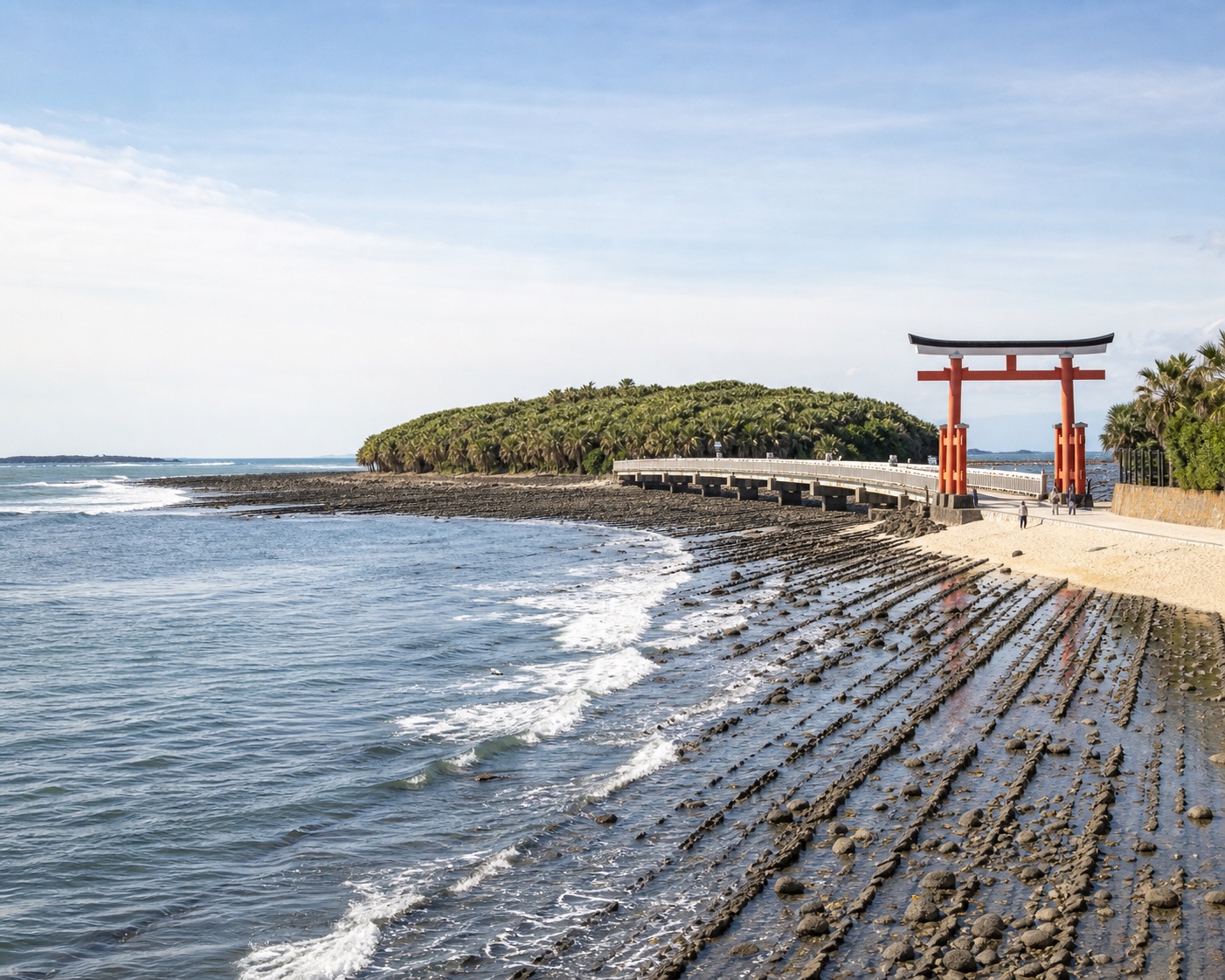
Multiple breaks along the coast offer different characteristics. The breaks near the river mouths (particularly Aoshima and Kisakihama) produce the most structured banks. Jetty areas create reference points and consistent rip channels for paddle-outs. Position where the sand has accumulated deepest against structures or near river deposits. The peaks shift with each typhoon event.
Rip currents develop alongside jetties and intensify on bigger swells. Typhoon events produce powerful, chaotic conditions that can overwhelm intermediate surfers. Jellyfish appear in late summer. The river mouths can carry debris after heavy rainfall. Strong offshore rips during major swell events can pull surfers significantly offshore.
Multiple car parks serve the various breaks along the coast. The beaches are flat and immediately accessible. Surf shops and rental facilities are abundant. Full facilities including showers and changing rooms at the main beaches. Miyazaki city has an airport with domestic connections.
Miyazaki has a large, dedicated surf community. Weekends are busy at the main breaks. Weekday mornings offer the best ratios. The Japanese surf culture is polite and orderly. Multiple breaks along the coast distribute surfers. The standard is high among the local competitive community.
The water here is significantly warmer than mainland Japan due to the Kuroshio Current. A springsuit suffices from May through October; a 3/2mm covers winter. Check multiple breaks along the coast; the best banks shift constantly. The local shapers produce excellent boards tuned to the local conditions. Typhoon swell windows are brief (24-48 hours) so be ready to respond. The local cuisine (Miyazaki chicken nanban) provides excellent post-surf sustenance.
No recent check-ins. Be the first to report.
Record your session, conditions and gear.
Based on historical weekly averages
Combining historical conditions with school holiday crowd pressure to find the sweet spot.
How busy each week is based on school holiday overlap from feeder markets.
The timing score combines two signals: historical conditions quality (how good the skiing or surfing typically is in a given week, based on 5 years of weather data) and crowd pressure (how many of this destination's feeder markets have school holidays that week).
Crowd pressure is weighted by each feeder country's share of visitors. If 40% of a resort's visitors come from France and France is on holiday, that contributes 0.40 to the crowd pressure score. Crowds can reduce the timing score by up to 35%, ensuring conditions still matter most.
Scores: 5 = great conditions with low crowds (the sweet spot). 4 = great conditions with moderate crowds, or good conditions with low crowds. 3 = average. 2 = below average conditions or very crowded. 1 = poor conditions or peak holiday chaos.
Last 29 days of logged conditions.
Sign up to save favourite spots and get surf alerts
Create free accountCreate a free profile and let employers in Miyazaki find you.
Create Profile →Current conditions refresh every 3 hours when the cron runs. Hourly data updates every 30 minutes. The 7-day forecast, luck factor, and packing notes are all pre-computed at the same time.
We compare the 7-day forecast to the last 5 years of marine data for the same week at Miyazaki. The delta tells you whether conditions are shaping up better, worse, or about the same as a typical mid-June.
We score each day of the 7-day forecast using the same algorithm as the leaderboard, and highlight the highest scorer.
Open-Meteo's Marine API (swell height, period, water temperature) and Weather API (wind and conditions).
Honestly, no. Every break has tide windows, swell directions and reef contours that a global model cannot see. Treat the score as a starting point, then check a local cam.
The best week for surf at Miyazaki is the week of 2 November (score 3/5) with low crowds.
Next to nothing in the water. Check back tomorrow. Light onshore crumble taking the edge off. Best conditions early morning before the sea breeze arrives. Not enough swell to get this spot firing properly.
Heads up: jellyfish: peak season.
Indicators derived from forecast data, not official warnings. Always check local lifeguard or official advice.
Good water clarity: ~14m visibility
Daily scores over the last 12 months at Miyazaki