South Africa Β· Southern Africa
Not enough data yet. Log a session to help build the accuracy score.
This guide was generated from conditions data. Know this spot? Submit your own tips below.
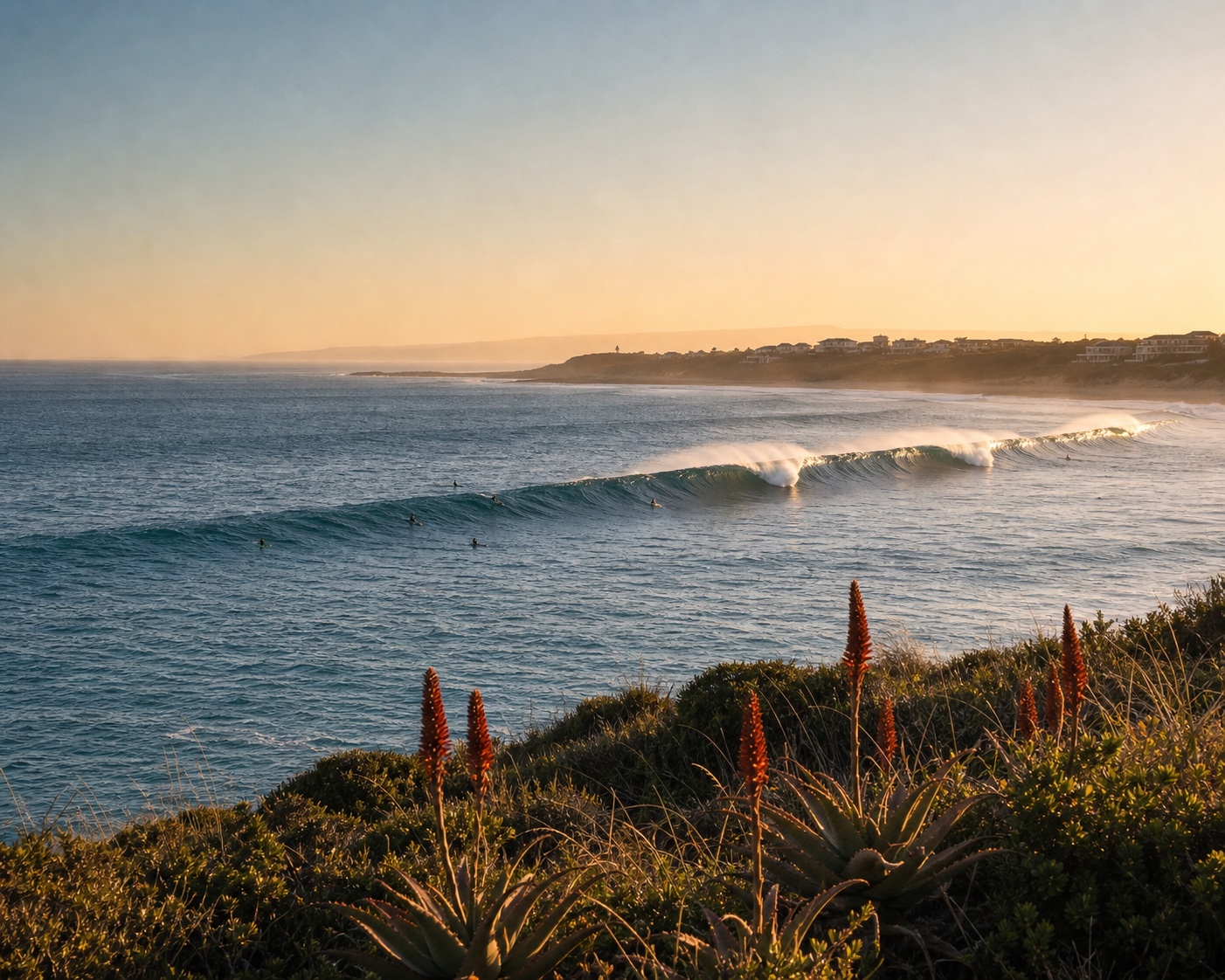
Jeffreys Bay, specifically the Supertubes section, is one of the fastest, most mechanical right-hand point breaks on the planet. The wave breaks over a long basalt and limestone rock shelf, producing high-speed barrels that connect through multiple sections when the swell is right. The speed at which the wave travels down the point is extraordinary, demanding elite fitness and technical ability. J-Bay is a regular fixture on the professional tour and a bucket-list wave for every serious surfer.
South-westerly groundswells from the Roaring Forties arrive from April through September (South African winter). The wave needs at least 4-6ft of swell to properly connect through the sections. The ideal setup is 6-10ft of south-west swell with a westerly or north-westerly offshore wind. The wave has multiple sections (Boneyards, Supertubes, Impossibles, Tubes, The Point, Albatross) that activate at different sizes.
Supertubes is the primary section, with a defined take-off zone where the swell hits the shallowest portion of the reef shelf. The right peels at high speed for 200-300 metres, with barrel sections forming throughout. On connecting days, you can ride from Boneyards through Supertubes to Impossibles (600+ metres). Position at the top of the Supertubes section and commit to the speed immediately.
The rock shelf is sharp and exposed at lower tides. The wave's speed means getting caught behind a section drives you across uneven reef. Strong currents sweep down the point on bigger days. Great white sharks are present in the area and encounters have occurred. The water is cold (14-18C). The wave's speed leaves zero margin for positioning errors.
Parking at the Supertubes car park directly above the break. A short walk down the dunes reaches the beach. The paddle-out is alongside the rocks. Facilities include toilets and a small shop. The town of Jeffreys Bay has full services and accommodation.
J-Bay is South Africa's most popular surf destination and Supertubes attracts experienced surfers from across the country and the world. Expect 20-40 surfers on good days. The competitive standard is very high. The wave naturally thins the crowd as only confident surfers can handle the speed and commitment required. Dawn patrol offers the best window.
The wave is faster than you expect. Your first few rides will end with you getting outrun by the section. Bring a board with speed: slightly longer and narrower than standard, with extra rocker for the late drops. Position yourself further up the point than you think necessary; the current will sweep you down rapidly. A 4/3mm wetsuit with boots covers winter conditions. Watch from the car park for a full set cycle to understand the speed and the connecting sections before paddling out.
No recent check-ins. Be the first to report.
Record your session, conditions and gear.
Based on historical weekly averages
Combining historical conditions with school holiday crowd pressure to find the sweet spot.
How busy each week is based on school holiday overlap from feeder markets.
The timing score combines two signals: historical conditions quality (how good the skiing or surfing typically is in a given week, based on 5 years of weather data) and crowd pressure (how many of this destination's feeder markets have school holidays that week).
Crowd pressure is weighted by each feeder country's share of visitors. If 40% of a resort's visitors come from France and France is on holiday, that contributes 0.40 to the crowd pressure score. Crowds can reduce the timing score by up to 35%, ensuring conditions still matter most.
Scores: 5 = great conditions with low crowds (the sweet spot). 4 = great conditions with moderate crowds, or good conditions with low crowds. 3 = average. 2 = below average conditions or very crowded. 1 = poor conditions or peak holiday chaos.
Last 29 days of logged conditions.
Sign up to save favourite spots and get surf alerts
Create free accountCreate a free profile and let employers in Jeffreys Bay find you.
Create Profile βCurrent conditions refresh every 3 hours when the cron runs. Hourly data updates every 30 minutes. The 7-day forecast, luck factor, and packing notes are all pre-computed at the same time.
We compare the 7-day forecast to the last 5 years of marine data for the same week at Jeffreys Bay. The delta tells you whether conditions are shaping up better, worse, or about the same as a typical mid-June.
We score each day of the 7-day forecast using the same algorithm as the leaderboard, and highlight the highest scorer.
Open-Meteo's Marine API (swell height, period, water temperature) and Weather API (wind and conditions).
Honestly, no. Every break has tide windows, swell directions and reef contours that a global model cannot see. Treat the score as a starting point, then check a local cam.
The best week for surf at Jeffreys Bay is the week of 30 November (score 3/5) with low crowds.
Slim pickings. Only worth it if you are gagging for a wave. Strong offshore, clean but tough to paddle into. Best conditions early morning before the sea breeze arrives.
Heads up: jellyfish: peak season, and rocks exposed at low tide.
Indicators derived from forecast data, not official warnings. Always check local lifeguard or official advice.
Good water clarity: ~15m visibility
Daily scores over the last 12 months at Jeffreys Bay
See timing scores, school holiday busyness, and lift pass pricing to find the best time to book.
View Best Time to Go β