Not enough data yet. Log a session to help build the accuracy score.
This guide was generated from conditions data. Know this spot? Submit your own tips below.
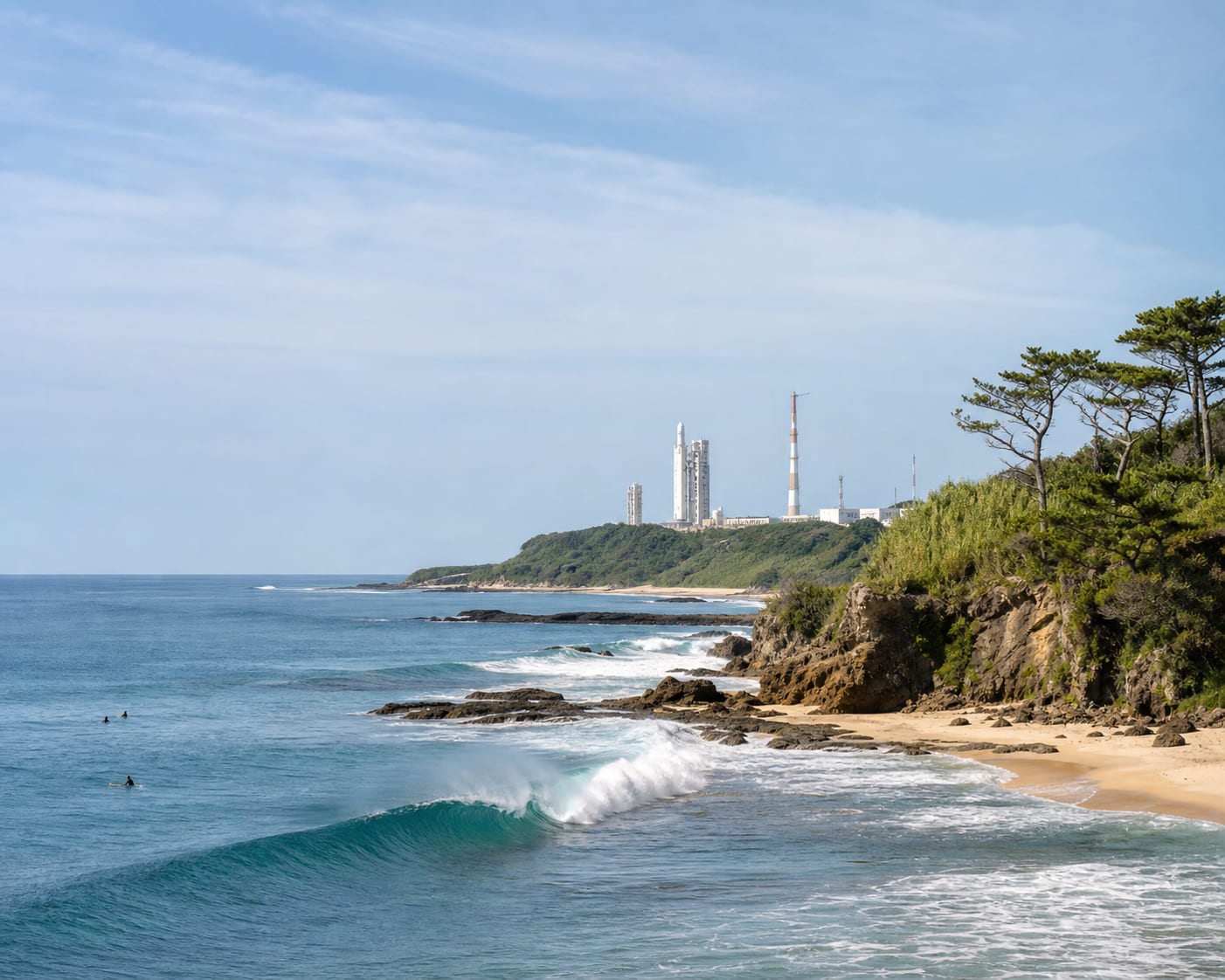
Tanegashima is a subtropical island south of Kyushu, Japan, offering a variety of beach and reef breaks across its east-facing coastline. The mix of white sand beaches and coral/rock reef sections produces waves ranging from gentle learner peaks to fast, hollow reef breaks. The island is best known as Japan's space launch centre, but for surfers it represents a warm-water alternative to the cold mainland coast with more consistent swell exposure to the Pacific.
Summer typhoon season (June-October) delivers the most powerful groundswells. Winter trade winds provide consistent smaller swells. The east coast picks up 2-8ft of east to south-east swell. North-westerly offshore winds provide clean conditions. The island's exposure means it catches more consistent swell than the mainland.
The beach breaks offer multiple peaks along the sandy sections. The reef breaks (such as those around Sumiyoshi) require more precise positioning over the coral platforms. Choose spots based on your level: sand for beginners, reef for intermediates and above. The peaks form where the sand and reef transitions create depth changes.
The reef sections are sharp coral and volcanic rock. Falls carry consequence at lower tides. Typhoon swells can be powerful and chaotic. Sea urchins inhabit the reef. The island's remote location means limited specialised medical care. Strong currents develop during larger swells.
Car or motorbike rental is essential on the island. Beaches are accessible from coastal roads. Basic facilities at the main beaches. Accommodation ranges from minshuku (Japanese inns) to surf lodges. The island is reached by ferry from Kagoshima (3 hours) or a short flight.
Tanegashima has a small local surf community supplemented by visitors from the mainland during typhoon season. Most days see 5-15 surfers spread across multiple breaks. The atmosphere is relaxed and welcoming. The island never feels crowded.
The subtropical climate means warm water year-round (22-28C). A springsuit covers winter; board shorts suffice in summer. The island's multiple breaks mean you can always find something working for your level. Typhoon swell windows are the highlight: monitor forecasts and time your visit accordingly. The space centre launches are spectacular if your visit coincides with one.
No recent check-ins. Be the first to report.
Record your session, conditions and gear.
Based on historical weekly averages
Combining historical conditions with school holiday crowd pressure to find the sweet spot.
How busy each week is based on school holiday overlap from feeder markets.
The timing score combines two signals: historical conditions quality (how good the skiing or surfing typically is in a given week, based on 5 years of weather data) and crowd pressure (how many of this destination's feeder markets have school holidays that week).
Crowd pressure is weighted by each feeder country's share of visitors. If 40% of a resort's visitors come from France and France is on holiday, that contributes 0.40 to the crowd pressure score. Crowds can reduce the timing score by up to 35%, ensuring conditions still matter most.
Scores: 5 = great conditions with low crowds (the sweet spot). 4 = great conditions with moderate crowds, or good conditions with low crowds. 3 = average. 2 = below average conditions or very crowded. 1 = poor conditions or peak holiday chaos.
Last 29 days of logged conditions.
Sign up to save favourite spots and get surf alerts
Create free accountCreate a free profile and let employers in Tanegashima find you.
Create Profile →Current conditions refresh every 3 hours when the cron runs. Hourly data updates every 30 minutes. The 7-day forecast, luck factor, and packing notes are all pre-computed at the same time.
We compare the 7-day forecast to the last 5 years of marine data for the same week at Tanegashima. The delta tells you whether conditions are shaping up better, worse, or about the same as a typical mid-June.
We score each day of the 7-day forecast using the same algorithm as the leaderboard, and highlight the highest scorer.
Open-Meteo's Marine API (swell height, period, water temperature) and Weather API (wind and conditions).
Honestly, no. Every break has tide windows, swell directions and reef contours that a global model cannot see. Treat the score as a starting point, then check a local cam.
The best week for surf at Tanegashima is the week of 2 November (score 3/5) with low crowds.
Next to nothing in the water. Check back tomorrow. Strong offshore, clean but tough to paddle into. Best conditions early morning before the sea breeze arrives. Not enough swell to get this spot firing properly.
Heads up: jellyfish: peak season.
Indicators derived from forecast data, not official warnings. Always check local lifeguard or official advice.
Crystal clear water: ~21m visibility
Daily scores over the last 12 months at Tanegashima