Maldives · Indian Ocean
Not enough data yet. Log a session to help build the accuracy score.
This guide was generated from conditions data. Know this spot? Submit your own tips below.
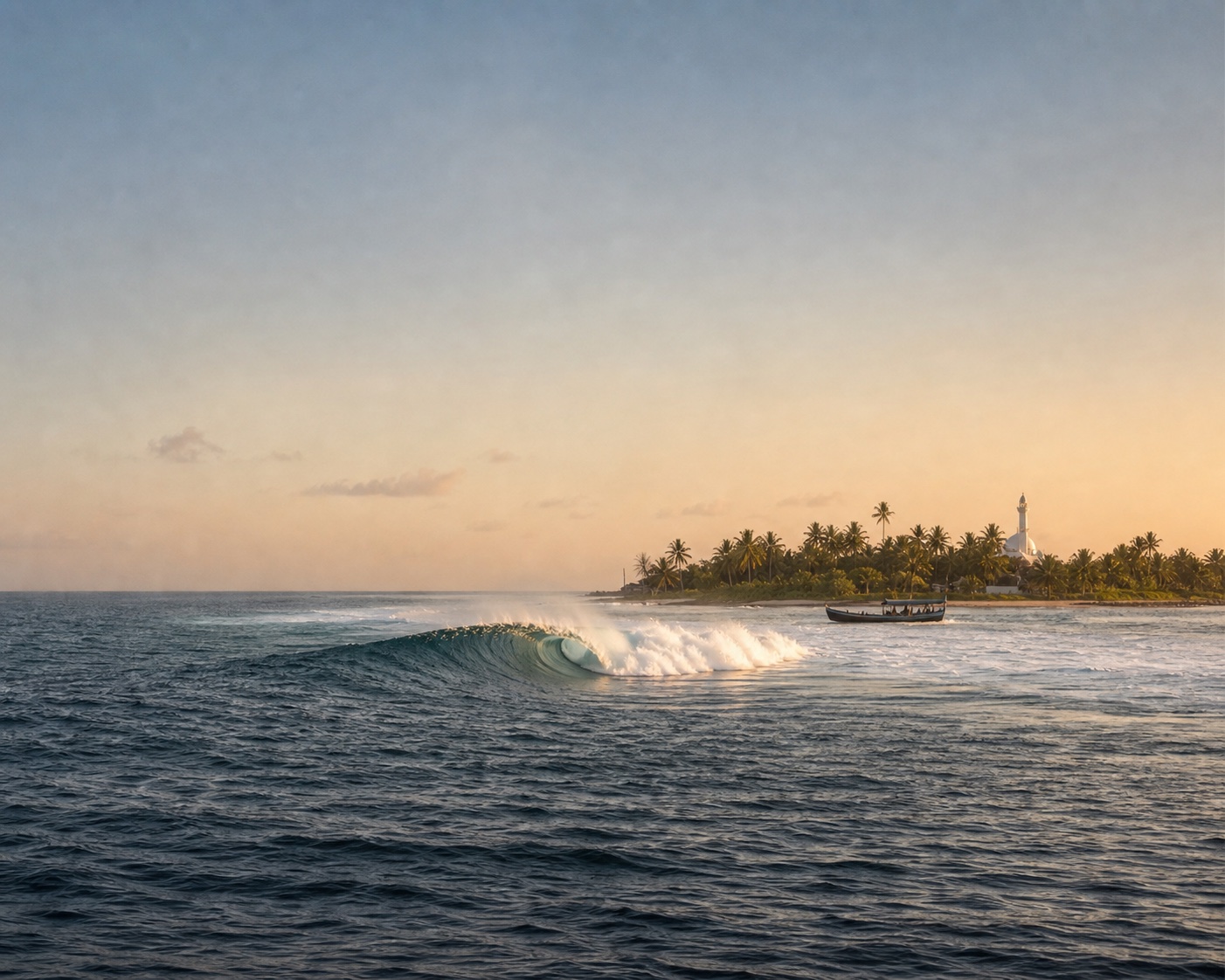
The North Male Atoll hosts the most accessible concentration of quality reef breaks in the Maldives, including the famous Cokes (Thulusdhoo) and Chickens. These waves break over shallow coral shelves rising from deep Indian Ocean water, producing mechanical, fast-peeling walls in crystal-clear tropical surroundings. Unlike the remote outer atolls that require expensive charter boats, North Male breaks sit within day-trip distance of the capital, making them the entry point for most surfers visiting the Maldives.
The prime season runs from March through October when long-period south-easterly groundswells generated in the Roaring Forties push into the atoll. April through June typically offers the largest, most consistent swells before the south-west monsoon brings variable winds from July onwards. The waves need at least 3-4ft of swell to activate properly. North-westerly winds during the dry season provide ideal offshore conditions for the east-facing breaks.
Cokes (the right at Thulusdhoo) has a well-defined take-off zone on the outside reef ledge. The peak is concentrated and drops immediately into the barrel section. Chickens (the left at Villingilimathi Huraa) offers a more workable wall with a wider take-off zone. At both spots, the channel adjacent to the reef provides a safe entry point and a clear paddle-out route. Sit on the reef edge where the deep water transitions to shallow, using the colour change in the water as your marker.
Live coral reef sits centimetres below the surface on the inside sections. Falls result in lacerations ranging from minor scrapes to severe cuts requiring stitches. Reef boots are strongly recommended. Currents can sweep across the reef pass, pulling surfers away from the take-off zone. The channel between spots can have strong tidal flow. Sea urchins inhabit the shallower portions of the reef.
Access to the breaks is by boat. Speedboat transfers from Male airport to Thulusdhoo take around 30 minutes. Several guesthouses on the island provide surf packages including boat transfers to various breaks. Charter boats also service the breaks for day-trippers from Male. There is no swimming directly off the island to the break; boat access is essential.
The North Male breaks are the most crowded in the Maldives, receiving traffic from both island guesthouses and passing charter boats. Cokes can hold 15-25 surfers on prime days. Chickens is generally quieter. The atmosphere is friendly but the concentrated take-off zones mean you need to be confident and assertive. The crowd thins dramatically on smaller days when charter boats move to more exposed atolls.
Tide is everything in the Maldives. Most breaks need at least a mid-tide to provide adequate water depth over the reef. Low tide sessions are dangerous and the waves close out. Check the tide chart and time your boat transfers accordingly. Bring reef-safe sunscreen, a rash vest for UV protection, and antiseptic cream for inevitable coral cuts. The water is bathtub warm year-round at 28-30C, so no wetsuit is needed. A standard shortboard works well, though a step-up provides more paddle power for the deeper take-offs.
No recent check-ins. Be the first to report.
Record your session, conditions and gear.
Based on historical weekly averages
Combining historical conditions with school holiday crowd pressure to find the sweet spot.
How busy each week is based on school holiday overlap from feeder markets.
The timing score combines two signals: historical conditions quality (how good the skiing or surfing typically is in a given week, based on 5 years of weather data) and crowd pressure (how many of this destination's feeder markets have school holidays that week).
Crowd pressure is weighted by each feeder country's share of visitors. If 40% of a resort's visitors come from France and France is on holiday, that contributes 0.40 to the crowd pressure score. Crowds can reduce the timing score by up to 35%, ensuring conditions still matter most.
Scores: 5 = great conditions with low crowds (the sweet spot). 4 = great conditions with moderate crowds, or good conditions with low crowds. 3 = average. 2 = below average conditions or very crowded. 1 = poor conditions or peak holiday chaos.
Last 29 days of logged conditions.
Sign up to save favourite spots and get surf alerts
Create free accountCreate a free profile and let employers in North Malé Atoll find you.
Create Profile →Current conditions refresh every 3 hours when the cron runs. Hourly data updates every 30 minutes. The 7-day forecast, luck factor, and packing notes are all pre-computed at the same time.
We compare the 7-day forecast to the last 5 years of marine data for the same week at North Malé Atoll. The delta tells you whether conditions are shaping up better, worse, or about the same as a typical mid-June.
We score each day of the 7-day forecast using the same algorithm as the leaderboard, and highlight the highest scorer.
Open-Meteo's Marine API (swell height, period, water temperature) and Weather API (wind and conditions).
Honestly, no. Every break has tide windows, swell directions and reef contours that a global model cannot see. Treat the score as a starting point, then check a local cam.
The best week for surf at North Malé Atoll is the week of 30 November (score 3/5) with low crowds.
Next to nothing in the water. Check back tomorrow. Short-period chop. The waves lack any real push. Strong offshore, clean but tough to paddle into. Not enough swell to get this spot firing properly.
Heads up: thunderstorms forecast, and jellyfish: peak season.
Indicators derived from forecast data, not official warnings. Always check local lifeguard or official advice.
Good water clarity: ~13m visibility
Daily scores over the last 12 months at North Malé Atoll