Japan Β· Japan
Not enough data yet. Log a session to help build the accuracy score.
This guide was generated from conditions data. Know this spot? Submit your own tips below.
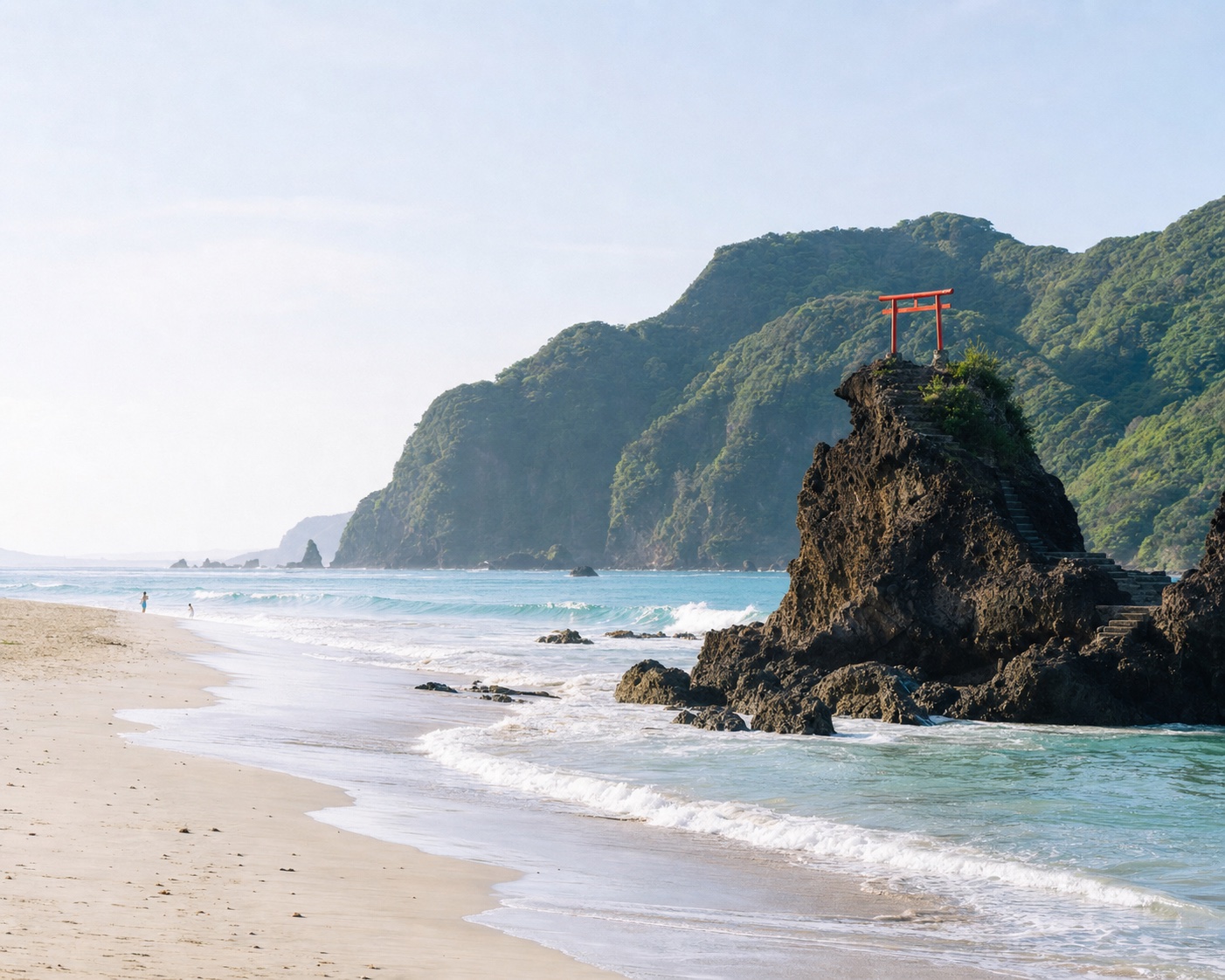
The Izu Peninsula offers a collection of picturesque beach breaks south-west of Tokyo, with Tatadohama and Shirahama being the most popular. Nestled in sheltered coves between volcanic headlands, these beaches produce gentle waves on fine white sand, creating ideal conditions for learners and weekend warriors escaping the city. The peninsula combines surf with hot spring onsen culture, coastal hiking, and fresh seafood, making it a complete coastal experience.
Southerly wind swells arrive year-round, with autumn typhoon season (August-October) producing the most significant groundswells. Winter months (November-March) deliver consistent small to medium swells from passing low-pressure systems. The coves face south, capturing moderate energy while filtering the heaviest waves. A northerly offshore wind provides clean conditions, most reliable in the early mornings. The sheltered geography means the waves are smaller than on the exposed east-facing coast.
Tatadohama has a wide, gently sloping beach with multiple peaks across the bay. The centre of the beach typically offers the most consistent sandbars. Shirahama has a more defined reef section at the southern end that produces better shape on bigger swells. Beginners should stay in the whitewater close to shore. Intermediate surfers can sit on the outer bars where the green faces offer longer rides.
Minimal hazards make this ideal for learning. The sandy bottom is uniformly gentle. Mild rip currents can form between sandbars on bigger swells. The water is colder than expected in winter (14-18C). Rocky headlands border the coves and should be given clearance. During typhoon swells, conditions can escalate rapidly beyond beginner level.
Paid car parks serve each beach, filling early on summer weekends. The beaches are flat and fully accessible. Surf rental shops are available near both beaches. Public facilities including showers, toilets, and changing rooms exist. The peninsula is accessible by train from Tokyo (2-3 hours) with a bus connection to the beaches.
Summer weekends bring large crowds from Tokyo. The beaches fill with swimmers, surfers, and families. Weekday mornings are significantly quieter. The autumn shoulder season offers the best combination of good surf and thin crowds. Japanese surf culture is polite and orderly even in busy conditions.
Combine a surf trip with an onsen visit. The volcanic peninsula has dozens of hot spring baths that provide perfect post-surf recovery. A wetsuit is needed year-round: 3/2mm in summer, 5/4mm with boots and hood in winter. The best waves often arrive with approaching typhoons, creating a brief window of clean offshore conditions before the wind shifts. Book accommodation early for summer weekends; the peninsula fills completely.
No recent check-ins. Be the first to report.
Record your session, conditions and gear.
Based on historical weekly averages
Combining historical conditions with school holiday crowd pressure to find the sweet spot.
How busy each week is based on school holiday overlap from feeder markets.
The timing score combines two signals: historical conditions quality (how good the skiing or surfing typically is in a given week, based on 5 years of weather data) and crowd pressure (how many of this destination's feeder markets have school holidays that week).
Crowd pressure is weighted by each feeder country's share of visitors. If 40% of a resort's visitors come from France and France is on holiday, that contributes 0.40 to the crowd pressure score. Crowds can reduce the timing score by up to 35%, ensuring conditions still matter most.
Scores: 5 = great conditions with low crowds (the sweet spot). 4 = great conditions with moderate crowds, or good conditions with low crowds. 3 = average. 2 = below average conditions or very crowded. 1 = poor conditions or peak holiday chaos.
Last 29 days of logged conditions.
Sign up to save favourite spots and get surf alerts
Create free accountCreate a free profile and let employers in Izu Peninsula find you.
Create Profile βCurrent conditions refresh every 3 hours when the cron runs. Hourly data updates every 30 minutes. The 7-day forecast, luck factor, and packing notes are all pre-computed at the same time.
We compare the 7-day forecast to the last 5 years of marine data for the same week at Izu Peninsula. The delta tells you whether conditions are shaping up better, worse, or about the same as a typical mid-June.
We score each day of the 7-day forecast using the same algorithm as the leaderboard, and highlight the highest scorer.
Open-Meteo's Marine API (swell height, period, water temperature) and Weather API (wind and conditions).
Honestly, no. Every break has tide windows, swell directions and reef contours that a global model cannot see. Treat the score as a starting point, then check a local cam.
The best week for surf at Izu Peninsula is the week of 2 November (score 3/5) with low crowds.
Next to nothing in the water. Check back tomorrow. Short-period chop. The waves lack any real push. Onshore wind making a mess of the surface. Conditions improving through the afternoon.
Heads up: jellyfish: peak season.
Indicators derived from forecast data, not official warnings. Always check local lifeguard or official advice.
Good water clarity: ~11m visibility
Daily scores over the last 12 months at Izu Peninsula