United States · North America
Not enough data yet. Log a session to help build the accuracy score.
This guide was generated from conditions data. Know this spot? Submit your own tips below.
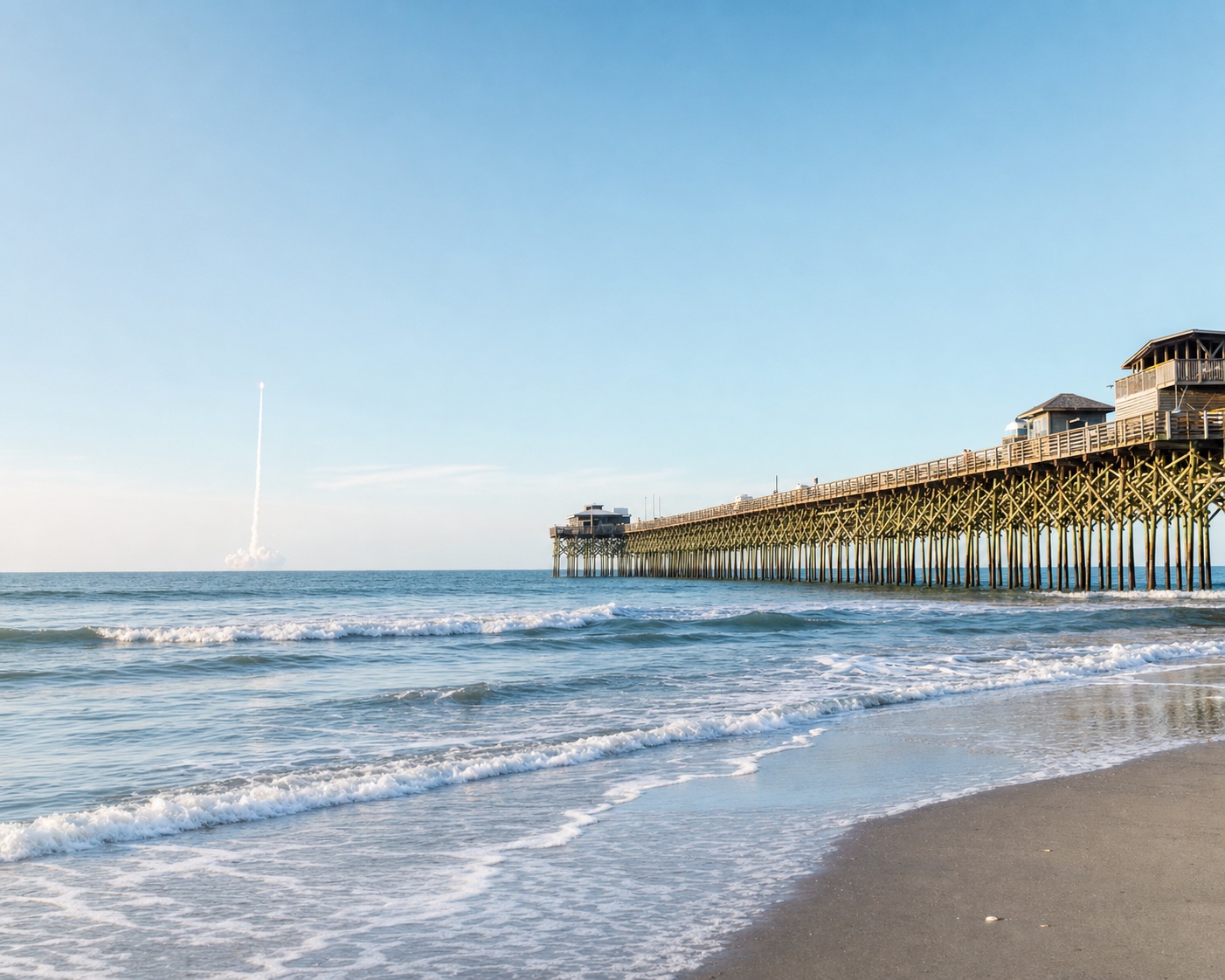
Cocoa Beach is one of Florida's most accessible surf spots, a gentle beach break on the Atlantic coast where soft, crumbling waves peel over an exceptionally flat sandy gradient. The surf here rarely exceeds head-high, but its remarkable consistency and forgiving nature have produced eleven-time world champion Kelly Slater and a thriving East Coast surf culture. The space industry heritage (Cape Canaveral is next door) adds a unique backdrop to sessions.
Short-period easterly wind swells provide waves year-round, with the most consistent conditions from September through March. Hurricane groundswells from August to November deliver the biggest and best-shaped waves. The wave works on anything from 2-5ft of east to north-east swell. Westerly offshore winds provide clean conditions, most common during cold front passages in winter. Early mornings are typically calmest.
The beach offers multiple peaks across a wide stretch of sand. The areas near the piers (Cocoa Beach Pier and the 2nd Light area) tend to produce slightly more structure due to sand accumulation around the pilings. Beginners should stay in the whitewater close to shore. Intermediate surfers can sit on the outer bars for longer green-face rides. The peaks shift constantly with tidal flow.
Minimal hazards make this ideal for all levels. The sandy bottom is uniformly flat. Mild rip currents form during larger swells. The main hazard is the crowd during peak conditions. Jellyfish appear seasonally, particularly Portuguese man-of-war after onshore wind events. Lightning from summer afternoon thunderstorms is a genuine threat. Sharks (bull and blacktip) frequent the area.
Multiple public car parks serve the beach at regular intervals along A1A. The beach is flat and immediately accessible with no obstacles. Surf rental and schools are abundant. Full facilities including showers, toilets, and beachside restaurants are available. The beach is a short drive from Orlando (1 hour).
Cocoa Beach is popular, particularly when a good swell coincides with a weekend. The wide beach distributes surfers effectively. The standard ranges from beginners to competitive shortboarders. Early mornings and weekdays offer the best window for uncrowded sessions. The vibe is generally friendly and community-oriented.
Florida waves are small and fast-moving. A wider, more volumised board catches waves earlier and maximises your count on these small-wave days. Don't bring a performance shortboard expecting overhead barrels; bring a groveller or a fish. The best surf of the year arrives with hurricane groundswells in autumn. Monitor tropical weather systems and be ready when the swell arrives; the window is often 24-48 hours. Board shorts are sufficient year-round though a light springsuit helps from December through March.
No recent check-ins. Be the first to report.
Record your session, conditions and gear.
Based on historical weekly averages
Combining historical conditions with school holiday crowd pressure to find the sweet spot.
How busy each week is based on school holiday overlap from feeder markets.
The timing score combines two signals: historical conditions quality (how good the skiing or surfing typically is in a given week, based on 5 years of weather data) and crowd pressure (how many of this destination's feeder markets have school holidays that week).
Crowd pressure is weighted by each feeder country's share of visitors. If 40% of a resort's visitors come from France and France is on holiday, that contributes 0.40 to the crowd pressure score. Crowds can reduce the timing score by up to 35%, ensuring conditions still matter most.
Scores: 5 = great conditions with low crowds (the sweet spot). 4 = great conditions with moderate crowds, or good conditions with low crowds. 3 = average. 2 = below average conditions or very crowded. 1 = poor conditions or peak holiday chaos.
Last 29 days of logged conditions.
Sign up to save favourite spots and get surf alerts
Create free accountCreate a free profile and let employers in Cocoa Beach find you.
Create Profile →Current conditions refresh every 3 hours when the cron runs. Hourly data updates every 30 minutes. The 7-day forecast, luck factor, and packing notes are all pre-computed at the same time.
We compare the 7-day forecast to the last 5 years of marine data for the same week at Cocoa Beach. The delta tells you whether conditions are shaping up better, worse, or about the same as a typical mid-June.
We score each day of the 7-day forecast using the same algorithm as the leaderboard, and highlight the highest scorer.
Open-Meteo's Marine API (swell height, period, water temperature) and Weather API (wind and conditions).
Honestly, no. Every break has tide windows, swell directions and reef contours that a global model cannot see. Treat the score as a starting point, then check a local cam.
The best week for surf at Cocoa Beach is the week of 30 November (score 3/5) with low crowds.
Next to nothing in the water. Check back tomorrow. Strong onshore blowing everything out. Give it a miss. Best conditions early morning before the sea breeze arrives.
Heads up: thunderstorms forecast, and rocks exposed at low tide.
Indicators derived from forecast data, not official warnings. Always check local lifeguard or official advice.
Reduced water clarity: ~3m visibility
Elevated phytoplankton detected, possible algal bloom
Daily scores over the last 12 months at Cocoa Beach