United States Β· Pacific Islands
Not enough data yet. Log a session to help build the accuracy score.
This guide was generated from conditions data. Know this spot? Submit your own tips below.
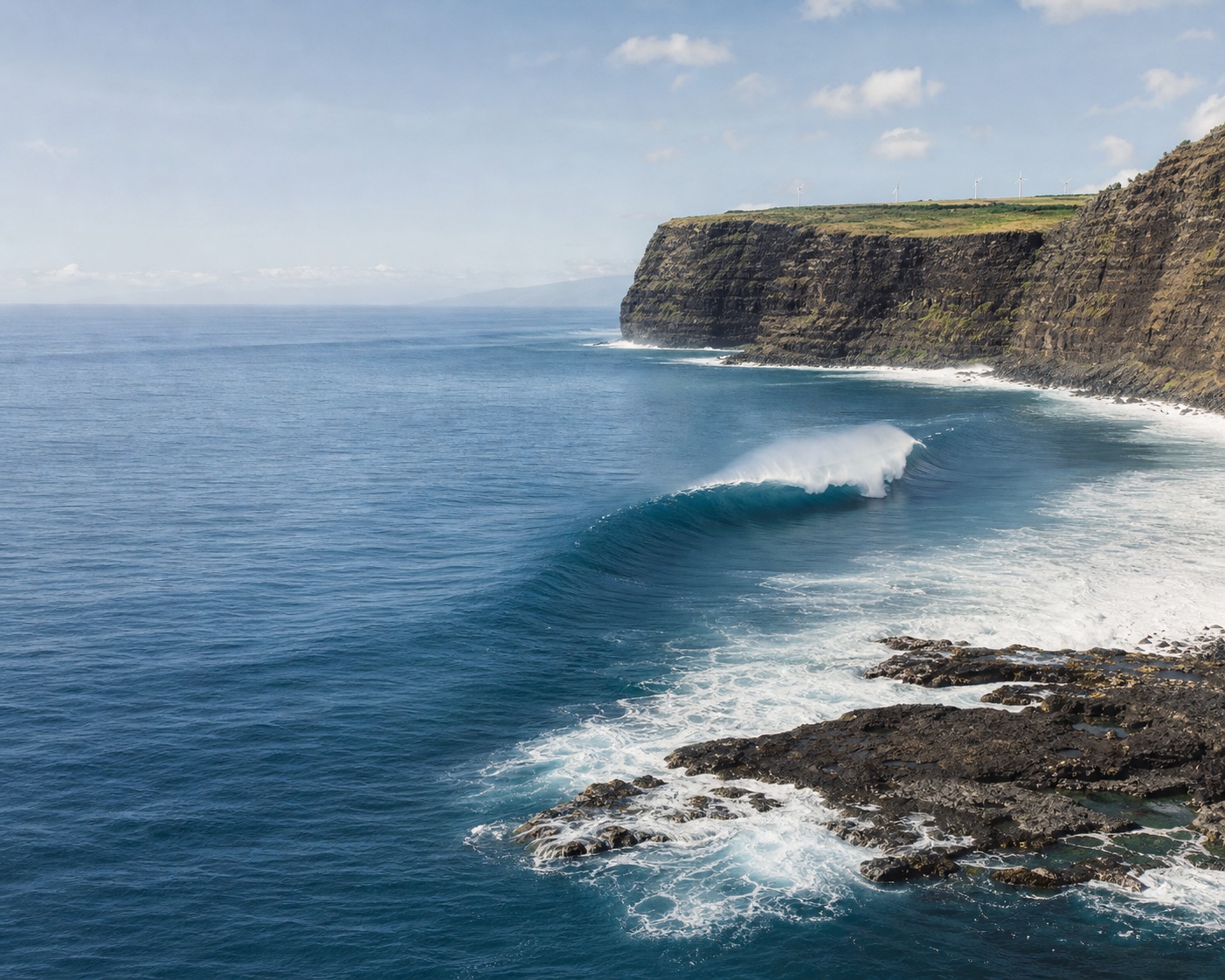
Jaws (Pe'ahi) is one of the most terrifying big-wave breaks on Earth, a monstrous right-hand reef on Maui's north shore where waves regularly exceed 15 metres in face height. The wave breaks over a deep volcanic reef trench that compresses immense North Pacific swells into towering, impossibly thick walls of moving water. The lip alone weighs thousands of tonnes. This is the ultimate arena for elite big-wave surfing, accessible only to the world's best watermen equipped with jet-ski support and specialised safety equipment.
Jaws activates only during the most significant North Pacific winter swells, typically between November and March. The wave needs genuine 20ft-plus open ocean swell to properly break. The biggest days produce 40-60ft faces. A southerly offshore wind is required to groom the massive faces. These conditions align perhaps 10-15 times per season. Forecasting and preparation are essential.
Positioning at Jaws is managed via tow-in (jet-ski) for most sessions due to the extreme size and speed required to catch waves. Paddle-in sessions are attempted by a handful of elite athletes on the most favourable days. The take-off zone is over the deep reef trench where the swell first compresses and stands up.
Jaws represents the absolute limit of human capability in the ocean. Multi-wave hold-downs in water moving at tremendous speed. The hydraulic force can snap boards, tear inflation vests, and separate surfers from safety equipment. The reef below is deep enough to avoid direct impact in most cases but the turbulence and duration of hold-downs are the primary danger. Drowning is a genuine risk.
A dirt road leads to the cliff-top lookout above the break. Spectators gather here during major events. Access to the water is by jet-ski from the harbour or from the rocky shore below the cliffs. No beach access exists. The break is approximately 200 metres offshore.
Jaws is surfed by a community of 10-30 elite big-wave specialists when conditions align. This is an invitation-only arena in practice. Tow teams coordinate to manage safety and avoid interference. Major events (such as the Eddie) are invite-only competitions.
Jaws is not a wave for any surfer outside the elite big-wave community. It requires specialised big-wave guns (10'0"+), inflation vests with CO2 cartridges, jet-ski tow teams, rescue protocols, and years of graduated big-wave experience. Watching from the cliff during a major swell is a profound experience that every surfer should have at least once. The scale of the wave defies comprehension until you see it in person.
No recent check-ins. Be the first to report.
Record your session, conditions and gear.
Based on historical weekly averages
Combining historical conditions with school holiday crowd pressure to find the sweet spot.
How busy each week is based on school holiday overlap from feeder markets.
The timing score combines two signals: historical conditions quality (how good the skiing or surfing typically is in a given week, based on 5 years of weather data) and crowd pressure (how many of this destination's feeder markets have school holidays that week).
Crowd pressure is weighted by each feeder country's share of visitors. If 40% of a resort's visitors come from France and France is on holiday, that contributes 0.40 to the crowd pressure score. Crowds can reduce the timing score by up to 35%, ensuring conditions still matter most.
Scores: 5 = great conditions with low crowds (the sweet spot). 4 = great conditions with moderate crowds, or good conditions with low crowds. 3 = average. 2 = below average conditions or very crowded. 1 = poor conditions or peak holiday chaos.
Last 28 days of logged conditions.
Sign up to save favourite spots and get surf alerts
Create free accountCreate a free profile and let employers in Jaws/Pe'ahi find you.
Create Profile βCurrent conditions refresh every 3 hours when the cron runs. Hourly data updates every 30 minutes. The 7-day forecast, luck factor, and packing notes are all pre-computed at the same time.
We compare the 7-day forecast to the last 5 years of marine data for the same week at Jaws/Pe'ahi. The delta tells you whether conditions are shaping up better, worse, or about the same as a typical mid-June.
We score each day of the 7-day forecast using the same algorithm as the leaderboard, and highlight the highest scorer.
Open-Meteo's Marine API (swell height, period, water temperature) and Weather API (wind and conditions).
Honestly, no. Every break has tide windows, swell directions and reef contours that a global model cannot see. Treat the score as a starting point, then check a local cam.
The best week for surf at Jaws/Pe'ahi is the week of 30 November (score 3/5) with low crowds.
Flat as a lake. Save your energy for another day. Moderate wind adding texture to the faces. Not enough swell to get this spot firing properly.
Heads up: jellyfish: peak season, and rocks exposed at low tide.
Indicators derived from forecast data, not official warnings. Always check local lifeguard or official advice.
Crystal clear water: ~34m visibility
Daily scores over the last 12 months at Jaws/Pe'ahi