United States Β· Pacific Islands
Not enough data yet. Log a session to help build the accuracy score.
This guide was generated from conditions data. Know this spot? Submit your own tips below.
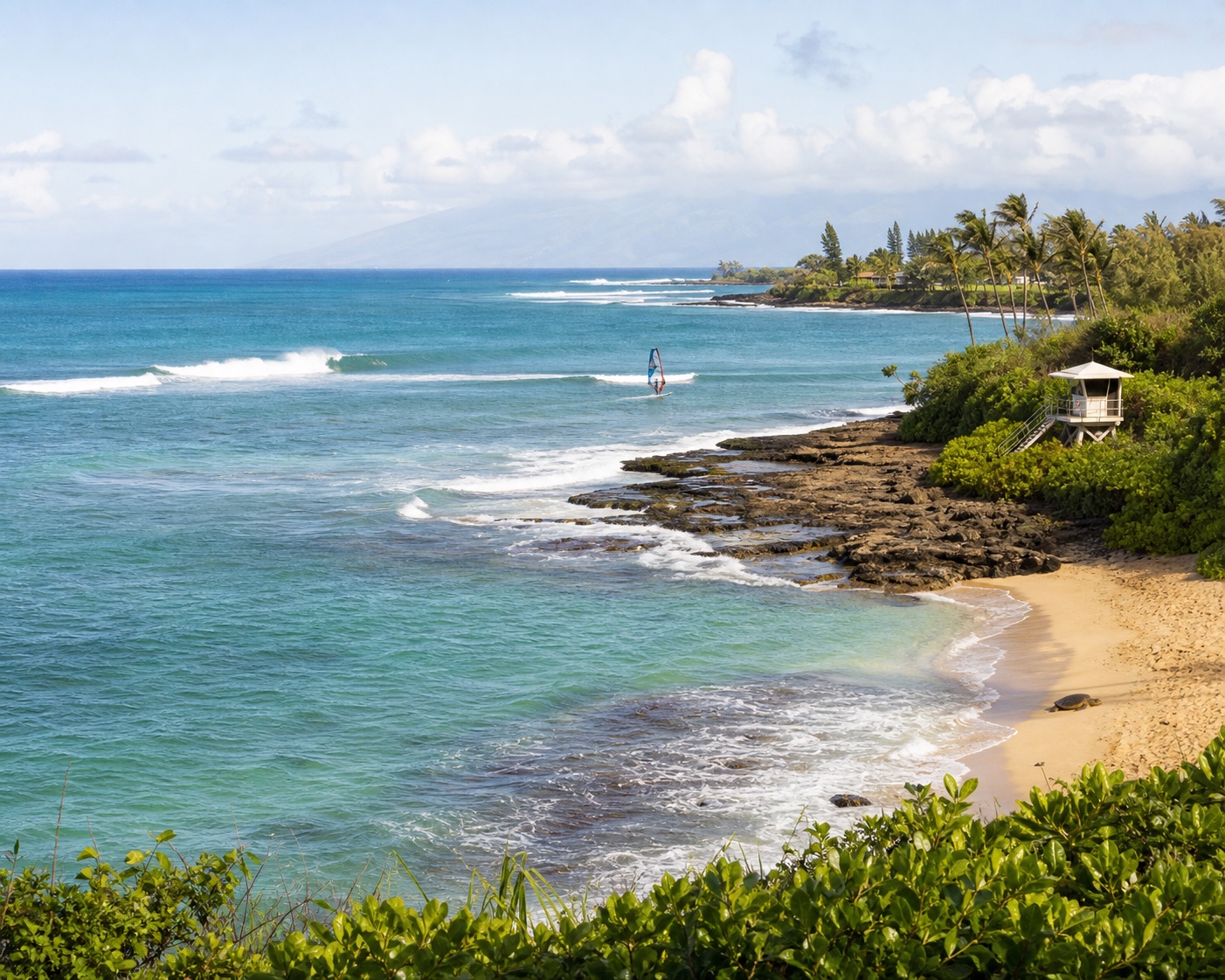
Ho'okipa is a raw, windswept reef break on Maui's north shore, globally famous as the birthplace of windsurfing and tow-in surfing. The wave breaks over a jagged, shallow volcanic coral reef that produces powerful, fast peaks in conditions that would render most spots unsurfable. The relentless north-east trade winds that plague most breaks are embraced here by the wind-sports community, creating a unique environment where surfers, windsurfers, and kiters share the same swells. When the wind drops, the reef produces world-class conventional surfing waves.
North-westerly winter groundswells from November through March deliver the biggest and most powerful waves. The reef handles serious size, breaking from 4-15ft. Southerly offshore winds provide the cleanest surfing conditions but are rare; most sessions involve managing the prevailing trade winds. The early morning window before the trades strengthen (typically before 10am) offers the best chance of cleaner conditions for surfing.
The reef has multiple peaks. Pavilions on the east side produces fast, hollow rights. The Point on the west side offers longer, more workable lefts. Middles provides a variety of peaks. The take-off zones are concentrated over the shallowest reef sections. Position yourself on the outside of the reef platform and watch for sets refracting off the reef's uneven contours. The sandy channels between reef sections provide paddle-out routes.
The volcanic reef is extremely sharp and shallow. Falls result in severe cuts. The waves break with significant power and the turbulent trade wind chop makes duck-diving difficult. Strong currents sweep across the reef. Windsurfers and kiters share the water, creating collision risks. Sea turtles haul out on the beach; give them wide berth. The power and shallow reef make this high-consequence surfing.
A public car park with views directly over the break serves the east side. Additional parking exists along the access road. The walk to the waterline descends through dirt paths to the rocky shore. Entry to the water requires crossing slippery reef rocks. Facilities at the park include picnic areas and toilets. Watching from the cliff is a worthwhile spectacle even without surfing.
Ho'okipa has an established local hierarchy among surfers, windsurfers, and kiters. The afternoon is traditionally ceded to wind sports. Surfers dominate the early morning glass window. The local crew is experienced and territorial. Showing respect and surfing within your ability earns acceptance. Do not paddle out unless you are comfortable in powerful, shallow reef break conditions.
The morning glass window is precious and short. Be in the water by 6:30am to maximise clean conditions before the trades establish. A shorter, wider board handles the choppy conditions better than a standard performance shortboard. Reef boots are essential for both entry and protection during wipeouts. The wave is significantly more powerful than it appears from the cliff due to the offshore wind holding the faces up. Study the reef from the lookout point to identify channels and hazards before your first paddle out.
No recent check-ins. Be the first to report.
Record your session, conditions and gear.
Based on historical weekly averages
Combining historical conditions with school holiday crowd pressure to find the sweet spot.
How busy each week is based on school holiday overlap from feeder markets.
The timing score combines two signals: historical conditions quality (how good the skiing or surfing typically is in a given week, based on 5 years of weather data) and crowd pressure (how many of this destination's feeder markets have school holidays that week).
Crowd pressure is weighted by each feeder country's share of visitors. If 40% of a resort's visitors come from France and France is on holiday, that contributes 0.40 to the crowd pressure score. Crowds can reduce the timing score by up to 35%, ensuring conditions still matter most.
Scores: 5 = great conditions with low crowds (the sweet spot). 4 = great conditions with moderate crowds, or good conditions with low crowds. 3 = average. 2 = below average conditions or very crowded. 1 = poor conditions or peak holiday chaos.
Last 28 days of logged conditions.
Sign up to save favourite spots and get surf alerts
Create free accountCreate a free profile and let employers in Hookipa find you.
Create Profile βCurrent conditions refresh every 3 hours when the cron runs. Hourly data updates every 30 minutes. The 7-day forecast, luck factor, and packing notes are all pre-computed at the same time.
We compare the 7-day forecast to the last 5 years of marine data for the same week at Hookipa. The delta tells you whether conditions are shaping up better, worse, or about the same as a typical mid-June.
We score each day of the 7-day forecast using the same algorithm as the leaderboard, and highlight the highest scorer.
Open-Meteo's Marine API (swell height, period, water temperature) and Weather API (wind and conditions).
Honestly, no. Every break has tide windows, swell directions and reef contours that a global model cannot see. Treat the score as a starting point, then check a local cam.
The best week for surf at Hookipa is the week of 30 November (score 3/5) with low crowds.
Flat as a lake. Save your energy for another day. Onshore chop spoiling the lineup. Best conditions early morning before the sea breeze arrives. Not enough swell to get this spot firing properly.
Heads up: jellyfish: peak season, and rocks exposed at low tide.
Indicators derived from forecast data, not official warnings. Always check local lifeguard or official advice.
Crystal clear water: ~32m visibility
Daily scores over the last 12 months at Hookipa