El Salvador ยท Central America
Each location is refreshed once every three hours. The hourly view, 7-day forecast, luck factor and packing notes come from the same stored update.
We compare the 7-day forecast with the version-matched historical observations available for the same time of year at El Sunzal. The delta shows whether conditions look better, worse or about the same as a typical late July.
We score each day of the 7-day forecast using the same algorithm as the leaderboard, and highlight the highest scorer.
Open-Meteo's Marine API (swell height, period, water temperature) and Weather API (wind and conditions).
Proper groundswell lighting up the lineup. Mid-period swell giving the waves decent shape and push. Gentle onshore putting some texture on the faces. Conditions improving through the afternoon.
PeakWave scores are planning signals, not safety clearance. Check local authorities, official bulletins and on-site conditions before you go. Read our editorial policy.
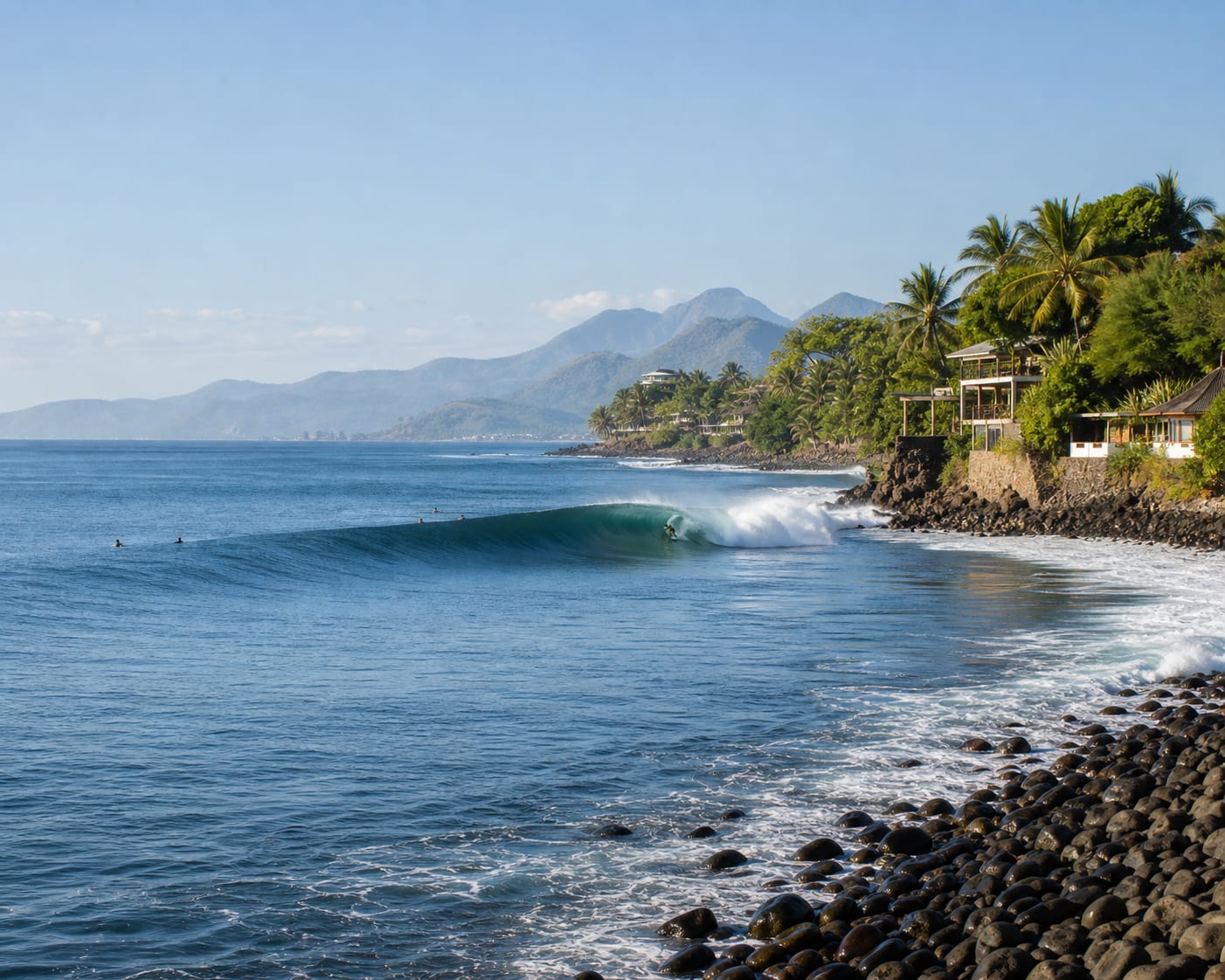
El Sunzal is a highly consistent, right-hand point break situated on the Pacific coast of El Salvador. The seafloor comprises a vast matrix of large, smooth cobblestones descending gradually into deep water. This deep-water bathymetry dictates the wave mechanics; rather than jacking abruptly, south-westerly Pacific groundswells hit the cobblestone point and wrap slowly, producing a thick, sloping, and endlessly peeling right-hand face. A north-easterly offshore wind, common in the early mornings, grooms the surface to a glassy texture. Because the wave lacks a steep, pitching lip and breaks with a relatively slow, manageable velocity, it is highly suited for intermediate surfers and longboarders. The incredibly forgiving nature of the break provides a highly stable platform for practising cutbacks, speed generation, and drawn-out carving manoeuvres over extended distances. The deep water over the rocks minimises the risk of impact, making it an excellent venue for building ocean confidence in a warm tropical environment.
Heads up: thunderstorms forecast, and jellyfish: peak season.
Indicators derived from forecast data, not official warnings. Always check local lifeguard or official advice.
The air here is 24% cleaner than the average comparison city right now.
Somewhat cleaner than a typical city. Air quality is unlikely to affect most people.
Not a pollutant. Ozone is naturally higher at altitude and near the coast, and lower in cities where traffic exhaust breaks it down. High readings here typically indicate clean air. Can cause short-term airway irritation during intense exercise but is not linked to the long-term health risks of particulate pollution.
Additive health score: each pollutant contributes points relative to its WHO 2021 guideline and long-term health impact (PM2.5 9, NOโ 5, Oโ 3, PM10 2, SOโ 1 at WHO limits). Data via Open-Meteo. City markers show live readings. Red line marks the WHO guideline. Updated 09:24
Crystal clear water: ~22m visibility
Daily scores over the last 12 months at El Sunzal
Historical quality only. Safety is not reconstructed for this view.
Create a free profile and let employers in El Sunzal find you.
Create Profile โPartly. The model uses stored spot geometry, swell ranges and tide preferences where configured. It cannot see changing banks, crowds, access, closures or everything visible on a local cam, so treat it as a starting point.
The best week for surf at El Sunzal is the week of 9 November (score 3/5) with low crowds.
This guide was generated from conditions data. Know this spot? Submit your own tips below.
El Sunzal is a consistent right-hand point break on El Salvador's Pacific coast, producing long, mellow walls over a cobblestone bottom. The wave wraps slowly around the point, offering thick, sloping faces that peel at a comfortable pace. This is the friendlier, more accessible counterpart to nearby El Tunco's heavy rivermouth. The wave rewards smooth, flowing surfing and provides an excellent environment for intermediates building confidence on longer rides.
South-westerly Pacific groundswells arrive consistently from April through October. The wave activates on small swells (2-3ft) and handles up to 6ft before becoming too fast. North-easterly offshore winds, most reliable at dawn, groom the faces beautifully. The dry season (November-April) has lighter, less consistent swells but cleaner morning conditions.
The take-off zone sits at the top of the cobblestone point where the swell first wraps and steepens. The right peels for 100-200 metres along the gradually deepening bottom. Position yourself at the top of the point for the longest rides. The inside section offers shorter, mellower waves for less experienced surfers. The deep water beyond the point provides a comfortable paddle-out.
The cobblestone bottom is round and relatively deep, minimising severe impact. The main hazards are the crowd on good days and the current that can sweep riders further down the point. The tropical sun is intense. On bigger swells, the wave picks up speed and becomes less forgiving.
Parking along the road above the break. A short walk down to the beach. Basic warungs and accommodation options nearby. The break is a 10-minute drive from El Tunco village which has fuller facilities. The El Salvador coastline is concentrated, making it easy to check multiple spots.
El Sunzal draws both locals and visitors seeking a mellower alternative to El Tunco. Expect 15-25 surfers on good days. The long, peeling nature of the wave means everyone gets rides. The atmosphere is relaxed and non-aggressive. Weekend mornings are busiest.
A longboard or wide fish maximises fun on this sloping, fat wave. The wave does not generate enough speed or steepness for aggressive shortboarding to be rewarding. What it does offer is length, consistency, and workable faces for drawn-out carving. The early morning glass-off window (6am-8am) consistently provides the cleanest conditions before the thermal onshore develops. Combine El Sunzal sessions with El Tunco for variety; the contrast between the mellow point and the heavy rivermouth provides excellent progression.
Surf at El Sunzal
Your score
Forecast feel
Score this window against what you actually found.
No scored surf reviews in the last 24 hours.
No recent check-ins. Be the first to report.
Log a day
Add El Sunzal to your private Companion record without GPS.
Combining historical conditions with school holiday crowd pressure to find the sweet spot.
The timing score combines two signals: historical conditions quality (how good the skiing or surfing typically is in a given week, based on 5 years of weather data) and crowd pressure (how many of this destination's feeder markets have school holidays that week).
Crowd pressure is weighted by each feeder country's share of visitors. If 40% of a resort's visitors come from France and France is on holiday, that contributes 0.40 to the crowd pressure score. Crowds can reduce the timing score by up to 35%, ensuring conditions still matter most.
Scores: 5 = great conditions with low crowds (the sweet spot). 4 = great conditions with moderate crowds, or good conditions with low crowds. 3 = average. 2 = below average conditions or very crowded. 1 = poor conditions or peak holiday chaos.
Last 30 days of logged conditions.
Based on historical weekly averages
Conditions at El Sunzal tend to be best between 08:00 to 11:00 in July.
Average score during this window: 73/100
See timing scores, school holiday busyness, and lift pass pricing to find the best time to book.
View Best Time to Go โ