Senegal · Atlantic Africa
Not enough data yet. Log a session to help build the accuracy score.
This guide was generated from conditions data. Know this spot? Submit your own tips below.
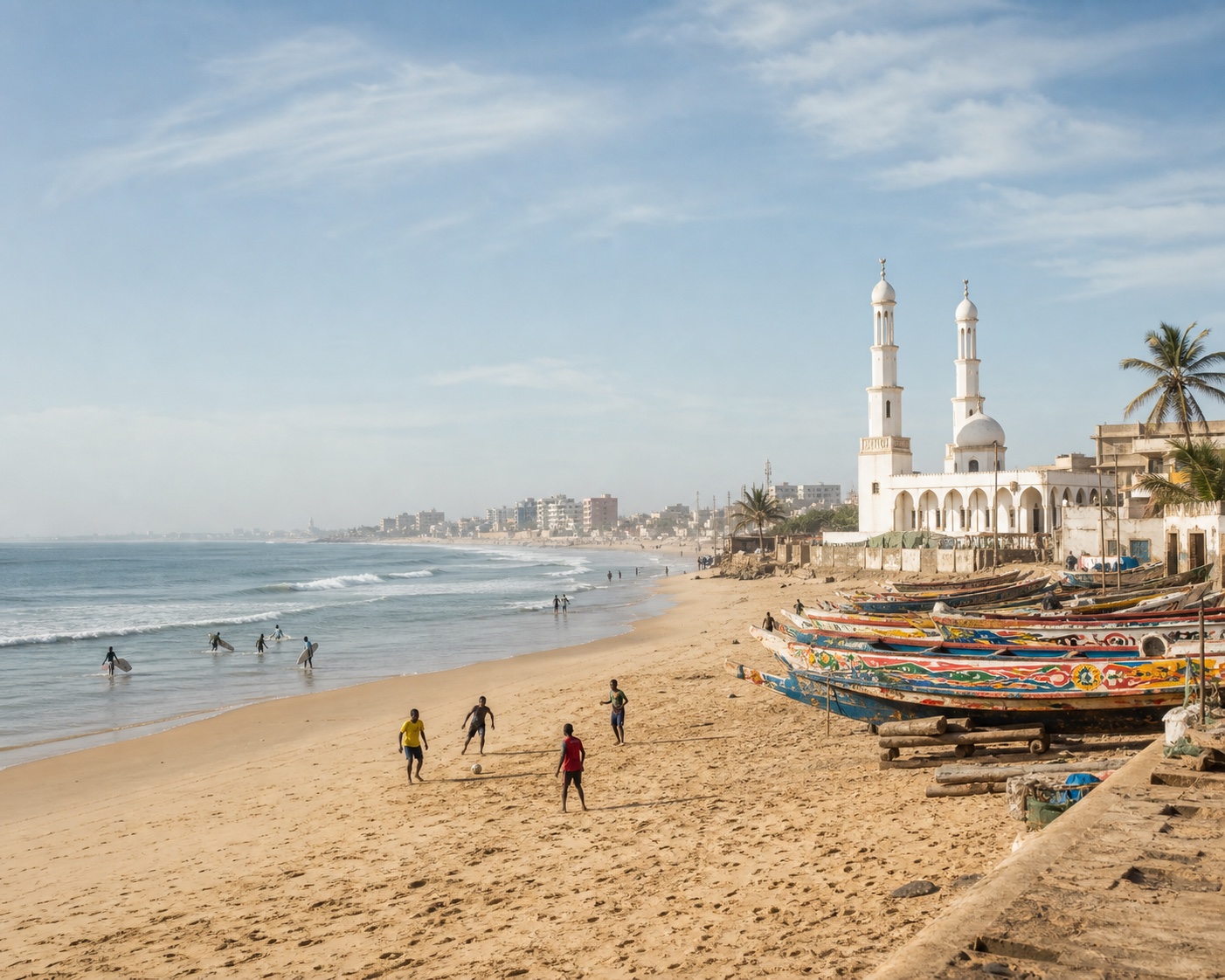
Dakar Yoff is a broad, exposed beach break on the Cap-Vert peninsula in Senegal, offering accessible waves for beginners and intermediates in warm West African waters. The gently sloping sandy bottom produces soft, crumbling walls that spill rather than plunge, creating long, forgiving rides. The beach has an energetic atmosphere with local fishing pirogues launching through the surf and a growing Senegalese surf community using the wave as their training ground.
North Atlantic winter groundswells from November through March provide the most consistent and powerful conditions. The beach also picks up shorter-period north-westerly wind swell throughout the year. The wave works on 2-6ft of north to north-west swell. South-easterly offshore winds provide clean conditions, most reliable in the early mornings. The Harmattan dust wind from the Sahara can create unusual offshore conditions.
The wide beach offers multiple peaks spread across several hundred metres. The central section tends to have the most consistent banks. The northern end near the fishing beach can produce more defined peaks where boat channels structure the sand. Beginners should stay in the whitewater close to shore. Intermediate surfers can sit on the outer bars where longer green faces form.
Fishing pirogues launch through the surf zone and must be given right of way. Currents can develop on bigger swells. The sun is intense at this latitude. Portuguese man-of-war appear occasionally. The main beach can be busy with non-surfing activity. Sea urchins inhabit scattered rock patches.
Informal parking along the beachfront road. The beach is flat and immediately accessible. Basic facilities are available in the surrounding neighbourhood. Surf schools and board rental have established in recent years. The beach is within the city of Dakar, accessible by taxi or car rapide from anywhere in the city.
The growing Senegalese surf community uses Yoff as its primary training ground. Expect 10-20 surfers on good days, a mix of local learners and more experienced riders. International visitors are relatively uncommon. The atmosphere is friendly and encouraging, with the local community happy to share waves and knowledge.
The water is warm year-round (22-27C) so board shorts and a rash vest are sufficient. A longboard or wide fish maximises wave count on the gentle faces. The best conditions often arrive with the approach of a north Atlantic low-pressure system, when the swell builds and the offshore Harmattan wind holds. The local surf community is welcoming; engage with them and you will receive excellent local knowledge about the various breaks along the peninsula. If Yoff is too small, the heavier reef breaks at Ngor and Ouakam are a short taxi ride away.
No recent check-ins. Be the first to report.
Record your session, conditions and gear.
Based on historical weekly averages
Combining historical conditions with school holiday crowd pressure to find the sweet spot.
How busy each week is based on school holiday overlap from feeder markets.
The timing score combines two signals: historical conditions quality (how good the skiing or surfing typically is in a given week, based on 5 years of weather data) and crowd pressure (how many of this destination's feeder markets have school holidays that week).
Crowd pressure is weighted by each feeder country's share of visitors. If 40% of a resort's visitors come from France and France is on holiday, that contributes 0.40 to the crowd pressure score. Crowds can reduce the timing score by up to 35%, ensuring conditions still matter most.
Scores: 5 = great conditions with low crowds (the sweet spot). 4 = great conditions with moderate crowds, or good conditions with low crowds. 3 = average. 2 = below average conditions or very crowded. 1 = poor conditions or peak holiday chaos.
Last 28 days of logged conditions.
Sign up to save favourite spots and get surf alerts
Create free accountCreate a free profile and let employers in Dakar Yoff find you.
Create Profile →Current conditions refresh every 3 hours when the cron runs. Hourly data updates every 30 minutes. The 7-day forecast, luck factor, and packing notes are all pre-computed at the same time.
We compare the 7-day forecast to the last 5 years of marine data for the same week at Dakar Yoff. The delta tells you whether conditions are shaping up better, worse, or about the same as a typical mid-June.
We score each day of the 7-day forecast using the same algorithm as the leaderboard, and highlight the highest scorer.
Open-Meteo's Marine API (swell height, period, water temperature) and Weather API (wind and conditions).
Honestly, no. Every break has tide windows, swell directions and reef contours that a global model cannot see. Treat the score as a starting point, then check a local cam.
The best week for surf at Dakar Yoff is the week of 30 November (score 3/5) with low crowds.
Small waves but still worth a paddle for keen surfers. Onshore wind making a mess of the surface. Best conditions early morning before the sea breeze arrives.
Heads up: jellyfish: peak season.
Indicators derived from forecast data, not official warnings. Always check local lifeguard or official advice.
Moderate water clarity: ~4m visibility
Daily scores over the last 12 months at Dakar Yoff