Senegal · Atlantic Africa
Not enough data yet. Log a session to help build the accuracy score.
This guide was generated from conditions data. Know this spot? Submit your own tips below.
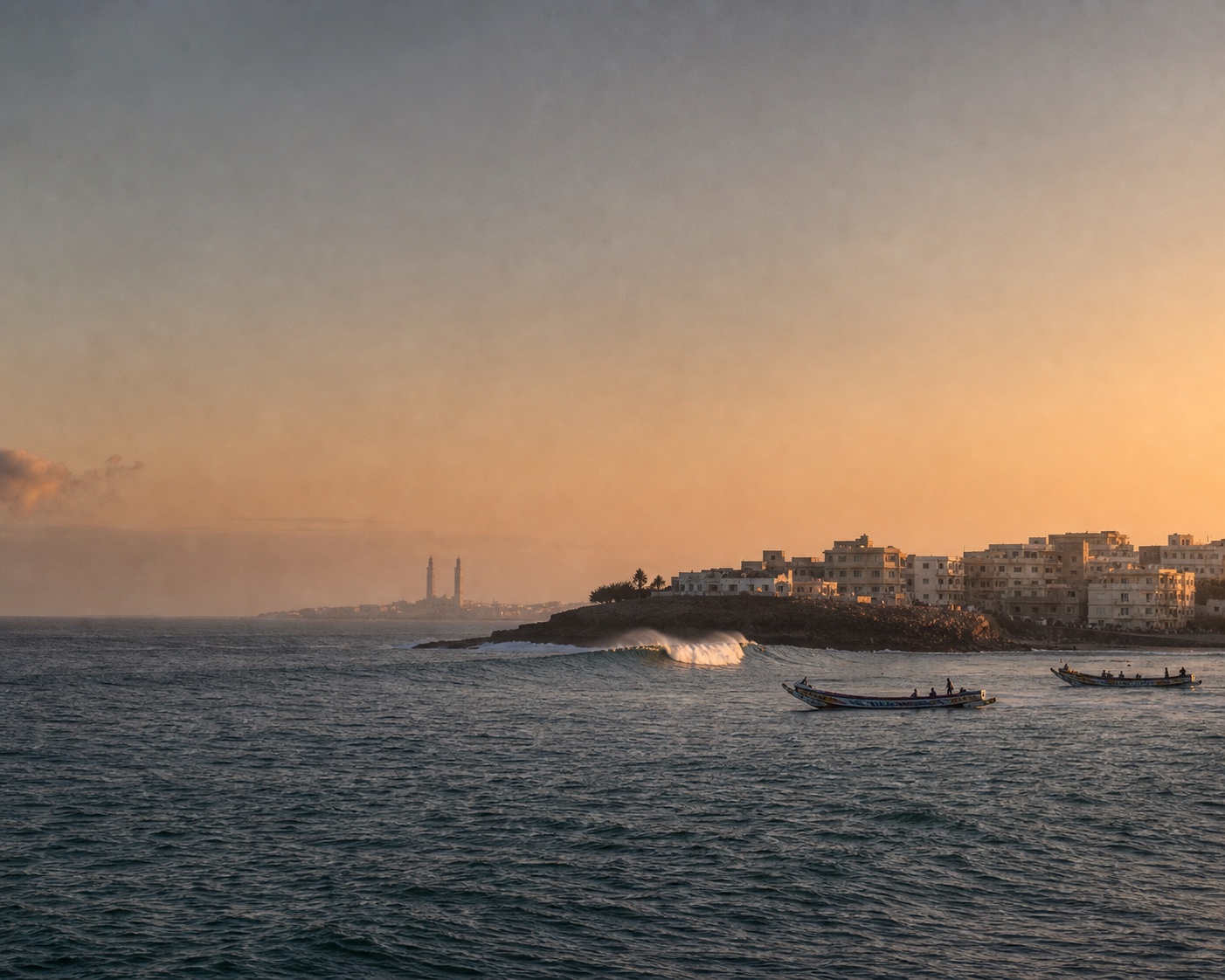
Ngor and Ouakam are powerful reef breaks on the Cap-Vert peninsula in Dakar, Senegal, offering some of West Africa's most intense waves. Ouakam in particular produces an exceptionally thick, plunging right-hand barrel when North Atlantic winter swells wrap around the peninsula and detonate on the shallow volcanic rock shelf. The setting is dramatic: rugged black volcanic coastline backed by the sprawling city of Dakar. This is raw, powerful surf in an unforgettable location.
The prime season runs from November through March when consistent north-westerly winter groundswells track across the North Atlantic. January and February typically deliver the largest, most powerful swells. The waves need at least 5-6ft of swell to properly activate the outer reefs. South-easterly winds blow offshore, and these are most reliable early in the morning before the sea breeze develops. The wave quality deteriorates rapidly once onshore winds establish after midday.
At Ouakam, the take-off zone sits over the shallowest section of volcanic reef where the swell first hits the ledge. The peak is concentrated and the drop is immediate and steep. At Ngor, the right-hander off the island offers a more workable wall with a wider take-off window. Position yourself deep at Ouakam and commit fully to the drop; half-measures result in going over the falls onto the reef. The deep-water channel adjacent to the reef provides the paddle-out route.
The volcanic reef is razor-sharp and the consequences of a fall are severe. The wave breaks with tremendous force onto an extremely shallow ledge. Hold-downs are powerful and disorienting. Strong currents sweep across the reef during bigger swells. Sea urchins carpet the reef in places. There is no soft landing here; every wipeout carries risk of serious injury. The rocks on shore are equally sharp and covered in slippery algae.
Street parking is available in the residential areas above the breaks. Access to Ouakam involves scrambling down volcanic rock to a paddle-out point. The rocks are sharp and slippery, so reef boots are essential for entry and exit. Ngor Island is accessed by pirogue (fishing boat) from Ngor village, a five-minute crossing. Local fishermen provide the service for a small fee.
The heavy, consequence-laden nature of these waves keeps crowds naturally thin. Expect 5-15 surfers on a good day, mostly experienced locals and visiting big-wave enthusiasts. The Senegalese surf community is tight-knit, welcoming, and incredibly skilled. Showing respect and surfing within your ability earns immediate acceptance. Do not paddle out if you are not genuinely comfortable in heavy, hollow waves.
Bring a step-up board. These waves are powerful and you need the paddle speed and hold of a bigger board to make the steep drops. Helmet and reef boots are not optional here; they are essential. The best strategy is to surf Ngor on smaller days to familiarise yourself with the reef environment before attempting Ouakam on a proper swell. The local surf guides know the reefs intimately and hiring one for your first session provides invaluable positioning advice that could save you from a serious injury.
No recent check-ins. Be the first to report.
Record your session, conditions and gear.
Based on historical weekly averages
Combining historical conditions with school holiday crowd pressure to find the sweet spot.
How busy each week is based on school holiday overlap from feeder markets.
The timing score combines two signals: historical conditions quality (how good the skiing or surfing typically is in a given week, based on 5 years of weather data) and crowd pressure (how many of this destination's feeder markets have school holidays that week).
Crowd pressure is weighted by each feeder country's share of visitors. If 40% of a resort's visitors come from France and France is on holiday, that contributes 0.40 to the crowd pressure score. Crowds can reduce the timing score by up to 35%, ensuring conditions still matter most.
Scores: 5 = great conditions with low crowds (the sweet spot). 4 = great conditions with moderate crowds, or good conditions with low crowds. 3 = average. 2 = below average conditions or very crowded. 1 = poor conditions or peak holiday chaos.
Last 29 days of logged conditions.
Sign up to save favourite spots and get surf alerts
Create free accountCreate a free profile and let employers in Ngor/Ouakam find you.
Create Profile →Current conditions refresh every 3 hours when the cron runs. Hourly data updates every 30 minutes. The 7-day forecast, luck factor, and packing notes are all pre-computed at the same time.
We compare the 7-day forecast to the last 5 years of marine data for the same week at Ngor/Ouakam. The delta tells you whether conditions are shaping up better, worse, or about the same as a typical mid-June.
We score each day of the 7-day forecast using the same algorithm as the leaderboard, and highlight the highest scorer.
Open-Meteo's Marine API (swell height, period, water temperature) and Weather API (wind and conditions).
Honestly, no. Every break has tide windows, swell directions and reef contours that a global model cannot see. Treat the score as a starting point, then check a local cam.
The best week for surf at Ngor/Ouakam is the week of 16 November (score 3/5) with low crowds.
Next to nothing in the water. Check back tomorrow. Onshore wind making a mess of the surface. Conditions improving through the afternoon.
Heads up: jellyfish: peak season, and rocks exposed at low tide.
Indicators derived from forecast data, not official warnings. Always check local lifeguard or official advice.
Moderate water clarity: ~4m visibility
Daily scores over the last 12 months at Ngor/Ouakam