Not enough data yet. Log a session to help build the accuracy score.
This guide was generated from conditions data. Know this spot? Submit your own tips below.
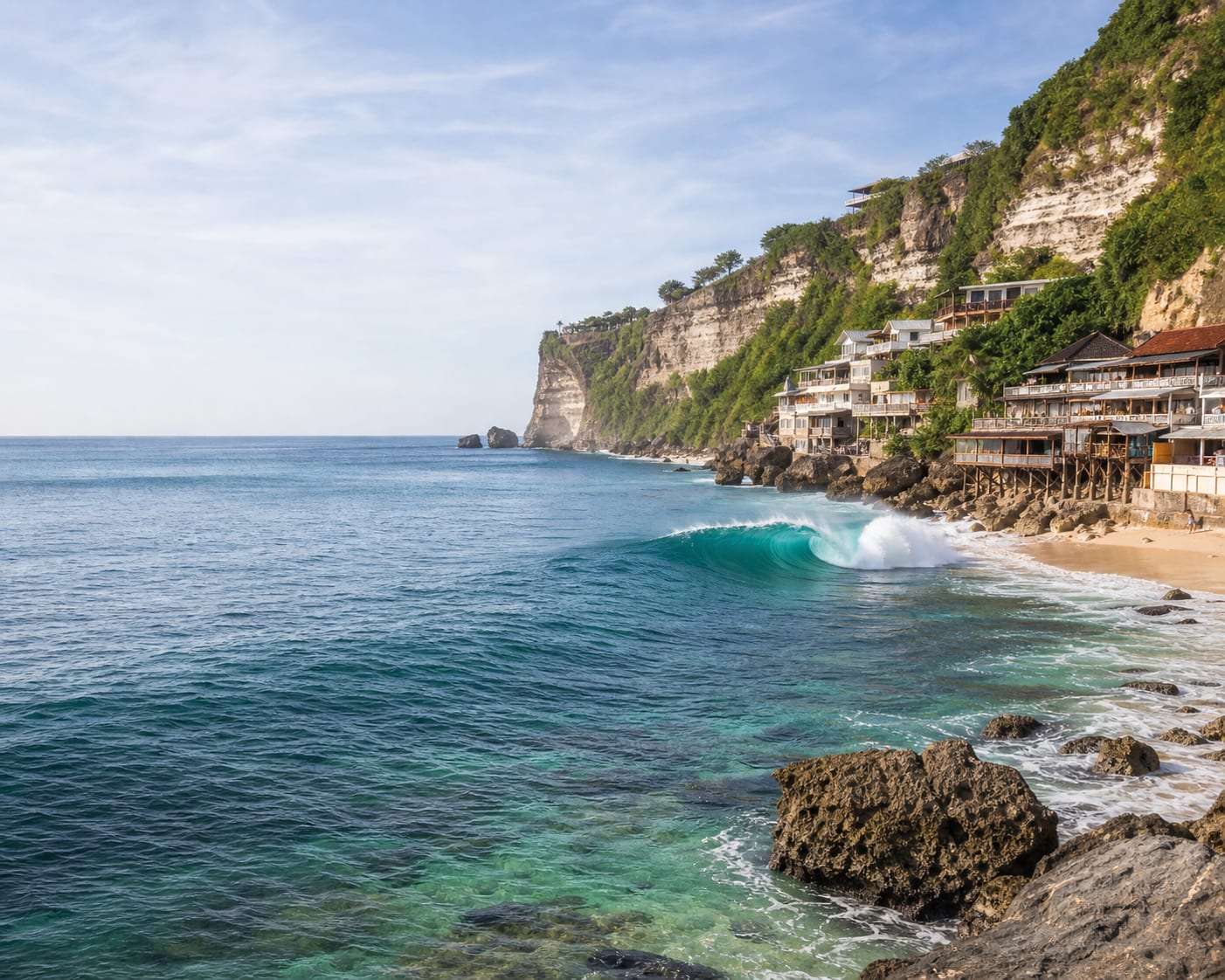
Bingin is an intensely concentrated left-hand barrel on Bali's Bukit Peninsula, breaking over an extremely shallow coral limestone shelf. The wave does one thing and does it perfectly: a short, mechanical tube that breaks in exactly the same spot with remarkable consistency. There are no long carving walls here. You take off, pull in, and either make the barrel or get put on the reef. The cliff-top setting with its warungs perched above the break adds to the theatre of watching this wave perform.
The dry season from May through October delivers the most consistent south-westerly Indian Ocean groundswells. The wave needs 3-5ft of swell to break properly; much bigger and it becomes unmanageable. A north-east offshore wind, typical of the dry season mornings, holds the tube open beautifully. The best sessions occur at dawn before the trade winds strengthen. The wave is extremely tide-sensitive, requiring a mid-tide for optimal shape with enough water to provide a margin over the reef.
The take-off zone is remarkably concentrated, with the peak breaking over the same section of reef every time. Sit on the boil where the deeper water meets the shallow shelf. The wave jacks quickly and you need to be in exactly the right spot. Too deep and you go over the falls; too far on the shoulder and you miss the barrel. Watch the locals for positioning cues. The channel to the north provides both entry and exit.
The reef is extremely shallow and exposed at lower tides. Falls put you directly onto sharp coral limestone. Cuts and reef rash are near-guaranteed over multiple sessions. The wave breaks close to shore with minimal deep water for safe wipeouts. On the inside, the reef is particularly shallow and getting caught there can result in severe injuries. Reef boots are highly recommended. The channel has a strong current that intensifies on bigger swells.
Access is via a steep staircase cut into the cliff face, descending approximately 50 metres to the beach below. Motorbike parking is available at the cliff top. The stairs are narrow and can be slippery. Several warungs at the base of the cliff serve food and store boards. The paddle out from the beach to the break takes five minutes via the channel.
Bingin attracts barrel-hungry surfers from around the world during the dry season. The extremely concentrated take-off zone means even 10 surfers feels crowded. Priority goes to the surfer deepest on the peak. The local Balinese surfers are excellent and assertive. Dawn patrol offers the best chance of a less congested session. The wave works best at specific tide windows, so everyone arrives at the same time.
Timing is everything. The window between too-low tide (dangerously shallow) and too-high tide (wave goes fat) is narrow, roughly two hours either side of mid-tide. Plan your session around this window. Bring a shorter, wider board with plenty of rocker for the steep drop and tight barrel line. Zinc on your back and shoulders prevents reef rash when you inevitably make contact with the limestone. Carry antiseptic and butterfly closures for treating cuts immediately after your session.
No recent check-ins. Be the first to report.
Record your session, conditions and gear.
Based on historical weekly averages
Combining historical conditions with school holiday crowd pressure to find the sweet spot.
How busy each week is based on school holiday overlap from feeder markets.
The timing score combines two signals: historical conditions quality (how good the skiing or surfing typically is in a given week, based on 5 years of weather data) and crowd pressure (how many of this destination's feeder markets have school holidays that week).
Crowd pressure is weighted by each feeder country's share of visitors. If 40% of a resort's visitors come from France and France is on holiday, that contributes 0.40 to the crowd pressure score. Crowds can reduce the timing score by up to 35%, ensuring conditions still matter most.
Scores: 5 = great conditions with low crowds (the sweet spot). 4 = great conditions with moderate crowds, or good conditions with low crowds. 3 = average. 2 = below average conditions or very crowded. 1 = poor conditions or peak holiday chaos.
Last 28 days of logged conditions.
Sign up to save favourite spots and get surf alerts
Create free accountCreate a free profile and let employers in Bingin find you.
Create Profile βCurrent conditions refresh every 3 hours when the cron runs. Hourly data updates every 30 minutes. The 7-day forecast, luck factor, and packing notes are all pre-computed at the same time.
We compare the 7-day forecast to the last 5 years of marine data for the same week at Bingin. The delta tells you whether conditions are shaping up better, worse, or about the same as a typical mid-June.
We score each day of the 7-day forecast using the same algorithm as the leaderboard, and highlight the highest scorer.
Open-Meteo's Marine API (swell height, period, water temperature) and Weather API (wind and conditions).
Honestly, no. Every break has tide windows, swell directions and reef contours that a global model cannot see. Treat the score as a starting point, then check a local cam.
The best week for surf at Bingin is the week of 30 November (score 3/5) with low crowds.
Good energy in the water with consistent sets. Mid-period swell giving the waves decent shape and push. Heavy offshore making for difficult paddle-outs but textbook faces.
Heads up: thunderstorms forecast, and rip risk elevated.
Indicators derived from forecast data, not official warnings. Always check local lifeguard or official advice.
Moderate water clarity: ~4m visibility
Daily scores over the last 12 months at Bingin