United States · North America
Not enough data yet. Log a session to help build the accuracy score.
This guide was generated from conditions data. Know this spot? Submit your own tips below.
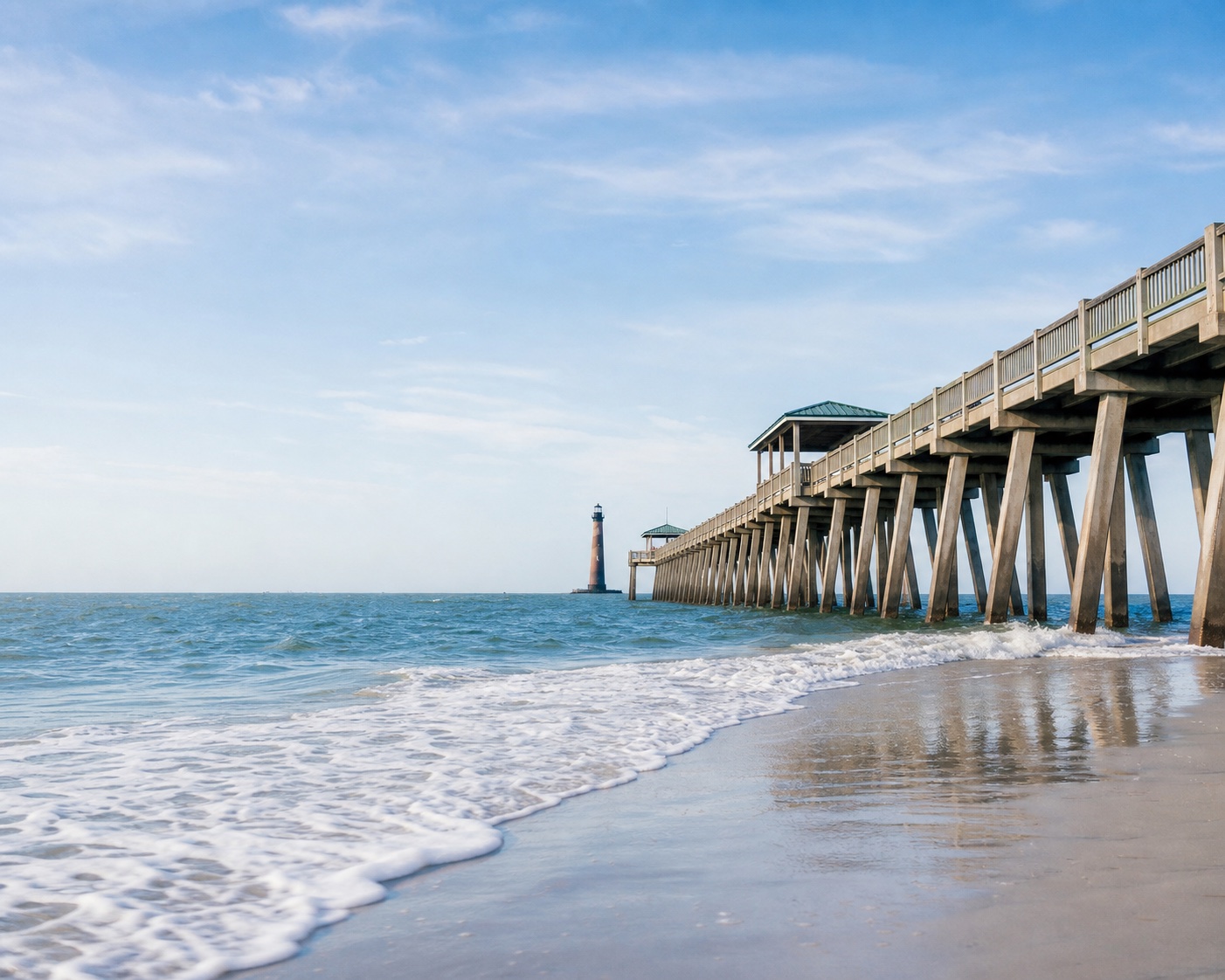
Folly Beach, known locally as The Washout, is Charleston's go-to surf spot and one of the most consistent breaks on the South Carolina coast. A series of stone groynes running perpendicular to the beach create structured sandbars that produce reliable peaks when the swell cooperates. The vibe is relaxed and community-driven, with a strong local scene that has been surfing here for decades. The beach faces south-east, picking up everything from summer hurricane groundswells to winter nor'easters pushing down the coast.
The best windows arrive between August and November when tropical systems track up the Atlantic, sending long-period groundswells towards the coast. Winter nor'easters from December through March also deliver rideable surf, though these tend to be shorter period and choppier. Look for east to south-east swells in the 3-6ft range with a north-west offshore wind. Dawn sessions before the sea breeze kicks in around 10am typically offer the cleanest conditions.
The peaks shift depending on sand movement, but the groynes serve as reliable reference points. The sandbars that form on the south side of each groyne tend to produce the best-shaped waves. On bigger swells, the outside bars activate and offer longer rides. Paddle out through the rip channels that run alongside the groynes rather than fighting the whitewater straight on. Position yourself just to the south of the groyne where the sand has accumulated deepest.
Strong longshore currents run parallel to the beach and intensify on bigger swells. The stone groynes are hard and unforgiving if you get swept into them. Rip currents form predictably in the channels between sandbars. Stingrays inhabit the shallows during summer, so shuffle your feet when wading out. Lightning is a genuine threat during summer afternoon thunderstorms.
Street parking lines East Arctic Avenue near The Washout, with a dedicated car park at the county park at the eastern end of the island. Metered parking operates during peak season. The beach is fully accessible with no cliff walks or difficult entries. Rinse stations and public toilets are available at the county park.
The Washout attracts a loyal local crew who surf year-round regardless of conditions. Summer weekends draw large crowds including stand-up paddlers and beginners from Charleston. Early mornings and weekdays thin the numbers considerably. The atmosphere is welcoming but the regular crew expect basic etiquette to be respected.
The sandbars shift dramatically after storms, so a spot that worked brilliantly last week might be flat this week. Check conditions in person rather than relying solely on webcams. The best banks tend to form in late summer after sustained south-westerly winds push sand offshore. Bring a thicker wetsuit than you think you need from November onwards as the Labrador Current makes the water surprisingly cold for the latitude.
No recent check-ins. Be the first to report.
Record your session, conditions and gear.
Based on historical weekly averages
Combining historical conditions with school holiday crowd pressure to find the sweet spot.
How busy each week is based on school holiday overlap from feeder markets.
The timing score combines two signals: historical conditions quality (how good the skiing or surfing typically is in a given week, based on 5 years of weather data) and crowd pressure (how many of this destination's feeder markets have school holidays that week).
Crowd pressure is weighted by each feeder country's share of visitors. If 40% of a resort's visitors come from France and France is on holiday, that contributes 0.40 to the crowd pressure score. Crowds can reduce the timing score by up to 35%, ensuring conditions still matter most.
Scores: 5 = great conditions with low crowds (the sweet spot). 4 = great conditions with moderate crowds, or good conditions with low crowds. 3 = average. 2 = below average conditions or very crowded. 1 = poor conditions or peak holiday chaos.
Last 29 days of logged conditions.
Sign up to save favourite spots and get surf alerts
Create free accountCreate a free profile and let employers in Folly Beach find you.
Create Profile →Current conditions refresh every 3 hours when the cron runs. Hourly data updates every 30 minutes. The 7-day forecast, luck factor, and packing notes are all pre-computed at the same time.
We compare the 7-day forecast to the last 5 years of marine data for the same week at Folly Beach. The delta tells you whether conditions are shaping up better, worse, or about the same as a typical mid-June.
We score each day of the 7-day forecast using the same algorithm as the leaderboard, and highlight the highest scorer.
Open-Meteo's Marine API (swell height, period, water temperature) and Weather API (wind and conditions).
Honestly, no. Every break has tide windows, swell directions and reef contours that a global model cannot see. Treat the score as a starting point, then check a local cam.
The best week for surf at Folly Beach is the week of 30 November (score 3/5) with low crowds.
Next to nothing in the water. Check back tomorrow. Short-period chop. The waves lack any real push. Onshore wind making a mess of the surface. Best conditions early morning before the sea breeze arrives. Not enough swell to get this spot firing properly.
Heads up: thunderstorms forecast.
Indicators derived from forecast data, not official warnings. Always check local lifeguard or official advice.
Moderate water clarity: ~3m visibility
Daily scores over the last 12 months at Folly Beach