Japan Β· Japan
Not enough data yet. Log a session to help build the accuracy score.
This guide was generated from conditions data. Know this spot? Submit your own tips below.
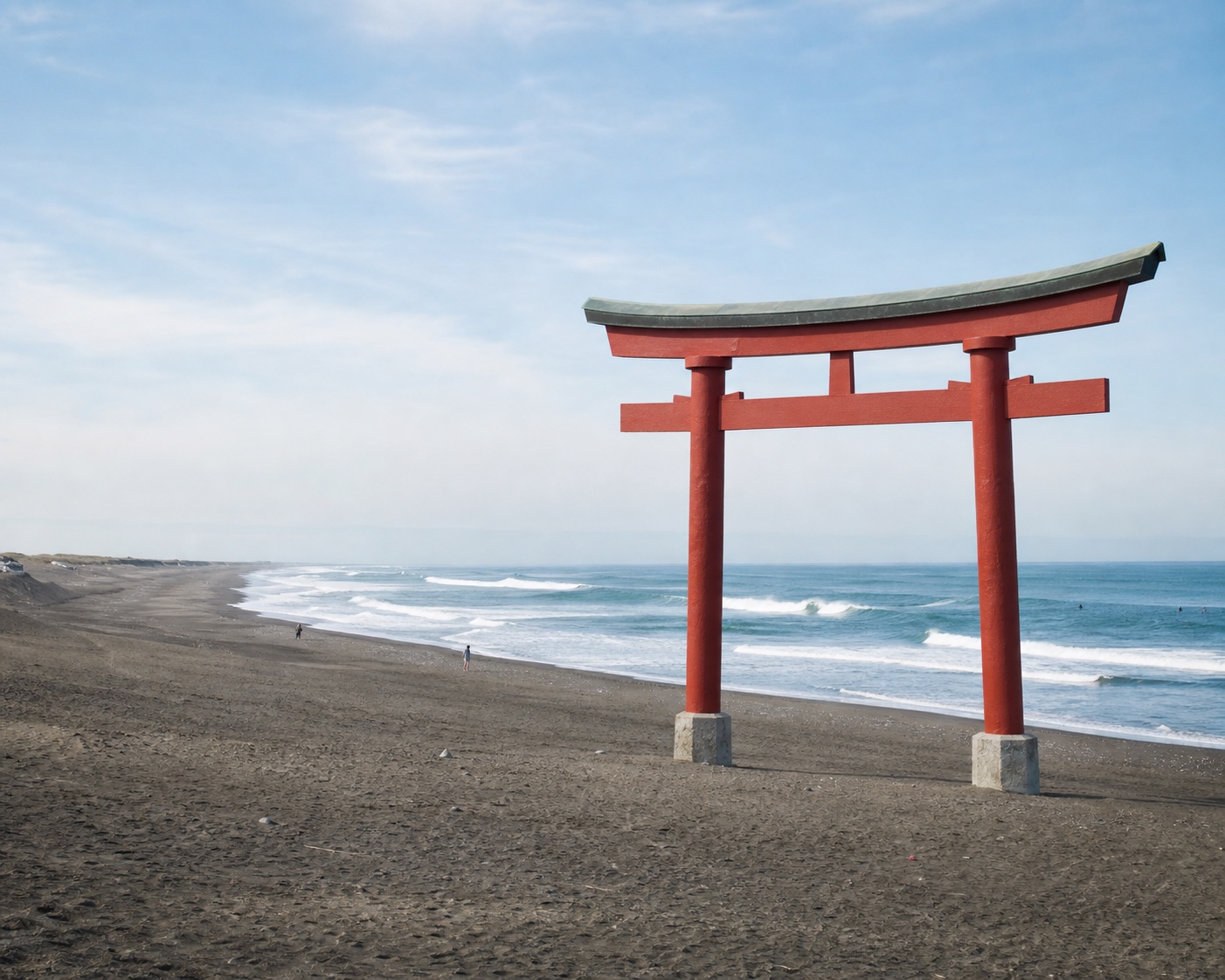
Tsurigasaki Beach (also called Shida) hosted the 2020 Olympic surfing events and sits adjacent to Ichinomiya in Chiba Prefecture. The wave shares similar characteristics with its famous neighbour: east-facing beach breaks structured by jetties producing quality A-frame peaks. The Olympic venue designation has elevated its profile, though the wave quality has always been well-regarded by the Tokyo surfing community.
Summer typhoon season (July-October) produces the most powerful groundswells. Winter provides consistent smaller easterly swells. The wave works on 2-6ft of east to south-east swell. Westerly offshore winds provide clean conditions. The jetty structures concentrate and organise the swells into rideable peaks.
The jetties provide reference points and create structured sandbars. The best banks form on the south side of each structure where sand accumulates. Position in the rip channels alongside the jetties for easy paddle-out, then move onto the adjacent sandbar. Multiple sections along the beach offer different characteristics.
Concrete jetties are hard structures. Strong rip currents run alongside them. Typhoon swells produce powerful, hollow conditions. Crowding is intense on weekends. Jellyfish in summer.
Paid car parks along the coast road. Full facilities. Train access from Tokyo (90 minutes). Surf shops and rental abundant.
Highly crowded, especially weekends and during typhoon events. The Olympic legacy has increased interest. Weekday mornings offer the best ratios. The Japanese surf community is polite but numbers are high.
Virtually identical to neighbouring Ichinomiya in terms of conditions and approach. The banks shift constantly. Local shops have the best intel on which section is working. Tuesday/Wednesday mornings are quietest. A 3/2mm wetsuit for winter, springsuit for summer. Standard performance shortboard covers most conditions.
No recent check-ins. Be the first to report.
Record your session, conditions and gear.
Based on historical weekly averages
Combining historical conditions with school holiday crowd pressure to find the sweet spot.
How busy each week is based on school holiday overlap from feeder markets.
The timing score combines two signals: historical conditions quality (how good the skiing or surfing typically is in a given week, based on 5 years of weather data) and crowd pressure (how many of this destination's feeder markets have school holidays that week).
Crowd pressure is weighted by each feeder country's share of visitors. If 40% of a resort's visitors come from France and France is on holiday, that contributes 0.40 to the crowd pressure score. Crowds can reduce the timing score by up to 35%, ensuring conditions still matter most.
Scores: 5 = great conditions with low crowds (the sweet spot). 4 = great conditions with moderate crowds, or good conditions with low crowds. 3 = average. 2 = below average conditions or very crowded. 1 = poor conditions or peak holiday chaos.
Last 28 days of logged conditions.
Sign up to save favourite spots and get surf alerts
Create free accountCreate a free profile and let employers in Tsurigasaki Beach find you.
Create Profile βCurrent conditions refresh every 3 hours when the cron runs. Hourly data updates every 30 minutes. The 7-day forecast, luck factor, and packing notes are all pre-computed at the same time.
We compare the 7-day forecast to the last 5 years of marine data for the same week at Tsurigasaki Beach. The delta tells you whether conditions are shaping up better, worse, or about the same as a typical mid-June.
We score each day of the 7-day forecast using the same algorithm as the leaderboard, and highlight the highest scorer.
Open-Meteo's Marine API (swell height, period, water temperature) and Weather API (wind and conditions).
Honestly, no. Every break has tide windows, swell directions and reef contours that a global model cannot see. Treat the score as a starting point, then check a local cam.
The best week for surf at Tsurigasaki Beach is the week of 2 November (score 3/5) with low crowds.
Flat as a lake. Save your energy for another day. Short-period wind swell: expect weak, crumbly faces. Gentle onshore putting some texture on the faces. Best conditions early morning before the sea breeze arrives. Not enough swell to get this spot firing properly.
Heads up: jellyfish: peak season.
Indicators derived from forecast data, not official warnings. Always check local lifeguard or official advice.
Good water clarity: ~9m visibility
Daily scores over the last 12 months at Tsurigasaki Beach