Skip to content
Log InFind WorkBrowse CandidatesJobsEmployersExploreConditionsResearchFestivalsPlanCommunity
Join as SeasonaireI'm Hiring
Live conditions

Torres

Brazil Β· South America

Updated 2 hours ago
🌧️
Type:beach
Shelter:exposed
Difficulty:intermediate
Tide:all tides
Facing:SE

Forecast accuracy at Torres

Not enough data yet. Log a session to help build the accuracy score.

Best time to go

No great windows in the next 2 days

Best available option is Today around 7am (score: 19). Conditions are below the Good threshold but may still be surfable.

Crowd report

No recent check-ins. Be the first to report.

Session journal

Record your session, conditions and gear.

Sign up to save favourite spots and get surf alerts

Create free account

Recent form

Last 18 days of logged conditions.

30-day average
2.2/10
Days firing
0
Score 6 or higher
Best day recently
3.9/10
1 May
Days logged
18

Spot guide

This guide was generated from conditions data. Know this spot? Submit your own tips below.

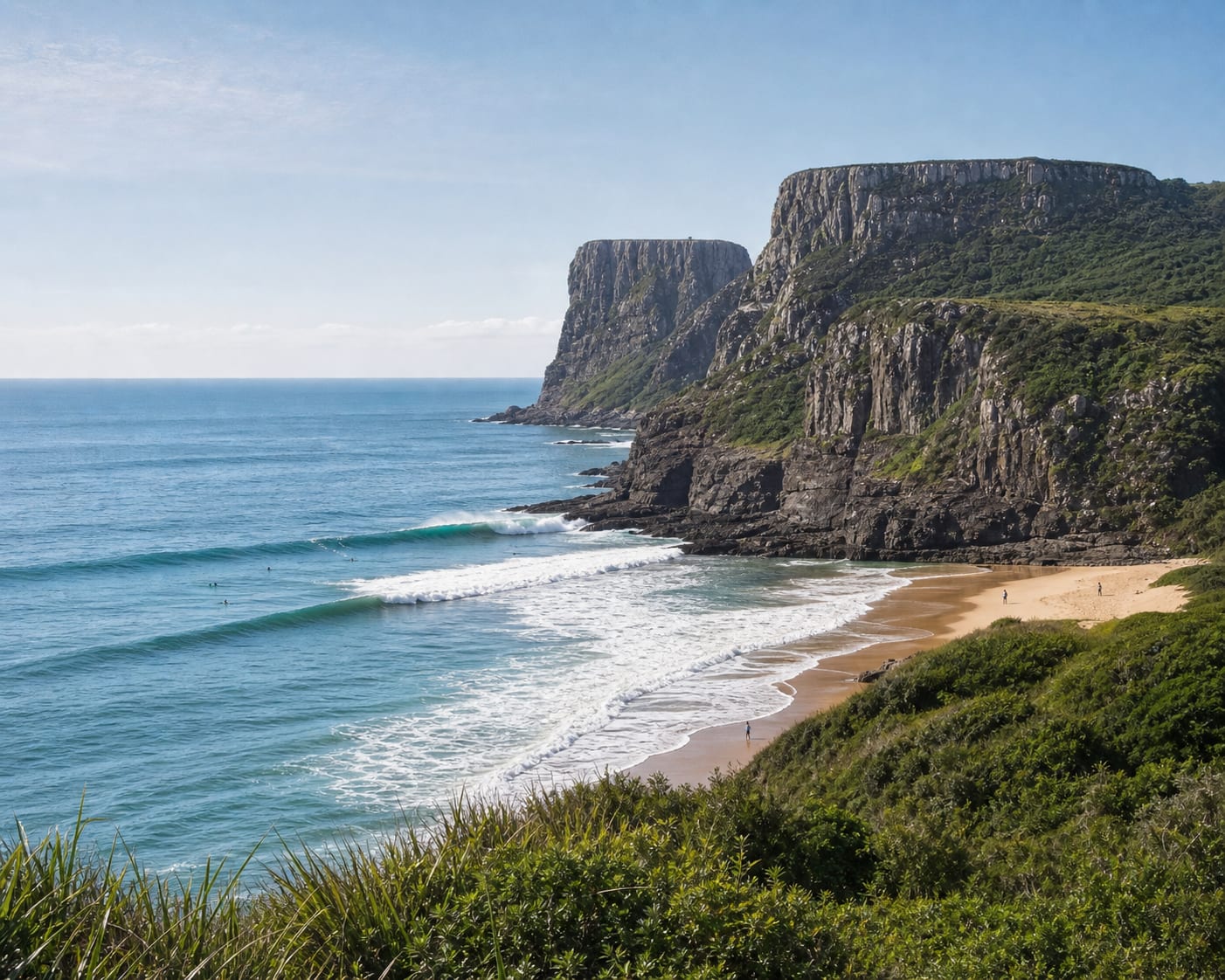
## The spot Torres is a consistent beach break in southern Brazil's Rio Grande do Sul state, uniquely defined by massive basalt cliffs that tower over the ocean and segment the coastline into distinct bays. The shifting sandbanks produce punchy A-frame peaks with both left and right options. The dramatic cliff backdrop distinguishes Torres from typical Brazilian beach breaks and the rock formations influence the sand accumulation patterns, creating more structured banks than the open coastline. ## When it works South-easterly Atlantic groundswells from March through October deliver the most consistent conditions. The wave works on 3-6ft of south-east to east swell. Westerly offshore winds provide clean conditions, most reliable at dawn before the thermal develops. Winter cold fronts produce the biggest swells. Summer has smaller, less consistent surf. ## Where to sit The various bays between the cliff formations each produce different characteristics. Praia da Cal is the most accessible. The sandbars form most reliably near the cliff bases where the rock formations concentrate sand. Position on the outer bars where the A-frames first break. The peaks shift with each storm. ## Hazards Strong rip currents develop in the channels between sandbars, intensified by the cliff formations that concentrate water flow. The cliffs themselves are a fall hazard if walking above. The water is cold in winter (14-18C). On bigger swells, the power can be significant for a beach break. ## Parking and access Car parks serve the main beaches. The town has full facilities. The cliffs provide excellent vantage points for checking conditions. The beach is accessible via paths from the cliff-top. Torres is a 3-hour drive from Porto Alegre or a 5-hour drive from Florianopolis. ## The crowd Moderate crowds of 15-25 surfers on good days. Summer holidays bring the biggest numbers. Weekday mornings are quiet. The local Rio Grande do Sul surf community is friendly. Multiple bays distribute the crowd. ## Local tips The cliff formations create wind shadows. When onshore winds are blowing, check the bays on the lee side of the cliffs for protected conditions. Southern Brazil gets genuinely cold; a 3/2mm wetsuit is needed from April through October. The basalt cliffs are photogenic at golden hour. Check multiple bays before committing; conditions vary between them depending on swell direction and sand movement.

Working in Torres this season?

Create a free profile and let employers in Torres find you.

Create Profile β†’

Frequently asked questions

How often is this page updated?

Current conditions refresh every 3 hours when the cron runs. Hourly data updates every 30 minutes. The 7-day forecast, luck factor, and packing notes are all pre-computed at the same time.

What is the luck factor?

We compare the 7-day forecast to the last 5 years of marine data for the same week at Torres. The delta tells you whether conditions are shaping up better, worse, or about the same as a typical late May.

How is 'best session' picked?

We score each day of the 7-day forecast using the same algorithm as the leaderboard, and highlight the highest scorer.

Where does the data come from?

Open-Meteo's Marine API (swell height, period, water temperature) and Weather API (wind and conditions).

Does the score capture local knowledge?

Honestly, no. Every break has tide windows, swell directions and reef contours that a global model cannot see. Treat the score as a starting point, then check a local cam.

When is the best time to surf Torres?

Check our timing score heatmap above for a week-by-week breakdown combining surf conditions with crowd pressure.