Each location is refreshed once every three hours. The hourly view, 7-day forecast, luck factor and packing notes come from the same stored update.
We compare the 7-day forecast with the version-matched historical observations available for the same time of year at Taitung. The delta shows whether conditions look better, worse or about the same as a typical late July.
We score each day of the 7-day forecast using the same algorithm as the leaderboard, and highlight the highest scorer.
Open-Meteo's Marine API (swell height, period, water temperature) and Weather API (wind and conditions).
Rideable waves with moderate energy. Short-period chop. The waves lack any real push. Light offshore grooming the faces nicely. Conditions improving through the afternoon.
PeakWave scores are planning signals, not safety clearance. Check local authorities, official bulletins and on-site conditions before you go. Read our editorial policy.
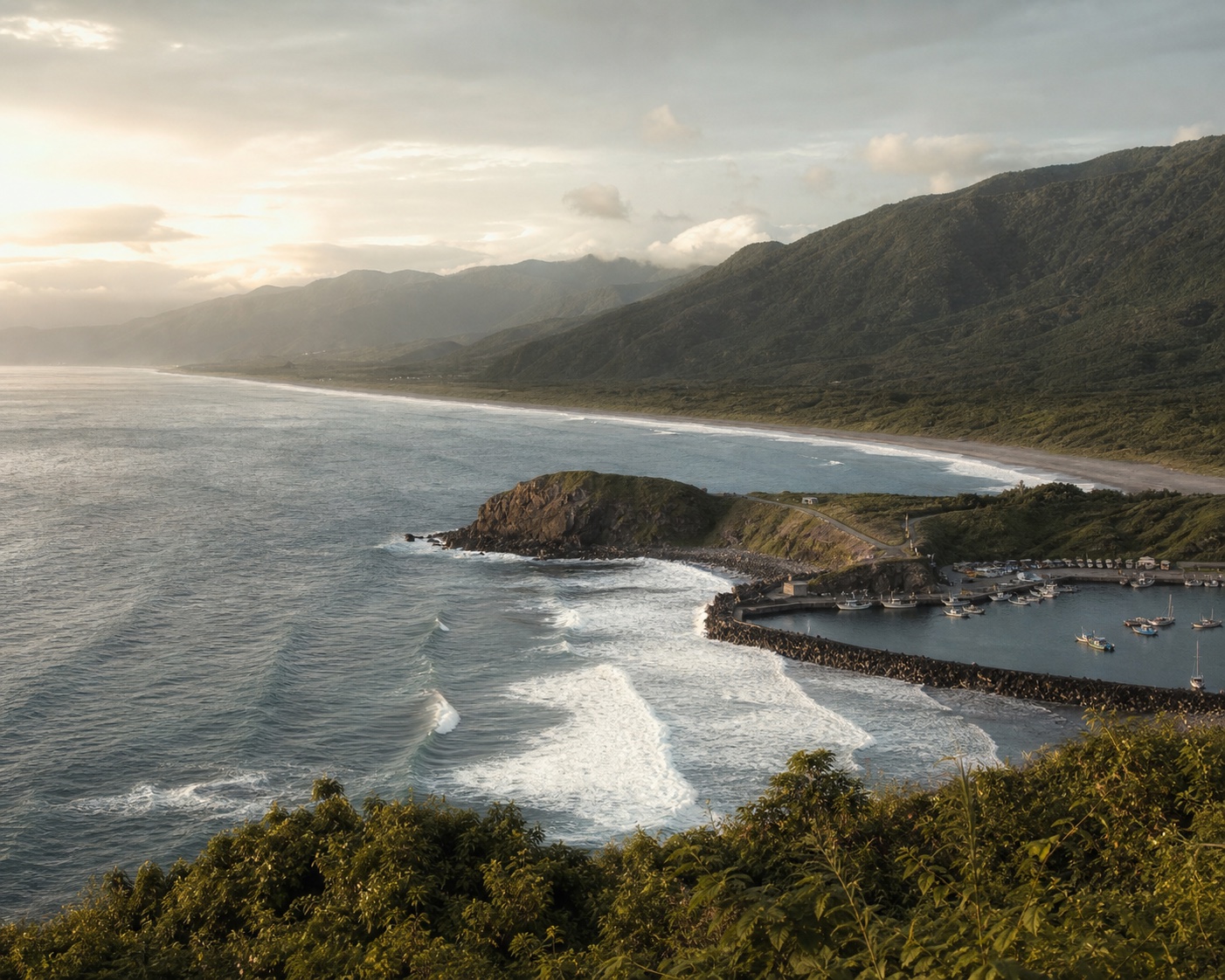
Taitung, specifically the breaks around Jinzun Harbour and Donghe, acts as the primary surfing hub on the south-eastern coast of Taiwan. The bathymetric profile is a volatile mix of scattered cobblestone rivermouths and dark, volcanic sandbanks. Because the coastline faces directly east into the Pacific Ocean, it acts as a magnet for swells generated by passing summer typhoons and the consistent winter north-east monsoon. A westerly wind blowing down from the steep coastal mountains provides optimal offshore conditions, grooming the wave faces. The wave mechanics typically produce A-frame peaks that offer steep, punchy drops and fast, carveable left and right-hand walls. Due to the variable nature of the sand and stone banks, the waves can range from forgiving, spilling walls to heavier, hollow sections depending on the tidal phase. While smaller days accommodate novices, the intense pace and strong currents during peak typhoon season dictate that it is best suited for intermediate surfers possessing solid wave-reading abilities and cardiovascular fitness.
Heads up: jellyfish: peak season, and rocks exposed at low tide.
Indicators derived from forecast data, not official warnings. Always check local lifeguard or official advice.
The air here is 87% cleaner than the average comparison city right now.
Significantly cleaner air than a typical city. Ideal for outdoor exercise with minimal respiratory strain.
Not a pollutant. Ozone is naturally higher at altitude and near the coast, and lower in cities where traffic exhaust breaks it down. High readings here typically indicate clean air. Can cause short-term airway irritation during intense exercise but is not linked to the long-term health risks of particulate pollution.
Additive health score: each pollutant contributes points relative to its WHO 2021 guideline and long-term health impact (PM2.5 9, NO₂ 5, O₃ 3, PM10 2, SO₂ 1 at WHO limits). Data via Open-Meteo. City markers show live readings. Red line marks the WHO guideline. Updated 09:01
Crystal clear water: ~23m visibility
Daily scores over the last 12 months at Taitung
Historical quality only. Safety is not reconstructed for this view.
Create a free profile and let employers in Taitung find you.
Create Profile →Partly. The model uses stored spot geometry, swell ranges and tide preferences where configured. It cannot see changing banks, crowds, access, closures or everything visible on a local cam, so treat it as a starting point.
The best week for surf at Taitung is the week of 16 November (score 3/5) with low crowds.
This guide was generated from conditions data. Know this spot? Submit your own tips below.
Taitung is Taiwan's primary surf hub, centred around Jinzun Harbour and Donghe on the south-eastern coast. A volatile mix of cobblestone rivermouths and dark volcanic sandbanks produces punchy A-frame peaks that offer fast, carveable walls. The coastline faces directly east into the Pacific Ocean, making it a magnet for typhoon swells and monsoon energy. The dramatic backdrop of steep, jungle-covered coastal mountains plunging towards the sea gives sessions a wild, remote quality despite the developing surf infrastructure.
Summer typhoon season (June-October) delivers the most powerful and exciting swells. The winter north-east monsoon (November-March) provides consistent smaller waves. The wave works on 2-8ft of east to north-east swell. Westerly winds blowing down from the coastal mountains provide offshore conditions, strongest in the early mornings. Typhoon swell windows are brief but spectacular.
Jinzun Harbour has a defined peak that forms where the jetty structures the sandbar. The right is generally longer. Donghe offers multiple peaks along the river-influenced sandbars. Position yourself where the darker sand (indicating a deeper channel) meets the shallower bar. The peaks shift with each typhoon event as the sand and cobblestones rearrange.
The cobblestone bottom at some spots can cause injury on shallow-water falls. Typhoon swells produce powerful currents and chaotic conditions that can overwhelm intermediate surfers. The volcanic sand shifts rapidly, creating unexpected shallow spots. Debris from the river mouth can be present after heavy rain. The mountains generate sudden, unpredictable wind changes.
Car parks serve the main breaks at Jinzun and Donghe. The beaches are accessible via short walks from the road. Facilities include toilets and seasonal refreshment stands. Surf schools and rental shops have established in the area. Taitung city is a 30-minute drive from the main breaks. Trains from Taipei take 4-5 hours.
The Taitung surf scene is growing but remains far less crowded than northern Taiwan. Expect 10-20 surfers on good days at the main spots. The Taiwanese surf community is friendly and supportive. Typhoon swells draw more experienced surfers from across the island. Weekday mornings are quiet.
Monitor typhoon tracks obsessively during summer. The best conditions arrive when a system passes close enough to generate groundswell but far enough that the wind remains offshore. These windows are 12-24 hours and reward those who can respond quickly. A standard shortboard handles most conditions. The water is warm (24-28C) from May through October; a springsuit suffices for winter (20-22C). The indigenous Amis communities along the coast welcome respectful visitors and their traditional culture adds richness to the coastal experience.
Surf at Taitung
Your score
Forecast feel
Score this window against what you actually found.
No scored surf reviews in the last 24 hours.
No recent check-ins. Be the first to report.
Log a day
Add Taitung to your private Companion record without GPS.
Combining historical conditions with school holiday crowd pressure to find the sweet spot.
The timing score combines two signals: historical conditions quality (how good the skiing or surfing typically is in a given week, based on 5 years of weather data) and crowd pressure (how many of this destination's feeder markets have school holidays that week).
Crowd pressure is weighted by each feeder country's share of visitors. If 40% of a resort's visitors come from France and France is on holiday, that contributes 0.40 to the crowd pressure score. Crowds can reduce the timing score by up to 35%, ensuring conditions still matter most.
Scores: 5 = great conditions with low crowds (the sweet spot). 4 = great conditions with moderate crowds, or good conditions with low crowds. 3 = average. 2 = below average conditions or very crowded. 1 = poor conditions or peak holiday chaos.
Last 13 days of logged conditions.
Based on historical weekly averages
See timing scores, school holiday busyness, and lift pass pricing to find the best time to book.
View Best Time to Go →