Not enough data yet. Log a session to help build the accuracy score.
This guide was generated from conditions data. Know this spot? Submit your own tips below.
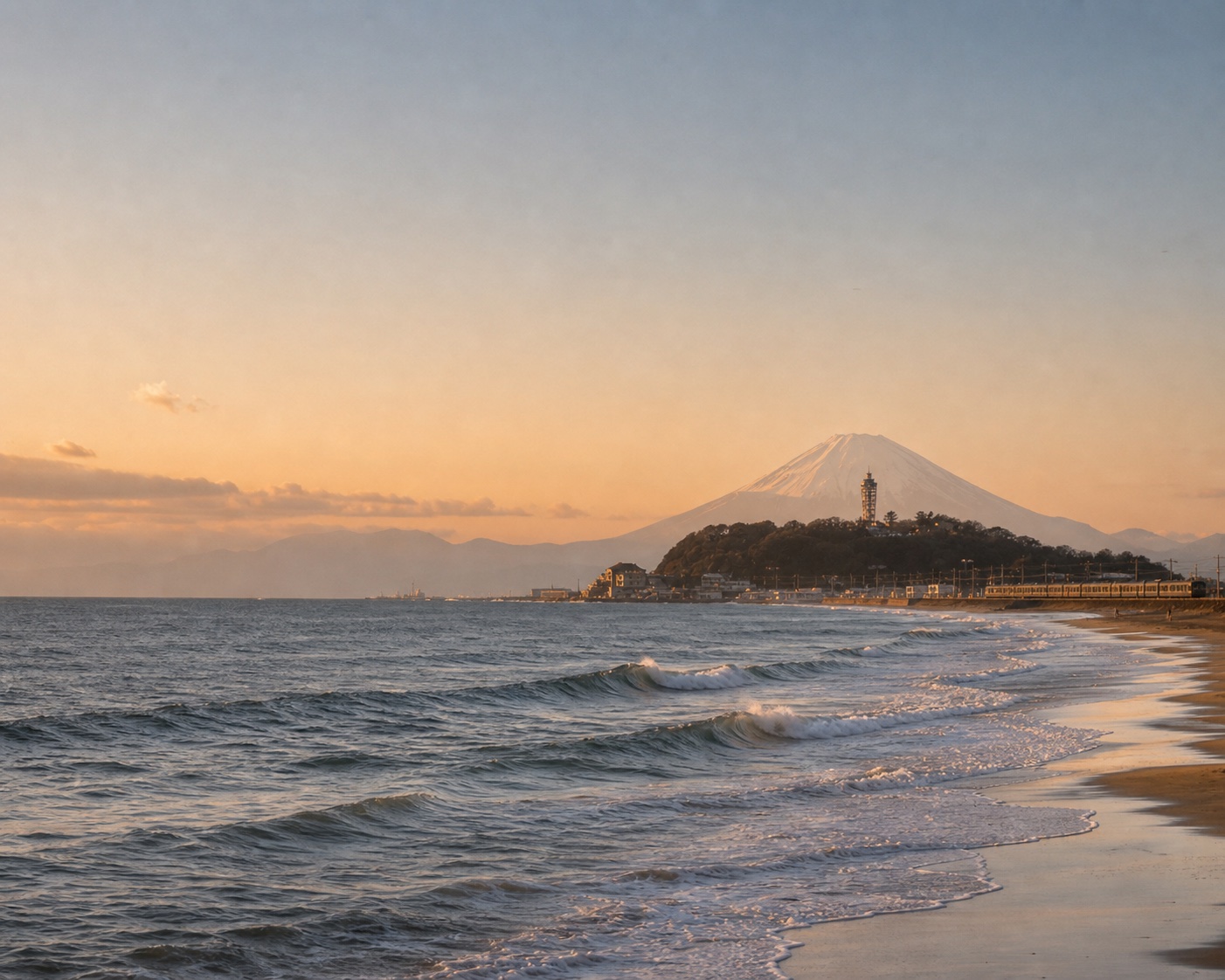
Shonan is Japan's most accessible surf area, a stretch of beach breaks along Sagami Bay south of Tokyo. The beaches face south and produce small, consistent waves from Pacific swells and typhoon energy. Enoshima Island sits offshore. It is Japan's original surf culture hub, where the sport first took root in the 1960s. Urban, busy, but consistently rideable.
The best waves come from typhoon swells (August-October) and Pacific low-pressure systems. A northerly wind is offshore. Works on all tides. Small wind swell produces waist-high waves year-round. The 2-4ft range is common; overhead days from typhoons are exceptional events.
Kugenuma, Tsujido, and Chigasaki are the main beaches. Multiple peaks along the urban coastline. The area around Kugenuma tends to have the best-formed banks. Choose based on crowd and sand conditions.
Crowded. Small waves that lack real power. Some rocks and tetrapod structures along the coast. Swimmers and other ocean users in summer. Generally very safe.
Train from Tokyo (60-90 minutes). Pay parking along the coast road. Direct beach access. Full urban facilities.
Extremely crowded. Tokyo's enormous population uses Shonan as its primary surf escape. Good days see 50-100+ people. Weekday mornings are best. The competitive pressure on small waves can be frustrating.
Shonan is Japan's surf culture centre despite the small waves. The atmosphere, the community, and the post-surf food (ramen, sushi) make it worthwhile. Typhoon swells transform the area; be ready to move fast when they arrive. Kamakura (nearby) has world-famous temples and shrines for flat days. The sunrise sessions are magical with Mount Fuji visible on clear days.
No recent check-ins. Be the first to report.
Record your session, conditions and gear.
Based on historical weekly averages
Combining historical conditions with school holiday crowd pressure to find the sweet spot.
How busy each week is based on school holiday overlap from feeder markets.
The timing score combines two signals: historical conditions quality (how good the skiing or surfing typically is in a given week, based on 5 years of weather data) and crowd pressure (how many of this destination's feeder markets have school holidays that week).
Crowd pressure is weighted by each feeder country's share of visitors. If 40% of a resort's visitors come from France and France is on holiday, that contributes 0.40 to the crowd pressure score. Crowds can reduce the timing score by up to 35%, ensuring conditions still matter most.
Scores: 5 = great conditions with low crowds (the sweet spot). 4 = great conditions with moderate crowds, or good conditions with low crowds. 3 = average. 2 = below average conditions or very crowded. 1 = poor conditions or peak holiday chaos.
Last 28 days of logged conditions.
Sign up to save favourite spots and get surf alerts
Create free accountCreate a free profile and let employers in Shonan find you.
Create Profile →Current conditions refresh every 3 hours when the cron runs. Hourly data updates every 30 minutes. The 7-day forecast, luck factor, and packing notes are all pre-computed at the same time.
We compare the 7-day forecast to the last 5 years of marine data for the same week at Shonan. The delta tells you whether conditions are shaping up better, worse, or about the same as a typical mid-June.
We score each day of the 7-day forecast using the same algorithm as the leaderboard, and highlight the highest scorer.
Open-Meteo's Marine API (swell height, period, water temperature) and Weather API (wind and conditions).
Honestly, no. Every break has tide windows, swell directions and reef contours that a global model cannot see. Treat the score as a starting point, then check a local cam.
The best week for surf at Shonan is the week of 16 November (score 3/5) with low crowds.
Slim pickings. Only worth it if you are gagging for a wave. Short-period wind swell: expect weak, crumbly faces. Heavy offshore making for difficult paddle-outs but textbook faces.
Heads up: jellyfish: peak season.
Indicators derived from forecast data, not official warnings. Always check local lifeguard or official advice.
Moderate water clarity: ~5m visibility
Daily scores over the last 12 months at Shonan