Mexico Β· Central America
Not enough data yet. Log a session to help build the accuracy score.
This guide was generated from conditions data. Know this spot? Submit your own tips below.
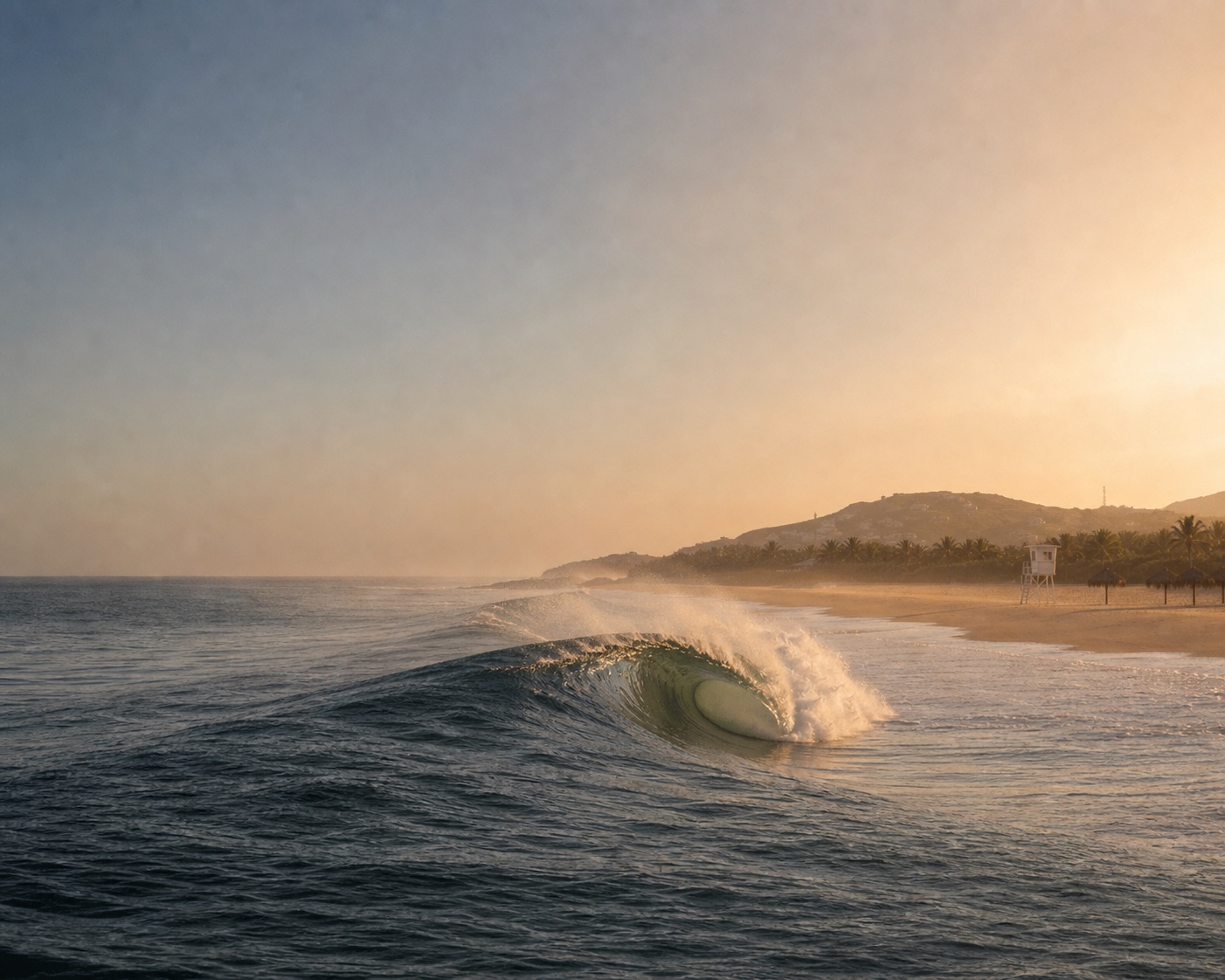
Playa Zicatela, the Mexican Pipeline, is one of the world's most dangerous beach breaks. A deep offshore trench delivers unattenuated Pacific energy directly onto near-vertical sandbanks, creating towering, monstrously thick barrels that break with catastrophic force. The wave has broken boards, bodies, and spirits with equal indifference. When overhead south swells arrive, Zicatela transforms into a spectacle of raw oceanic violence that rivals any wave on Earth for sheer power.
South-westerly Pacific groundswells from April through October deliver the heaviest conditions, with June and July typically producing the biggest swells. The wave needs 4ft-plus to barrel and produces world-class tubes in the 8-15ft range. North-easterly offshore winds hold the massive lips open, most reliable at dawn. The wave breaks year-round at various sizes.
The main peaks shift along Zicatela's stretch of beach. The central section tends to produce the most concentrated A-frame peaks. The take-off is steep and immediate, dropping into a thick barrel from the first moment. Position on the outer bar where the sets first stand up. Do not sit inside; the close-out sets will bury you.
The wave breaks with extraordinary hydraulic force in very shallow water. Hold-downs drive you into compacted sand with tremendous violence. Spinal injuries, broken bones, and near-drownings occur regularly. The shifting peaks close out without warning on bigger sets. Severe rip currents develop between the banks. The close-to-shore break creates a brutal shore dump. People have died here.
Street parking along the beachfront road. The beach is immediately accessible. The town has full services catering to the surf community. Accommodation lines the beach road from budget hostels to mid-range hotels. Puerto Escondido has a domestic airport with connections to Mexico City and Oaxaca.
Zicatela draws heavy-water specialists from around the world during peak season. Expect 20-40 surfers on good days. The standard is very high and the crowd is assertive. The wave's power naturally selects for experienced surfers. Dawn patrol is essential for the best conditions.
Do not paddle out at Zicatela on a solid swell unless you have extensive experience in heavy, hollow surf. The wave is genuinely more powerful than it appears from the beach; the sand compaction and deep-water energy concentration create forces that defy the apparent wave height. A strong shortboard or step-up with extra durability handles the power. The neighbouring beach breaks (Carrizalillo, La Punta) offer mellower alternatives when Zicatela is too heavy. Watch from the beach first. Always.
No recent check-ins. Be the first to report.
Record your session, conditions and gear.
Based on historical weekly averages
Combining historical conditions with school holiday crowd pressure to find the sweet spot.
How busy each week is based on school holiday overlap from feeder markets.
The timing score combines two signals: historical conditions quality (how good the skiing or surfing typically is in a given week, based on 5 years of weather data) and crowd pressure (how many of this destination's feeder markets have school holidays that week).
Crowd pressure is weighted by each feeder country's share of visitors. If 40% of a resort's visitors come from France and France is on holiday, that contributes 0.40 to the crowd pressure score. Crowds can reduce the timing score by up to 35%, ensuring conditions still matter most.
Scores: 5 = great conditions with low crowds (the sweet spot). 4 = great conditions with moderate crowds, or good conditions with low crowds. 3 = average. 2 = below average conditions or very crowded. 1 = poor conditions or peak holiday chaos.
Last 29 days of logged conditions.
Sign up to save favourite spots and get surf alerts
Create free accountCreate a free profile and let employers in Puerto Escondido find you.
Create Profile βCurrent conditions refresh every 3 hours when the cron runs. Hourly data updates every 30 minutes. The 7-day forecast, luck factor, and packing notes are all pre-computed at the same time.
We compare the 7-day forecast to the last 5 years of marine data for the same week at Puerto Escondido. The delta tells you whether conditions are shaping up better, worse, or about the same as a typical mid-June.
We score each day of the 7-day forecast using the same algorithm as the leaderboard, and highlight the highest scorer.
Open-Meteo's Marine API (swell height, period, water temperature) and Weather API (wind and conditions).
Honestly, no. Every break has tide windows, swell directions and reef contours that a global model cannot see. Treat the score as a starting point, then check a local cam.
The best week for surf at Puerto Escondido is the week of 9 November (score 3/5) with low crowds.
Slim pickings. Only worth it if you are gagging for a wave. Reasonable period putting some grunt behind each wave. Light onshore crumble taking the edge off. Best conditions early morning before the sea breeze arrives. Not enough swell to get this spot firing properly.
Heads up: thunderstorms forecast, and jellyfish: peak season.
Indicators derived from forecast data, not official warnings. Always check local lifeguard or official advice.
Crystal clear water: ~16m visibility
Daily scores over the last 12 months at Puerto Escondido
See timing scores, school holiday busyness, and lift pass pricing to find the best time to book.
View Best Time to Go β