South Africa Β· Southern Africa
Not enough data yet. Log a session to help build the accuracy score.
This guide was generated from conditions data. Know this spot? Submit your own tips below.
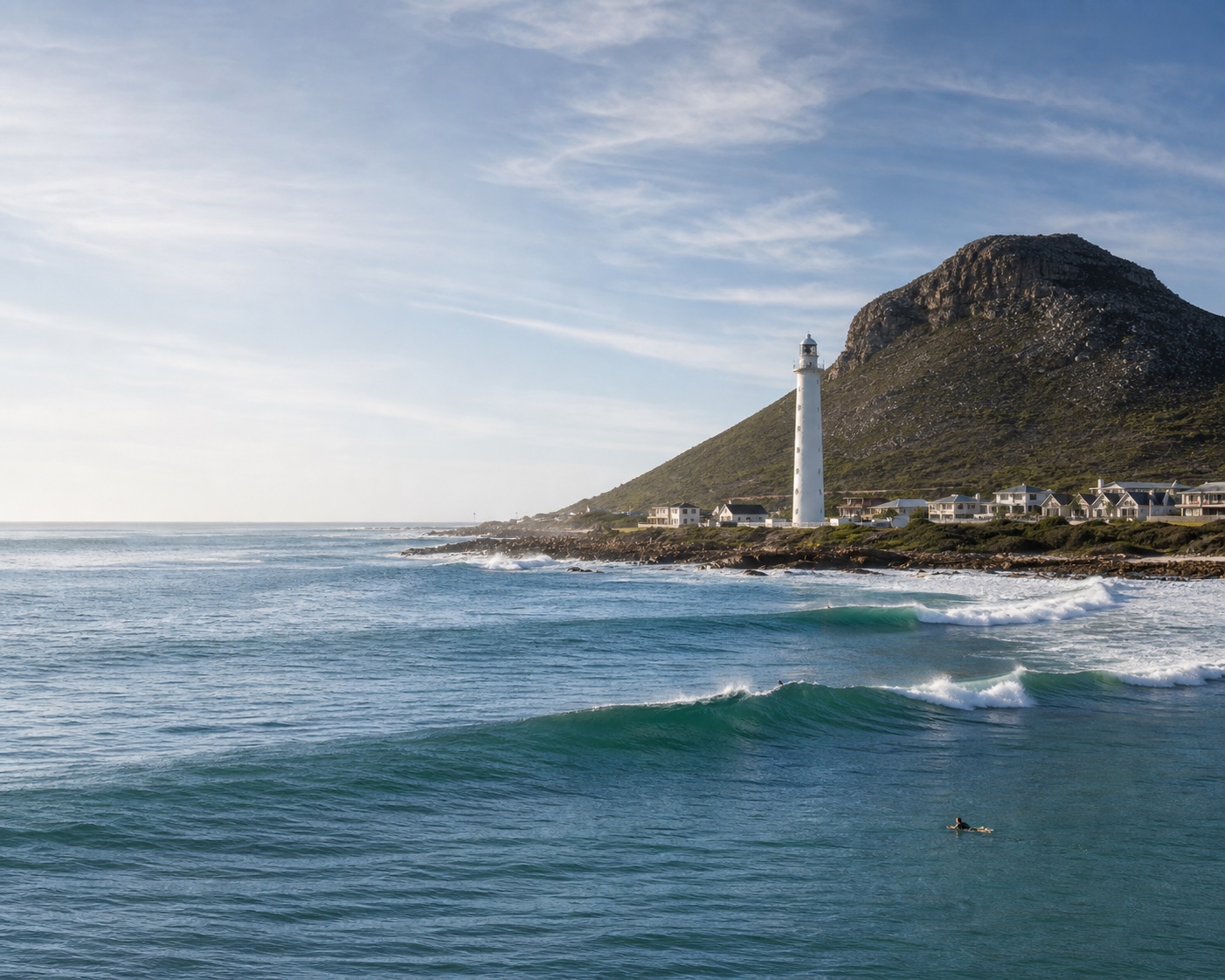
Kommetjie is a heavy-water reef break on Cape Town's Atlantic seaboard, where raw Southern Ocean swells detonate over deep granite reef smothered in kelp. Inner Kom and Outer Kom offer different intensities of the same brutal Atlantic power. The setting is dramatic: the Slangkop lighthouse on the headland, dense kelp forests stretching offshore, and the rugged Chapman's Peak mountains as a backdrop. This is serious, cold-water surfing that rewards commitment and punishes hesitation.
South-westerly winter groundswells from April through September deliver the most powerful conditions. The breaks need at least 5-6ft of swell to properly activate. Outer Kom handles genuine big-wave conditions on major swells. South-easterly winds blow offshore, providing clean conditions. The best sessions occur when a south-east wind event coincides with a solid west to south-west swell.
Inner Kom breaks closer to shore and offers a heavy, plunging left on 4-8ft swells. The take-off is beside a prominent rock formation. Outer Kom sits further offshore and activates on larger swells (8ft-plus), producing massive, grinding lefts. The kelp-filled channels provide paddle-out routes and safety zones. At Inner Kom, sit just outside the boil where the reef creates visible disruption.
The granite reef is unforgiving and the wave breaks with immense hydraulic force. The kelp is thick and can entangle leashes and bodies during hold-downs. Great white sharks patrol the kelp forests and this area has had documented encounters. The water is freezing (8-14C) year-round. Strong currents sweep across the reef on bigger swells. The shore entry crosses slippery, kelp-covered rocks.
Parking is available along the main road above the break. The walk to the waterline involves crossing rocky terrain to reach the paddle-out channel. The rocks are sharp and slippery. No formal facilities at the break. The village of Kommetjie has basic shops and cafes. Cape Town centre is a 40-minute drive.
The cold water, heavy conditions, and shark presence keep crowds naturally thin. Expect 5-15 surfers on a good day, all experienced and committed. The local crew is tight-knit and respects those who paddle out regularly regardless of conditions. The barrier to entry is high, creating a self-selecting group.
A thick wetsuit (5/4mm minimum with hood, boots, and gloves) is non-negotiable. Many local surfers wear 6/5mm in winter. The kelp feels oppressive at first but actually provides useful landmarks for positioning and dampens surface chop. Paddle through the kelp channels rather than fighting across the beds. A step-up board (6'6" to 7'0") with extra volume handles the powerful drops. The Shark Spotters programme operates in the area; check for alerts before paddling out.
No recent check-ins. Be the first to report.
Record your session, conditions and gear.
Based on historical weekly averages
Combining historical conditions with school holiday crowd pressure to find the sweet spot.
How busy each week is based on school holiday overlap from feeder markets.
The timing score combines two signals: historical conditions quality (how good the skiing or surfing typically is in a given week, based on 5 years of weather data) and crowd pressure (how many of this destination's feeder markets have school holidays that week).
Crowd pressure is weighted by each feeder country's share of visitors. If 40% of a resort's visitors come from France and France is on holiday, that contributes 0.40 to the crowd pressure score. Crowds can reduce the timing score by up to 35%, ensuring conditions still matter most.
Scores: 5 = great conditions with low crowds (the sweet spot). 4 = great conditions with moderate crowds, or good conditions with low crowds. 3 = average. 2 = below average conditions or very crowded. 1 = poor conditions or peak holiday chaos.
Last 28 days of logged conditions.
Sign up to save favourite spots and get surf alerts
Create free accountCreate a free profile and let employers in Kommetjie find you.
Create Profile βCurrent conditions refresh every 3 hours when the cron runs. Hourly data updates every 30 minutes. The 7-day forecast, luck factor, and packing notes are all pre-computed at the same time.
We compare the 7-day forecast to the last 5 years of marine data for the same week at Kommetjie. The delta tells you whether conditions are shaping up better, worse, or about the same as a typical mid-June.
We score each day of the 7-day forecast using the same algorithm as the leaderboard, and highlight the highest scorer.
Open-Meteo's Marine API (swell height, period, water temperature) and Weather API (wind and conditions).
Honestly, no. Every break has tide windows, swell directions and reef contours that a global model cannot see. Treat the score as a starting point, then check a local cam.
The best week for surf at Kommetjie is the week of 30 November (score 3/5) with low crowds.
Barely any swell. Not much to work with today. Breezy. Some surface chop to deal with. Best conditions early morning before the sea breeze arrives.
Heads up: rip risk elevated, and rocks exposed at low tide.
Indicators derived from forecast data, not official warnings. Always check local lifeguard or official advice.
Good water clarity: ~10m visibility
Daily scores over the last 12 months at Kommetjie