South Korea Β· Indo-Pacific
Not enough data yet. Log a session to help build the accuracy score.
This guide was generated from conditions data. Know this spot? Submit your own tips below.
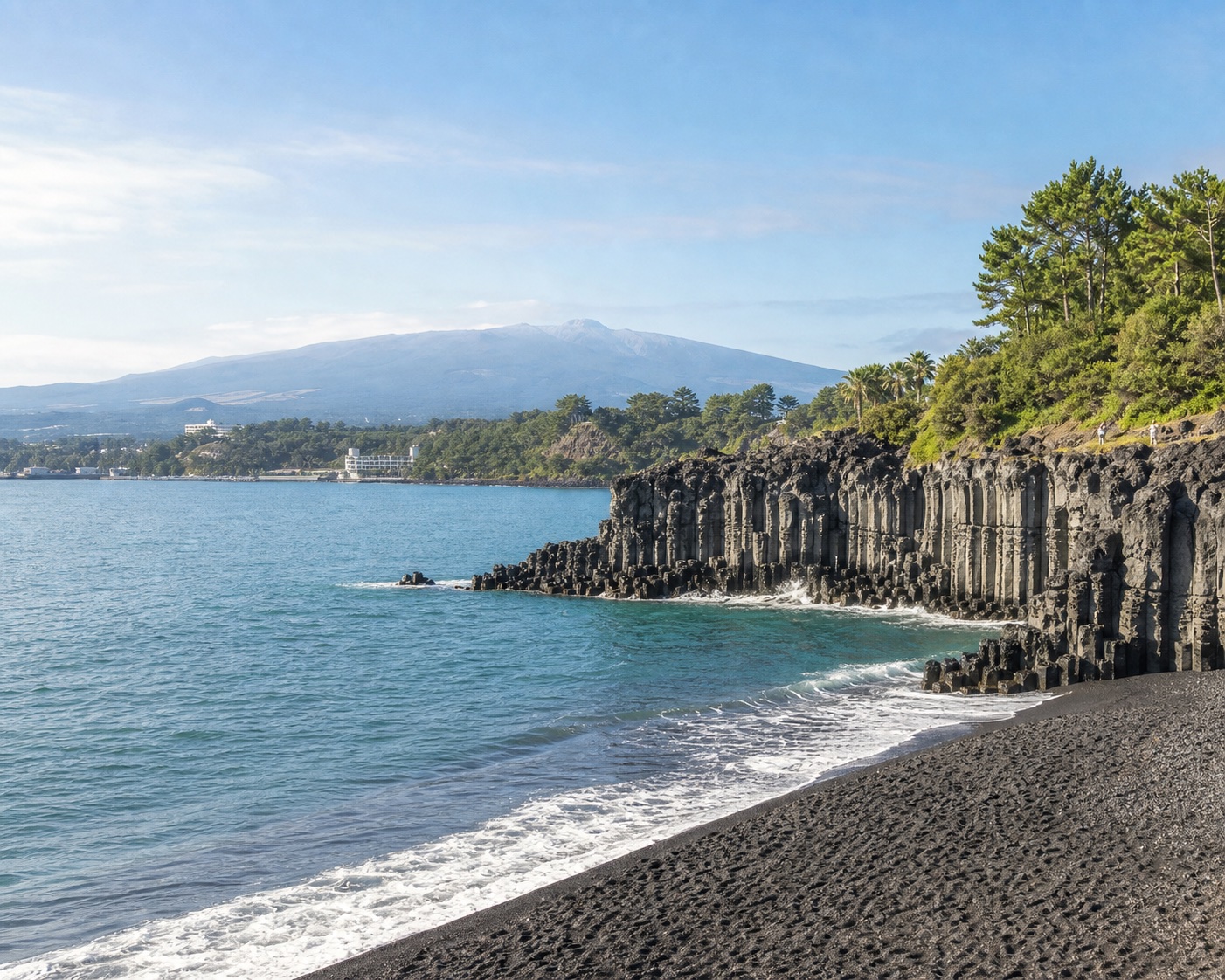
Jeju Jungmun is South Korea's premier surf beach, a gentle beach break on the southern coast of the volcanic Jeju Island. The wave breaks over a gently sloping expanse of compacted sand nestled between dramatic volcanic cliffs, producing soft, slow-rolling waves that are perfect for beginners. Korea's surf culture is young and growing rapidly, and Jungmun sits at its centre as the most accessible and consistent spot on the island. The contrast between the black volcanic rock and the emerald-green ocean creates a striking visual setting.
Summer typhoon season (July-October) delivers the most consistent and powerful swells as Pacific systems track north-west towards the Korean peninsula. Winter months bring southerly wind swells from passing frontal systems. The wave works on 2-5ft of south to south-east swell. Northerly offshore winds provide clean conditions, most reliable early in the morning. The beach's southern exposure makes it a reliable swell catcher for anything approaching from the south.
The beach offers multiple peaks spread across the wide sandy bay. The central section typically has the most consistent banks. Beginners should stay in the whitewater zone close to shore where the reformed waves are gentle and manageable. Intermediate surfers can sit on the outer bars for longer, green-face rides. The eastern end near the volcanic rocks occasionally produces a more defined peak.
Minimal hazards in standard conditions. The sandy bottom is flat and forgiving. Mild rip currents can develop on bigger swells. The volcanic cliffs at either end of the bay should be given clearance. During typhoon events, conditions can become dangerous with strong currents and powerful waves. Jellyfish appear in late summer. The water temperature drops significantly in winter (10-15C).
A public car park serves the beach, with additional accommodation parking at adjacent hotels. The beach is fully accessible via paved paths from the car park. Surf rental shops and schools operate from the beachfront. Public facilities are well-maintained. The beach is a 30-minute drive from Jeju City.
Jeju Jungmun is Korea's most popular surf beach and weekends draw large crowds, particularly during summer. Surf schools dominate the inside zone. Korean national holidays (especially Chuseok and Seollal) bring peak numbers. Weekday mornings are considerably quieter. The Korean surf community is welcoming and enthusiastic.
A full wetsuit is needed year-round. Winter requires a 5/4mm with hood, boots, and gloves as the water drops below 12C. Summer allows a 3/2mm or springsuit. The best typhoon windows are brief; monitor forecasts and be ready to move when a swell arrives. Combine surf sessions with the island's famous hiking trails and restaurants for the complete Jeju experience. Haenyeo (women divers) operate in the surrounding waters; give them absolute right of way.
No recent check-ins. Be the first to report.
Record your session, conditions and gear.
Based on historical weekly averages
Combining historical conditions with school holiday crowd pressure to find the sweet spot.
How busy each week is based on school holiday overlap from feeder markets.
The timing score combines two signals: historical conditions quality (how good the skiing or surfing typically is in a given week, based on 5 years of weather data) and crowd pressure (how many of this destination's feeder markets have school holidays that week).
Crowd pressure is weighted by each feeder country's share of visitors. If 40% of a resort's visitors come from France and France is on holiday, that contributes 0.40 to the crowd pressure score. Crowds can reduce the timing score by up to 35%, ensuring conditions still matter most.
Scores: 5 = great conditions with low crowds (the sweet spot). 4 = great conditions with moderate crowds, or good conditions with low crowds. 3 = average. 2 = below average conditions or very crowded. 1 = poor conditions or peak holiday chaos.
Last 29 days of logged conditions.
Sign up to save favourite spots and get surf alerts
Create free accountCreate a free profile and let employers in Jeju Jungmun find you.
Create Profile βCurrent conditions refresh every 3 hours when the cron runs. Hourly data updates every 30 minutes. The 7-day forecast, luck factor, and packing notes are all pre-computed at the same time.
We compare the 7-day forecast to the last 5 years of marine data for the same week at Jeju Jungmun. The delta tells you whether conditions are shaping up better, worse, or about the same as a typical mid-June.
We score each day of the 7-day forecast using the same algorithm as the leaderboard, and highlight the highest scorer.
Open-Meteo's Marine API (swell height, period, water temperature) and Weather API (wind and conditions).
Honestly, no. Every break has tide windows, swell directions and reef contours that a global model cannot see. Treat the score as a starting point, then check a local cam.
The best week for surf at Jeju Jungmun is the week of 12 October (score 3/5) with low crowds.
Slim pickings. Only worth it if you are gagging for a wave. Short-period chop. The waves lack any real push. Light onshore crumble taking the edge off. Best conditions early morning before the sea breeze arrives. Not enough swell to get this spot firing properly.
Heads up: jellyfish: peak season.
Indicators derived from forecast data, not official warnings. Always check local lifeguard or official advice.
Crystal clear water: ~16m visibility
Daily scores over the last 12 months at Jeju Jungmun