Indonesia Β· Indo-Pacific
Not enough data yet. Log a session to help build the accuracy score.
This guide was generated from conditions data. Know this spot? Submit your own tips below.
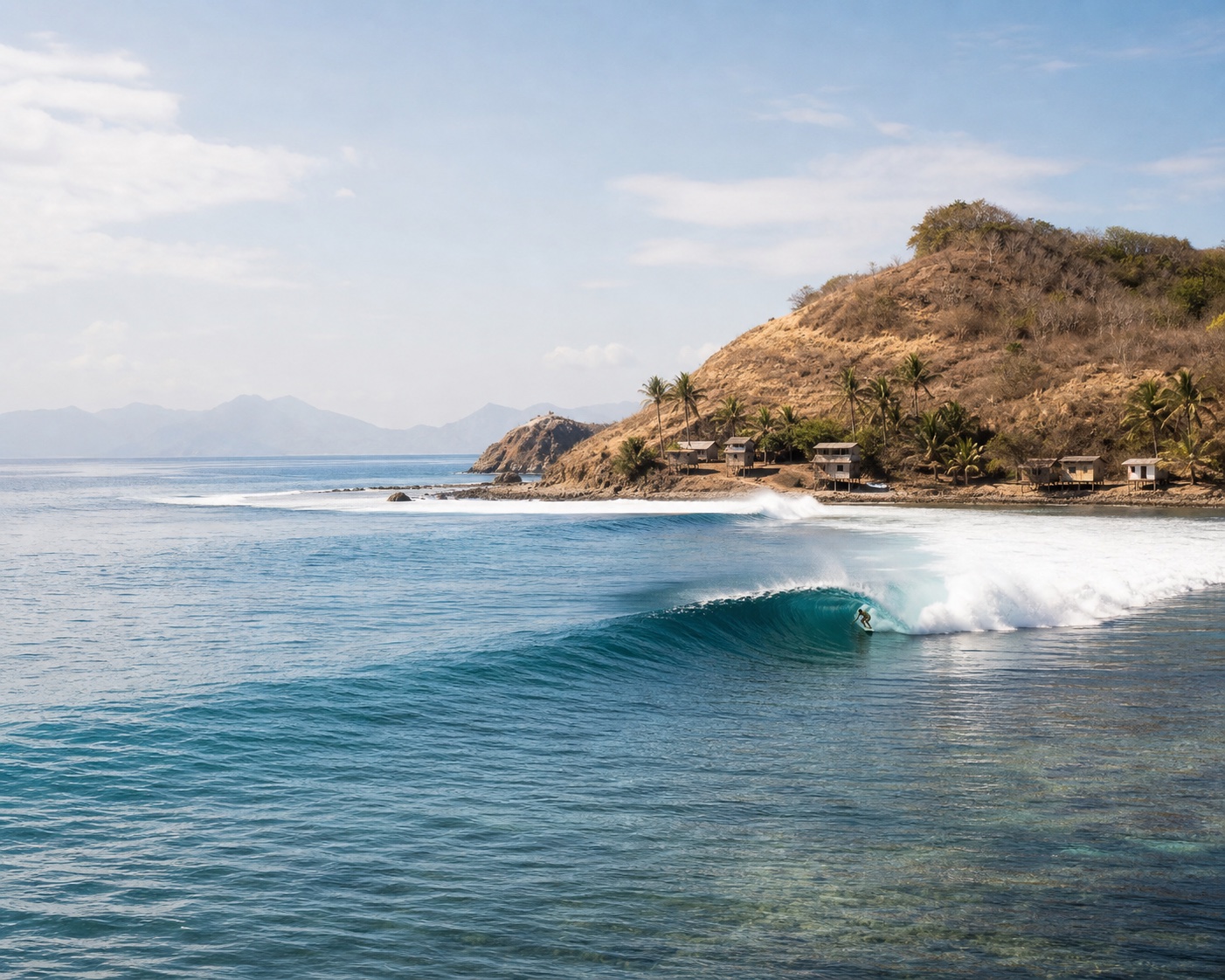
Desert Point on Lombok is widely considered one of the longest, most mechanically perfect left-hand barrels on the planet. The wave reels along an incredibly shallow, flat coral reef with robotic consistency, producing a high-speed tube that simply does not stop. When conditions align, the barrel runs for 200 metres or more without interruption. The setting is remote and arid, with only basic facilities and a small community of surfers drawn by the wave's legendary reputation. This is a pilgrimage destination for barrel hunters.
Desert Point is notoriously fickle, requiring a specific south-westerly swell direction to wrap around the peninsula and engage the reef at the correct angle. The season runs from May through September. The wave needs at least 4-6ft of swell and the direction must be precise. South-easterly trade winds blow offshore. The wave breaks only at specific tides (mid-tide is optimal). When conditions align, it is perfect; when they do not, it is either unsurfable or dangerously shallow.
The take-off zone is concentrated at the top of the reef where the deep water meets the shallow shelf. The wave pitches immediately into a high-speed barrel that reels down the reef. Position yourself exactly on the boil at the reef edge. The barrel section begins from the first moment; there is no warm-up section. The deep-water channel at the end of the reef provides the exit and paddle-back route.
The reef is critically shallow with live coral exposed at lower tides. The wave speed frequently outpaces the surfer, resulting in getting clipped by the lip and driven onto the reef. Any wipeout guarantees contact with the coral. The remote location means extremely limited medical facilities. Infections from coral cuts develop rapidly. The sheer speed of the wave makes it one of the most technically demanding barrels in the world.
Desert Point is at the south-western tip of Lombok. Basic warungs and simple accommodation exist near the break. The road from Kuta Lombok takes approximately 2 hours. The walk from the accommodation to the break is short. The paddle-out via the channel is straightforward but can be current-affected.
The fickle nature of the wave and remote location limit numbers. When conditions align, expect 10-20 surfers, many of whom have been waiting days or weeks for the swell to arrive. The concentrated take-off zone makes even a small crowd competitive. Priority goes to the deepest surfer. The atmosphere is intense; everyone present knows what they are waiting for.
Patience is the primary requirement. Desert Point may only break properly a handful of times per month. Many surfers camp nearby and wait. When it does fire, be in the water at first light. The wave is faster than you expect; it will outrun you multiple times before you calibrate. A longer board (6'4" to 6'8") with extra speed provides better odds of matching the wave's pace. Reef boots, helmet, and comprehensive first aid supplies are essential. The barrel rewards a low stance and high-line trim rather than pumping.
No recent check-ins. Be the first to report.
Record your session, conditions and gear.
Based on historical weekly averages
Combining historical conditions with school holiday crowd pressure to find the sweet spot.
How busy each week is based on school holiday overlap from feeder markets.
The timing score combines two signals: historical conditions quality (how good the skiing or surfing typically is in a given week, based on 5 years of weather data) and crowd pressure (how many of this destination's feeder markets have school holidays that week).
Crowd pressure is weighted by each feeder country's share of visitors. If 40% of a resort's visitors come from France and France is on holiday, that contributes 0.40 to the crowd pressure score. Crowds can reduce the timing score by up to 35%, ensuring conditions still matter most.
Scores: 5 = great conditions with low crowds (the sweet spot). 4 = great conditions with moderate crowds, or good conditions with low crowds. 3 = average. 2 = below average conditions or very crowded. 1 = poor conditions or peak holiday chaos.
Last 28 days of logged conditions.
Sign up to save favourite spots and get surf alerts
Create free accountCreate a free profile and let employers in Desert Point find you.
Create Profile βCurrent conditions refresh every 3 hours when the cron runs. Hourly data updates every 30 minutes. The 7-day forecast, luck factor, and packing notes are all pre-computed at the same time.
We compare the 7-day forecast to the last 5 years of marine data for the same week at Desert Point. The delta tells you whether conditions are shaping up better, worse, or about the same as a typical mid-June.
We score each day of the 7-day forecast using the same algorithm as the leaderboard, and highlight the highest scorer.
Open-Meteo's Marine API (swell height, period, water temperature) and Weather API (wind and conditions).
Honestly, no. Every break has tide windows, swell directions and reef contours that a global model cannot see. Treat the score as a starting point, then check a local cam.
The best week for surf at Desert Point is the week of 30 November (score 3/5) with low crowds.
Enough swell for a fun paddle. Nothing heroic, but enjoyable. Mid-period swell giving the waves decent shape and push. Heavy offshore making for difficult paddle-outs but textbook faces. Best conditions early morning before the sea breeze arrives.
Heads up: thunderstorms forecast, and rip risk elevated.
Indicators derived from forecast data, not official warnings. Always check local lifeguard or official advice.
Crystal clear water: ~23m visibility
Daily scores over the last 12 months at Desert Point