Fiji Β· Pacific Islands
Not enough data yet. Log a session to help build the accuracy score.
This guide was generated from conditions data. Know this spot? Submit your own tips below.
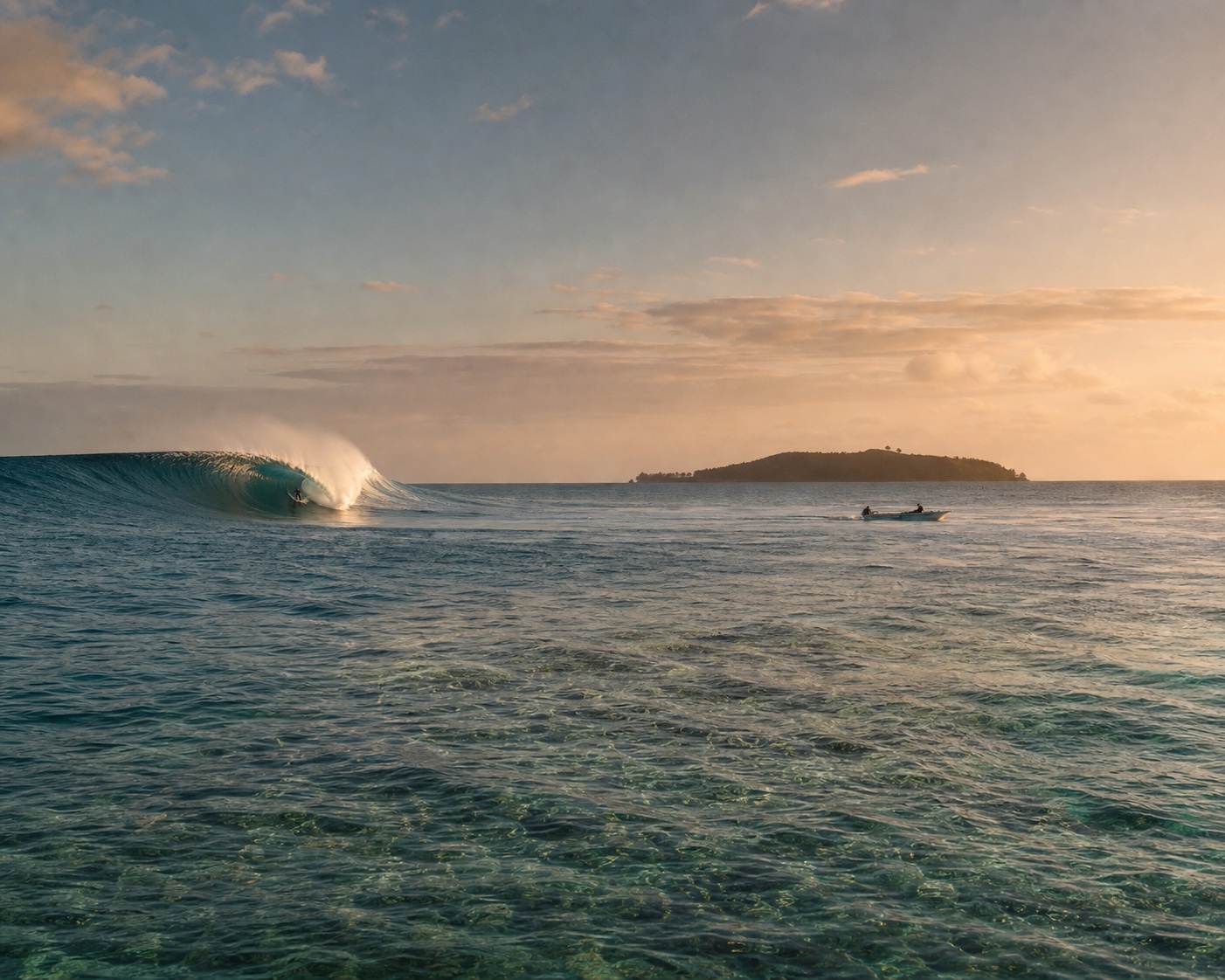
Cloudbreak is a world-class left-hand reef pass located off Tavarua Island in Fiji, consistently ranked among the most perfect and dangerous waves on the planet. The wave breaks over a pristine coral reef that rises abruptly from deep ocean, creating a mechanical barrel that detonates with extraordinary power. When the South Pacific sends its best groundswells, Cloudbreak transforms into a breathtaking spectacle of raw oceanic force. This is elite-level surfing in a tropical paradise setting.
The prime window runs from April through October when consistent south-westerly groundswells generated in the Roaring Forties track across the South Pacific. The wave needs solid 6ft-plus swell to properly activate the reef, and it handles swells up to genuine 20ft before becoming unrideable. South-east trade winds blow offshore, and these are most reliable and consistent during the dry season from June to September. Early mornings before the trades strengthen offer the glassiest conditions.
The take-off zone sits on the outside section of the reef where the swell first hits the shallow platform. On moderate swells, the peak is well-defined and the wave walls up before throwing over the inside ledge. On bigger days, the take-off shifts further out and the wave connects through multiple sections. Sit deep and commit early. Hesitation on the drop here has severe consequences. The channel to the south provides the safest exit after a ride.
The coral reef sits centimetres below the surface on the inside section. Wipeouts result in direct contact with sharp, living coral, causing severe lacerations. The wave breaks with immense hydraulic force, and hold-downs in the impact zone are long and disorienting. Strong currents sweep across the reef and can push you into shallower sections. On bigger swells, the wave closes out sections without warning. Jet-ski safety is essential for any swell above 8ft.
Access is by boat only, either from Tavarua Island or nearby Namotu Island. Several surf charter operators run trips to the break from the mainland port of Denarau. The boat ride takes approximately 30 minutes. There is no beach access. You paddle directly from the boat into the deep-water channel adjacent to the reef.
Since access restrictions were lifted, Cloudbreak sees more traffic than in its exclusive resort days. On prime swells, expect 20-30 surfers in the water, which is significant given the concentrated take-off zone. Locals from Tavarua and visiting professionals command priority. Respect the pecking order and wait for the sets that swing wide, offering secondary peaks further down the reef.
Bring reef boots and a helmet for anything over 6ft. The coral here is razor-sharp and a single fall can end your trip. Study the wave from the channel for a full set cycle before paddling into position. The wave speed increases dramatically as it hits the inside section, so maintain maximum trim speed through the barrel. A step-up board at least two inches longer than your standard shortboard is recommended for proper paddle-in sessions.
No recent check-ins. Be the first to report.
Record your session, conditions and gear.
Based on historical weekly averages
Conditions at Cloudbreak tend to be best between 09:00 to 12:00 in June.
Average score during this window: 3.4/10
Combining historical conditions with school holiday crowd pressure to find the sweet spot.
How busy each week is based on school holiday overlap from feeder markets.
The timing score combines two signals: historical conditions quality (how good the skiing or surfing typically is in a given week, based on 5 years of weather data) and crowd pressure (how many of this destination's feeder markets have school holidays that week).
Crowd pressure is weighted by each feeder country's share of visitors. If 40% of a resort's visitors come from France and France is on holiday, that contributes 0.40 to the crowd pressure score. Crowds can reduce the timing score by up to 35%, ensuring conditions still matter most.
Scores: 5 = great conditions with low crowds (the sweet spot). 4 = great conditions with moderate crowds, or good conditions with low crowds. 3 = average. 2 = below average conditions or very crowded. 1 = poor conditions or peak holiday chaos.
Last 28 days of logged conditions.
Sign up to save favourite spots and get surf alerts
Create free accountCreate a free profile and let employers in Cloudbreak find you.
Create Profile βCurrent conditions refresh every 3 hours when the cron runs. Hourly data updates every 30 minutes. The 7-day forecast, luck factor, and packing notes are all pre-computed at the same time.
We compare the 7-day forecast to the last 5 years of marine data for the same week at Cloudbreak. The delta tells you whether conditions are shaping up better, worse, or about the same as a typical mid-June.
We score each day of the 7-day forecast using the same algorithm as the leaderboard, and highlight the highest scorer.
Open-Meteo's Marine API (swell height, period, water temperature) and Weather API (wind and conditions).
Honestly, no. Every break has tide windows, swell directions and reef contours that a global model cannot see. Treat the score as a starting point, then check a local cam.
The best week for surf at Cloudbreak is the week of 30 November (score 3/5) with low crowds.
Next to nothing in the water. Check back tomorrow. Mid-period swell giving the waves decent shape and push. Moderate wind adding texture to the faces. Best conditions early morning before the sea breeze arrives. Not enough swell to get this spot firing properly.
Heads up: jellyfish: peak season, and rip risk elevated.
Indicators derived from forecast data, not official warnings. Always check local lifeguard or official advice.
Good water clarity: ~11m visibility
Daily scores over the last 12 months at Cloudbreak
Conditions at Cloudbreak tend to be best between 09:00 to 12:00 in June.
Average score during this window: 3.4/10
See timing scores, school holiday busyness, and lift pass pricing to find the best time to book.
View Best Time to Go β